.avif)


Window Crack Formation Causes
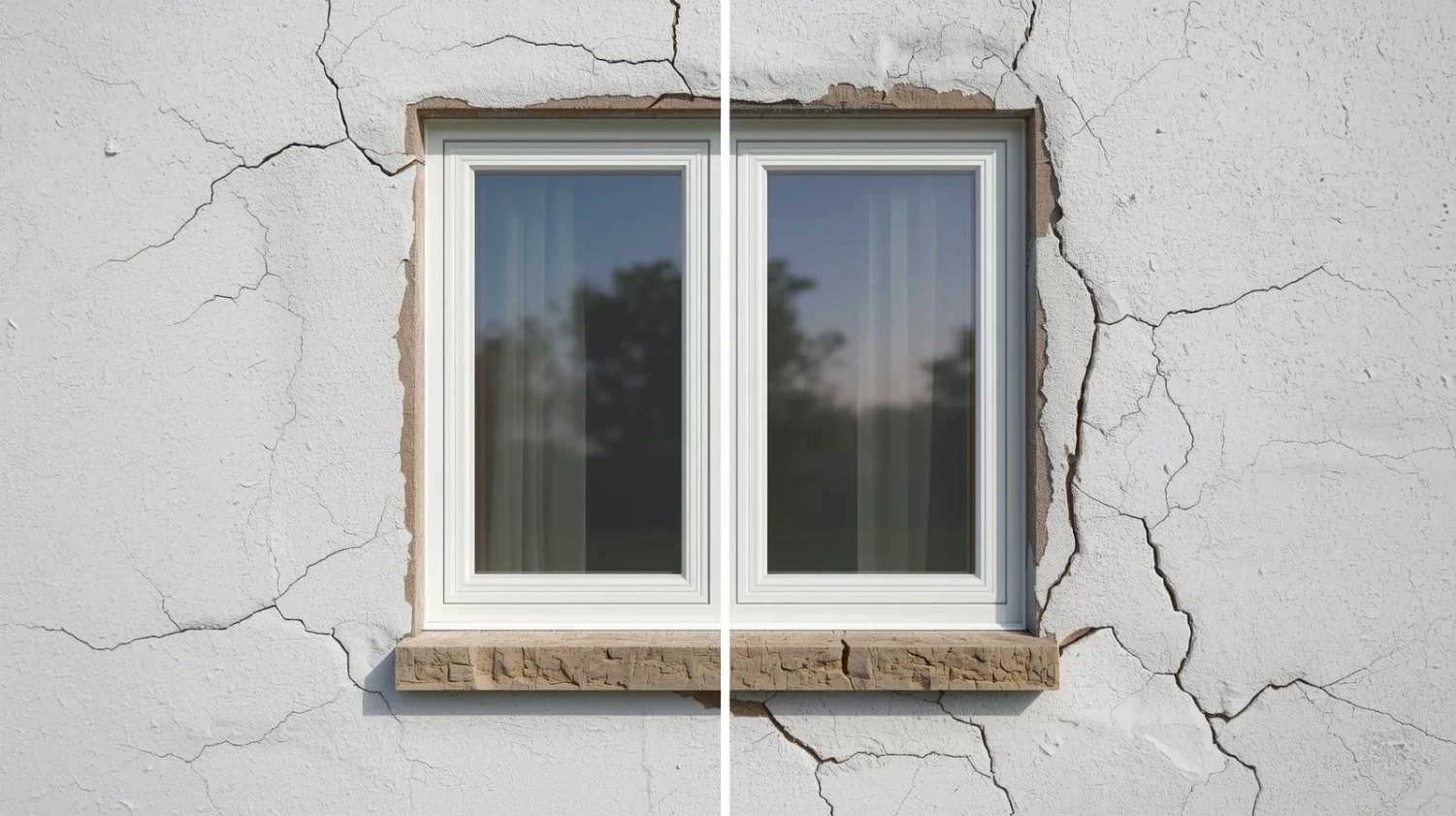

Window crack formation is caused by thermal stress, pressure changes inside sealed glass units, direct impact, poor installation, and structural settling. Some cracks appear suddenly with no visible cause, while others grow slowly over weeks or months. According to engineers at Pella Windows, there are three general types of glass cracks: thermal stress cracks, impact cracks, and pressure cracks. Each one looks different, forms for different reasons, and requires a different response.
In this article, we cover every major cause of window cracking, how to tell each type apart, whether a cracked window can be repaired or needs replacement, what homeowners insurance will and will not cover, and why impact windows with laminated glass are far more resistant to cracking than standard glass.
What Causes Window Crack Formation?
Window crack formation is caused by stress that exceeds what the glass can handle. Glass expands when it heats up and contracts when it cools down. If one part of the glass heats faster than another, the uneven expansion creates internal stress. When that stress becomes too much, the glass cracks. This is the most common cause and it is called thermal stress.
Other causes include pressure changes inside double-pane or triple-pane sealed units, physical impact from flying debris or accidental contact, poor edge quality from manufacturing or rough handling during installation, frame pressure from an improperly installed or shifting window frame, and house settling that slowly pushes the frame out of square. According to the U.S. Department of Energy, heat gain and heat loss through windows are responsible for 25% to 30% of residential heating and cooling energy use, and cracked glass makes that problem significantly worse because the broken seal can no longer insulate properly.
What Can Cause a Window to Crack Randomly?
A window can crack randomly due to thermal stress, nickel sulfide inclusions in tempered glass, or hidden edge damage that finally gives way under normal temperature changes. Thermal stress is the most common reason. It happens when part of the glass is in direct sunlight while the rest sits in shade, creating a temperature difference across the pane that the glass cannot absorb evenly.
Nickel sulfide inclusions are tiny metallic particles that can get trapped inside tempered glass during manufacturing. These particles expand slowly over time and can eventually cause the glass to shatter without warning, sometimes years after installation. According to the Double Glazing and Conservatory Ombudsman Service in the UK, this type of spontaneous breakage is rare but can happen in any tempered glass product. Homeowners who notice early signs of seal failure should get their windows inspected before small problems become big ones.
Can a Window Crack Without Being Hit?
Yes, a window can crack without being hit. Thermal stress cracks, pressure cracks, and spontaneous breakage from nickel sulfide inclusions can all form without any physical impact to the glass. In fact, most homeowners who discover a crack on their window have no idea how it got there because there was no impact event at all.
According to Quaker Windows, thermal stress cracks start perpendicular to the edge of the glass, usually running inward for about half an inch before changing direction. This pattern is the key sign that the crack was caused by temperature stress rather than something hitting the glass. Pressure cracks, on the other hand, form in an hourglass-shaped curve and are most common in insulated glass units installed at elevations significantly different from where the glass was manufactured.
Types of Window Cracks and What They Mean
Knowing which type of crack you are looking at tells you what caused it and what needs to happen next. The three main types are thermal stress cracks, pressure cracks, and impact cracks. Each one has a distinct pattern that makes it easy to identify once you know what to look for.
What Does a Thermal Stress Crack Look Like on a Window?
A thermal stress crack looks like a single line that starts at or very near the edge of the glass and runs inward at a roughly 90-degree angle. After about half an inch, the crack often changes direction and may branch or curve. It does not have a central point of impact. According to GEALAN Windows, thermal stress cracks are most common on south-facing and west-facing windows that receive strong, direct sunlight, especially when part of the glass is shaded by a wall, eave, or nearby tree.
These cracks form because the sunlit area of the glass expands while the shaded area stays cool and does not expand at the same rate. That tug between the two zones is what snaps the glass. Windows with Low-E coatings can sometimes increase the risk because the coating absorbs more heat. Proper glass glazing matched to the climate reduces this risk significantly.
What Does a Pressure Crack Look Like in a Window?
A pressure crack looks like a smooth, curved line that follows an hourglass-shaped path across the glass. It does not start from the edge like a thermal crack, and it does not radiate from a central impact point. Pressure cracks happen inside insulated glass units (double-pane or triple-pane windows) when the sealed air or gas between the panes expands or contracts due to elevation changes or extreme barometric pressure shifts.
According to Pella, insulated glass windows that are manufactured at one elevation and installed at a significantly higher or lower elevation are at greater risk for pressure cracks. The gas sealed between the panes was pressurized at the factory altitude. When the window moves to a different altitude, the pressure difference can be enough to crack the glass. This is one reason why professional installation by experienced technicians matters so much.
What Do Structural Damage Cracks Look Like?
Structural damage cracks look like multiple cracks radiating outward from a single point, often in a starburst or spiderweb pattern. This pattern means something hit the glass with enough force to break it at that spot. The impact point is usually visible as a small chip, dent, or shattered area at the center where the cracks begin.
Structural cracks can also appear as long, straight lines running across the glass if the window frame has shifted due to foundation settling or structural movement in the building. In those cases, the frame itself is putting pressure on the glass from the sides or corners. Homeowners who see cracks forming along the edges where the glass meets the frame should also check for frame material issues that may be contributing to the problem.
What Is the Difference Between a Stress Crack and an Impact Crack?
The difference between a stress crack and an impact crack is the pattern and location of the break. A stress crack starts at the edge of the glass with no visible impact point. An impact crack radiates outward from a central point where something struck the glass. The table below summarizes the key differences between each type of window crack.
Sources: Pella Windows, Quaker Windows, GEALAN Windows, Thompson Creek Window Company, Chicago Window Expert
Can Temperature Changes Crack a Window?
Yes, temperature changes can crack a window. This is called thermal stress cracking, and it is the most common type of non-impact window crack. Glass is a poor conductor of heat, which means it heats up and cools down slowly and unevenly. When one section of a window pane heats up much faster than another, the expanding glass pushes against the cooler section that is not expanding at the same rate. That internal push-and-pull creates stress, and if it exceeds the strength of the glass, a crack forms.
According to research cited by Glazing Refurbishments, a rapid temperature difference of more than 15 degrees Celsius (about 27 degrees Fahrenheit) across the surface of a single pane can be enough to cause a crack. In South Florida, where morning temperatures can be cool and afternoon sun can be intense, this kind of swing is common, especially on windows that face west.
Can Direct Sunlight Crack a Window?
Yes, direct sunlight can crack a window, especially when part of the glass is in full sun and the rest is shaded. The sunlit area heats up and expands while the shaded area stays cooler and does not expand. That uneven stress is what causes the crack. According to Angi, windows that face south or west are at the highest risk because they receive the most intense sunlight during the hottest part of the day.
Partial shading from eaves, overhangs, nearby trees, or even interior blinds pressed against the glass can make the problem worse. The shade keeps part of the glass cool while the exposed section absorbs heat. Homes with large picture windows or floor-to-ceiling glass are especially vulnerable because the surface area exposed to the sun is greater, and the temperature difference across the pane is more extreme.
How Do You Prevent Thermal Stress Cracks in Windows?
You prevent thermal stress cracks in windows by reducing the temperature difference across the glass surface, choosing the right glass for your climate, and making sure the window is installed correctly. Keep interior blinds or curtains slightly away from the glass rather than pressed flat against it, because trapped heat between the fabric and the glass increases thermal stress. Avoid placing space heaters, radiators, or HVAC vents directly below or next to windows.
Professional installation with correct edge clearance and proper frame support is critical. GEALAN Windows notes that poor edge quality or chips from rough handling during installation significantly increase the risk of thermal cracking. Heat-strengthened glass and precision-manufactured impact-resistant windows are built to handle higher thermal stress loads than standard annealed glass, making them a smart choice for homes that get intense sun exposure.
Does House Settling Cause Windows to Crack?
Yes, house settling can cause windows to crack. When a home's foundation shifts, even slightly, it moves the structural frame of the building. That movement transfers pressure to the window frames, which then squeeze or twist the glass. If the pressure is strong enough, the glass cracks. According to Quaker Windows, most settling happens within the first year after construction, but there is no set timeline and it can continue for years depending on the soil and foundation type.
Settling cracks usually appear along the edge or corner of the glass where the frame meets the pane. They look different from thermal or impact cracks because they tend to run in a straight line rather than branching or radiating. If you notice new cracks forming near the frame edges on multiple windows at the same time, settling may be the cause, and a structural inspection is a good idea. Homeowners should also watch for warning signs that point toward full window replacement rather than simple repair.
Can a Cracked Window Be Repaired?
A cracked window can sometimes be repaired if the crack is very small and has not spread across the pane. Two-part epoxy or clear nail polish can be used as a temporary fix to stop a small crack from growing. According to Angi, a DIY repair of a small thermal stress crack costs about $25 to $50 in materials, but the crack remains visible and the repair is not permanent.
For any crack longer than a few inches, or for any crack in a double-pane insulated glass unit, repair is not a realistic option. Once the seal between the panes is broken, the insulating gas escapes, and the window loses its energy efficiency and may start to fog. At that point, the glass or the entire window unit needs to be replaced. Standard annealed glass breaks into large, dangerous shards when it fails, while tempered glass is about 4 to 5 times stronger but still shatters completely. Laminated impact glass holds its broken pieces together with a plastic interlayer, keeping the opening sealed even after cracking.
Do Cracked Windows Need to Be Replaced Immediately?
Cracked windows do not always need to be replaced immediately, but they should not be ignored. A small, stable crack in a single-pane window may hold for a while, but it weakens the glass and makes it more likely to shatter under additional stress from wind, temperature changes, or vibration. A crack in a sealed double-pane unit is more urgent because the broken seal means the window is already losing its insulating ability and may start collecting moisture between the panes.
In hurricane-prone areas, any cracked window is a serious concern. A weakened pane that might survive normal weather could fail catastrophically during a storm, exposing the entire home to wind and water damage. The U.S. Environmental Protection Agency notes that wet or damp materials not dried within 24 to 48 hours will grow mold in most cases, and a blown-out window during a storm creates exactly that kind of moisture event. We always recommend replacing cracked glass as soon as possible, especially before hurricane season begins.
Will Homeowners Insurance Cover a Cracked Window?
Homeowners insurance will cover a cracked window if the damage was caused by a covered peril like a storm, falling debris, vandalism, or fire. According to Progressive Insurance, dwelling coverage pays to repair or replace broken windows that are part of the home's structure, up to the coverage limit and minus the deductible. If multiple windows are damaged by the same event, they are typically handled under a single claim with one deductible.
Homeowners insurance will not cover cracked windows caused by normal wear and tear, gradual deterioration, thermal stress, poor maintenance, or aging seals. Most stress cracks and pressure cracks fall into this category because they develop over time rather than from a sudden event. If the crack happened because of a defect in the glass, it may be covered under the manufacturer's warranty instead. Data from the Insurance Information Institute shows that the average water damage and freezing claim costs over $15,000, so preventing a compromised window from letting storm water in is well worth the cost of timely replacement.
In Florida, homeowners who upgrade to impact-rated windows can qualify for wind mitigation insurance discounts of 25% to 40%, which helps offset the cost of replacement over time. An impact glass comparison shows how much stronger laminated glass is compared to standard or tempered options.
Is It Cheaper to Replace All Windows at Once?
Yes, it is usually cheaper to replace all windows at once rather than one at a time. Window installers offer lower per-unit pricing on larger projects because they can buy materials in bulk, schedule one crew for the full job, and complete the work in fewer trips. Replacing one window at a time means paying for separate labor, setup, and cleanup each time, which adds up quickly.
There are other benefits beyond cost. Replacing all windows at the same time gives you a consistent look across the entire home, which improves curb appeal and resale value. It also means every window in the house meets the same energy and safety standards, which matters if you are upgrading to hurricane-rated windows in order to qualify for insurance discounts. A partial upgrade may not earn the full wind mitigation credit because Florida insurers typically require all openings to be protected before applying the maximum discount.
Homeowners interested in how different energy-efficient window features like Low-E coatings and argon gas fills affect performance can compare the long-term savings before making a decision.
Frequently Asked Questions
Can HVAC Vents Near a Window Cause Cracks?
Yes, HVAC vents near a window can cause cracks. When a heating or cooling vent blows air directly onto the interior surface of the glass, it creates a sharp temperature difference between the inside and outside of the pane. That sudden thermal gradient can produce enough stress to crack the glass, especially during extreme weather. Redirecting vents away from the window surface is a simple fix that reduces this risk.
Are Larger Windows More Likely to Crack?
Yes, larger windows are more likely to crack from thermal stress because the glass surface area exposed to temperature differences is greater. A bigger pane means there is more room for uneven heating between the sunlit and shaded sections. Square-shaped windows distribute stress more evenly than long, narrow windows, which are more vulnerable to cracking from uneven thermal loads.
Can Window Tint or Film Cause Stress Cracks?
Yes, window tint or aftermarket film can cause stress cracks if the product absorbs too much heat and raises the glass temperature beyond its tolerance. Some darker films trap heat between the film and the glass, increasing thermal stress. GEALAN Windows recommends making sure any film or coating is properly matched to the glass type and climate to avoid this problem. Always check with the window manufacturer before applying aftermarket films.
Do Double-Pane Windows Crack More Than Single-Pane?
Double-pane windows are more vulnerable to pressure cracks than single-pane windows because they contain sealed gas between the panes. Changes in altitude, barometric pressure, or extreme temperature swings can expand or contract that trapped gas enough to stress the glass. However, double-pane windows are less vulnerable to simple thermal stress cracks because the insulating gas layer moderates the temperature difference across each individual pane.
How Strong Is Laminated Impact Glass Compared to Standard Glass?
Laminated impact glass is significantly stronger than standard glass. Standard annealed glass breaks into large, sharp shards on impact. Tempered glass is about 4 to 5 times stronger than standard glass, according to USA Windows and Doors, but it shatters completely into small pieces when it fails. Laminated impact glass may crack on impact, but the plastic interlayer holds the broken pieces together and keeps the window sealed. According to Guardian Glass, hurricane impact glass must pass both a missile impact test and thousands of cycles of positive and negative pressure to earn its rating.
Putting It All Together
Window crack formation has many causes, from thermal stress and pressure shifts to impact damage and house settling. Some cracks are harmless at first, but every crack weakens the glass and increases the risk of a full failure during a storm or severe weather event. Knowing what type of crack you are dealing with helps you decide whether a repair will hold or whether full replacement is the right move.
For homeowners in the Doral and Broward County area who want glass that handles thermal stress, impact, and pressure far better than standard options, upgrading to laminated impact glass is the strongest long-term investment you can make.
If you have a cracked window or want to learn about your upgrade options, the team at ASP Windows & Doors is ready to help. We have been protecting homes for over 20 years with code-approved products and expert installation.
Call us at (888) 782-8342 or request a free estimate today.
Now Accepting Appointments
Proudly serving homeowners and businesses across South Florida and Southwest Florida. Book your visit and let our experts help protect and upgrade your space.
.avif)
.avif)
.avif)
%201.avif)
Insights & Resources
Stay informed with expert tips on impact windows, hurricane protection, and South Florida building standards.


%201.webp)
%201%20(1).webp)

%201.svg)
%201%20(1)%20(1).webp)
.png%20(1).webp)
.png.webp)
.avif)
.avif)


.avif)


.png)
.png)