.avif)


Broken Window Glass Risks
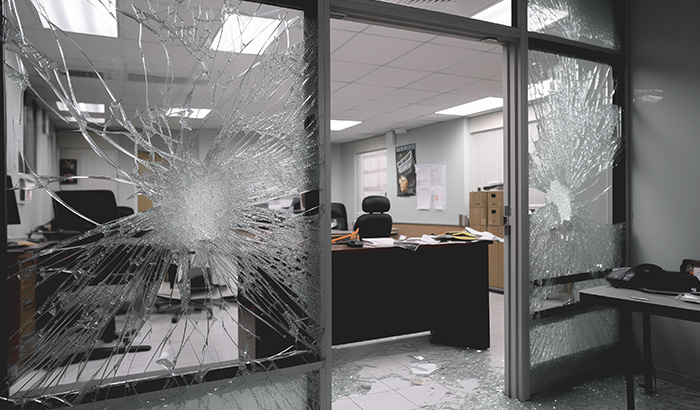

Broken window glass risks include severe cuts from flying shards, structural damage from interior pressurization during storms, water intrusion that leads to mold and rot, increased vulnerability to break-ins, and higher energy costs from a compromised building envelope. In hurricane zones, a single broken window can trigger a chain reaction that destroys an entire home.
Most people think of a broken window as a minor inconvenience. In reality, it is one of the most dangerous events that can happen to a home, especially during a storm. According to the Centers for Disease Control, flying glass fragments cause 67% of hurricane-related injuries treated in emergency rooms. According to the U.S. Department of Energy, windows already account for 25% to 30% of a home's total heating and cooling energy loss, and a broken window makes that number spike immediately. This article covers every major risk of broken window glass, explains how different glass types behave when they break, and shows why the type of glass in your windows determines how much damage a single break can cause.
What Are the Dangers of Broken Windows?
The dangers of broken windows are physical injury from sharp glass shards, home security exposure, structural damage during storms, water intrusion, mold growth, pest entry, increased energy costs, and reduced property value.
A broken window creates an open hole in your home's building envelope. That hole lets in rain, wind, dust, allergens, insects, and intruders. In a storm, it lets in wind pressure that can blow off your roof from the inside. The risks multiply fast, and each one feeds into the next.
Risk of Injury From Flying Glass Shards
Standard annealed glass, the type found in most older windows, breaks into large, jagged shards with razor-sharp edges. These shards can cause deep lacerations, sever tendons and arteries, and embed in skin, eyes, and soft tissue. According to Wikipedia's entry on flying glass, up to 85% of injuries from an explosion event are caused by flying glass fragments. In a hurricane, the same principle applies. Wind-driven debris shatters a window, and the shards become high-speed projectiles that fly across the room.
Children and pets are especially vulnerable. The Consumer Product Safety Commission has long identified glass-related injuries as a leading cause of emergency room visits in residential settings. Laminated impact glass eliminates this risk because the interlayer holds the broken pieces in place, even after the glass cracks. The shards stick to the plastic film instead of scattering into the room.
Risk of Structural Damage During Storms
When a window breaks during a hurricane, wind rushes into the home and pressurizes the interior. According to FEMA, this internal pressure pushes outward against the roof and walls. When interior pressure exceeds 15 to 20 pounds per square foot, the roof can lift off its structure entirely. Once the roof goes, the walls are exposed, and the entire home can be destroyed.
Post-Hurricane Andrew investigations by FEMA confirmed that window and door failure was the starting point for the majority of structural damage. Hurricane Andrew destroyed 63,000 homes in South Florida in 1992, and the findings from that disaster led directly to the mandatory impact window requirements now enforced in High Velocity Hurricane Zones across Miami-Dade, Broward, and coastal Palm Beach counties. Securing every opening, including windows and impact doors, is what keeps the building envelope intact.
Risk of Water Damage and Mold Growth
A broken window lets rain pour directly into your home. In a tropical storm or hurricane, that means gallons of water hitting your floors, walls, and furniture within minutes. According to FEMA, water intrusion accounts for 40% of hurricane insurance claims. Extended water exposure warps flooring, softens drywall, and saturates insulation. Mold can begin growing within 24 to 48 hours of water exposure in warm, humid conditions.
Even outside of storm season, a cracked or broken window allows moisture to seep into the wall cavity over time. This hidden moisture creates the perfect environment for mold, mildew, and wood rot. The damage often goes unnoticed until it has spread behind the walls, at which point the repair cost is far higher than replacing the window would have been.
Risk of Break-Ins and Security Exposure
A broken window is an open invitation to intruders. According to the Bureau of Justice Statistics, first-floor windows are the entry point for 23% of residential burglaries. Standard annealed glass shatters quickly and quietly, giving a burglar easy access in seconds. Even a cracked or damaged window signals vulnerability.
Laminated impact glass changes that equation. Even with repeated heavy strikes, the interlayer holds the broken glass in place and prevents an entry-sized opening from forming. The noise and time required to breach impact windows almost always forces an intruder to give up or get caught before gaining access.
Windows are not the only vulnerable opening. Pairing your windows with impact-rated entry doors closes off the other primary point of forced entry and gives your home full-perimeter protection.
How Much Force Is Needed to Break a Window?
The force needed to break a window depends on the glass type. Standard annealed glass breaks at about 6,000 pounds per square inch (PSI). Tempered glass breaks at about 24,000 PSI. Laminated impact glass can withstand even higher forces because the interlayer holds the glass together after the panes crack.
According to Federal Specification DD-G-1403B, tempered glass must have a minimum surface compression of 10,000 PSI to qualify as safety glass. In practice, most tempered glass breaks at around 24,000 PSI, which is four times stronger than standard annealed glass. But "stronger" does not mean "safer." When tempered glass fails, it shatters completely into small pieces and falls out of the frame. The opening is left fully exposed to wind, rain, and debris.
Laminated impact glass behaves differently. The PVB or SGP interlayer between the glass panes holds everything together even after the glass cracks. The window may spider-web, but it stays in the frame and continues to block wind, water, and debris. That is why laminated glass is the only type that meets Florida's hurricane impact testing standards under ASTM E1886 and E1996.
How Different Glass Types Break
The way glass breaks determines how dangerous it is. Not all glass breaks the same way, and the differences matter for your safety.
Glass TypeBreaking StrengthBreak PatternWhat Happens After BreakingAnnealed (standard)~6,000 PSILarge, jagged shardsShards fly as projectiles; opening fully exposedTempered~24,000 PSISmall, rounded fragmentsEntire pane falls out of frame; opening fully exposedLaminated (impact)Varies by configurationSpider-web cracks; stays in frameGlass stays bonded to interlayer; opening remains sealedInsulated LaminatedVaries by configurationSpider-web cracks; stays in frameDouble barrier remains intact; best thermal and impact protection
Sources: Jockimo Glass, Rustica, Federal Specification DD-G-1403B, Vitro Glass Education Center, Glass Association of North America
According to Vitro Glass Education Center, tempered glass is much more likely to fall from the glazing system immediately upon breakage because of the way it fractures into thousands of small pieces. If it is important for the glass to stay anchored in the frame after breaking, laminated glass should be used instead. That is exactly why impact-rated impact glass uses laminated construction. It is the only type that keeps the opening sealed after a hit.
What Happens When a Window Breaks During a Hurricane?
When a window breaks during a hurricane, wind enters the home at full force, pressurizes the interior, and can rip the roof off from the inside out. The broken opening also allows rain, debris, and additional wind-borne projectiles to enter the home, causing cascading damage to walls, ceilings, flooring, electrical systems, and personal belongings.
According to post-storm surveys by the Texas Tech Wind Science and Engineering Center, wind-borne debris causes 60% to 70% of window failures during hurricanes. Tree branches alone account for 38% of that debris. A 2x4 board traveling at 100 mph generates approximately 400 foot-pounds of impact force. Standard annealed and tempered glass shatter immediately on contact with that kind of energy.
According to the Insurance Institute for Business and Home Safety (IBHS), impact-resistant windows reduce hurricane damage costs by 40% to 60% because they keep the building envelope sealed. When the envelope stays intact, the interior stays protected from pressurization, water, and debris. That single difference, a window that holds versus one that shatters, can be the difference between a home that survives a storm and one that is destroyed.
Why Standard Glass Is the Weakest Point in Any Home
Standard glass is the weakest point in any home because it cannot absorb or distribute impact energy the way walls, roofing, and framing materials can. According to structural engineering research, walls handle distributed wind pressure across large surface areas. Glass concentrates impact force at a single point. A piece of metal flashing weighing less than a pound can strike a window with thousands of pounds of force per square inch. The glass shatters under that concentrated load.
Windows on upper floors and corner locations are even more vulnerable. According to structural data published by multiple engineering sources, upper-floor and corner windows experience 40% to 60% more wind pressure than ground-level openings. For high-rise buildings, this makes glass selection one of the most critical safety decisions in the entire design process.
Double-pane windows offer only about 30% more impact resistance than single-pane glass. Hurricane projectiles carry 300% to 400% more force than what breaks single-pane glass. The math is clear. Standard glass, whether single or double pane, cannot survive the forces generated by even a moderate hurricane.
How Laminated Impact Glass Eliminates Broken Glass Risks
Laminated impact glass eliminates broken glass risks by keeping the shattered pieces bonded to a tough plastic interlayer. Even after multiple debris strikes, the glass stays in the frame, the opening stays sealed, and no dangerous shards fly into the home.
According to the Glass Association of North America, PVB interlayers measuring 0.060 inches thick bond glass plies through heat and pressure, creating adhesion strengths of 25 to 35 PSI. When debris hits laminated glass, the outer pane may crack, but the fragments stick to the interlayer instead of scattering. The barrier remains continuous, which prevents interior pressurization, blocks rain infiltration, and protects occupants from flying glass.
Miami-Dade County testing requires impact windows to survive a 9-pound 2x4 lumber projectile fired at 50 feet per second, followed by 9,000 cycles of positive and negative pressure simulating sustained hurricane-force winds. Only laminated impact glass passes this test. Tempered glass shatters and falls out on the first hit. Standard annealed glass does not come close. We install laminated impact glass across all of our residential, commercial, and high-rise products because it is the only type that provides true protection after breaking.
Broken Glass Risks to Children and Pets
Broken glass is especially dangerous to children and pets because they are closer to the ground where shards tend to collect, they may not recognize the danger, and their skin is thinner and more easily cut. A child running into a standard glass door or window can suffer life-threatening lacerations. Pets walking through broken glass can sustain deep paw injuries that require emergency veterinary care.
Building codes require safety glazing in certain high-risk locations. According to the International Residential Code (IRC), safety glass is required within 18 inches of the floor, within 24 inches of a door, and in any location where human impact is likely. Sliding doors and low windows in playrooms, living rooms, and bedrooms are some of the most common locations where safety glazing is mandatory.
Impact-rated laminated glass meets and exceeds all safety glazing requirements. It provides the same break-safe performance as tempered glass with the added benefit of staying in the frame after impact. For families with young children, this added layer of protection is one of the most practical benefits of upgrading to impact windows.
Energy and Financial Risks of a Broken Window
A broken window causes an immediate spike in energy costs because it removes the thermal barrier between your home's interior and the outside air. In a hot, humid climate, your air conditioning system has to work significantly harder to compensate for the uncontrolled airflow through the opening.
According to the ENERGY STAR program, all the hidden air leaks in a typical older home can add up to the energy loss of a window left wide open. A broken window is literally that scenario, except it also lets in moisture, dust, allergens, insects, and noise. The financial impact goes beyond just the energy bill. Water damage from rain entering through a broken window can cost thousands of dollars to repair. Mold remediation, drywall replacement, and floor repairs add up fast.
Delaying the repair makes everything worse. A cracked window that is not replaced can fully break at any time, especially during a storm. Proactively replacing aging or damaged glass glazing with impact-rated products is always less expensive than dealing with the aftermath of a failure. According to the Insurance Information Institute, impact doors and windows can reduce homeowners insurance premiums by 10% to 35% in High Velocity Hurricane Zones, which helps offset the investment over time.
How to Reduce Broken Window Glass Risks in Your Home
The most effective way to reduce broken window glass risks is to replace standard glass with laminated impact glass. No other single upgrade provides the same combination of storm protection, security, energy efficiency, noise reduction, and UV protection.
If full replacement is not immediately possible, prioritize the most vulnerable openings first. Ground-floor windows, large picture windows, south-facing and west-facing glass, French doors, and any glass near high-traffic areas should be addressed before less exposed openings. Temporary measures like hurricane shutters or plywood provide some storm protection but offer zero benefits during the other 11 months of the year.
Regular inspections help catch problems early. Look for cracks, chips, failed seals, fogging between panes, and difficulty operating the window. Any of these signs means the glass or frame is compromised and more likely to fail under stress. A window that already has a hairline crack can shatter completely during a storm, a pressure change, or even a sharp temperature swing.
Frequently Asked Questions
Can Broken Glass Cause Structural Damage to a Home?
Yes, broken glass can cause structural damage to a home, especially during a hurricane. When a window breaks, wind enters and pressurizes the interior. According to FEMA, this interior pressure pushes against the roof and walls from the inside. When the pressure exceeds 15 to 20 PSF, the roof can lift off, which exposes the entire structure to catastrophic damage. A single broken window is often the starting point for total home loss during a major storm.
Is Tempered Glass Safe Enough for Hurricane Zones?
No, tempered glass is not safe enough for hurricane zones. Tempered glass is four to five times stronger than standard annealed glass, but it shatters completely when it fails. Once it breaks, the entire pane falls out of the frame and leaves the opening fully exposed to wind, rain, and debris. Only laminated impact glass meets Florida's hurricane impact testing standards because it stays in the frame after breaking.
What Should You Do if a Window Breaks During a Storm?
If a window breaks during a storm, move all family members to an interior room without windows, such as a bathroom, closet, or hallway. Close all interior doors between the broken window and the rest of the home to slow wind penetration. Do not attempt to board up the window while the storm is active. Wait until wind speeds drop below 40 mph before approaching the damaged area. Document the damage with photos for your insurance claim once it is safe to do so.
Does Homeowners Insurance Cover Broken Windows?
Yes, homeowners insurance generally covers broken windows when the damage is caused by a covered peril such as a storm, vandalism, or a break-in. According to Allstate, broken windows fall under dwelling coverage and are typically "open peril," meaning they are covered unless the cause is specifically excluded. Broken windows caused by general wear and tear or lack of maintenance are usually not covered. You will also need to pay your deductible before the insurance payout applies.
How Does Impact Glass Protect Against Flying Debris?
Impact glass protects against flying debris by absorbing the energy of the impact and keeping the broken glass bonded to a tough plastic interlayer. During Miami-Dade testing, the glass must survive a 9-pound 2x4 projectile fired at 50 feet per second and then endure 9,000 pressure cycles without the interlayer failing. The outer glass pane may crack, but the interlayer prevents penetration and keeps the opening sealed against wind, rain, and additional debris.
Can a Broken Window Attract Pests?
Yes, a broken window can attract pests. An unsealed opening allows mosquitoes, flies, ants, roaches, lizards, and even small rodents to enter your home freely. In warm, humid climates, pest activity is year-round, and even a small crack or gap in a window provides enough access for insects. Replacing damaged glass promptly is one of the simplest ways to keep pests out of your living space.
What It All Comes Down To
Broken window glass is far more dangerous than most people realize. The risks include severe injury, structural failure, water damage, mold, pest intrusion, security exposure, and higher energy costs. Standard annealed and tempered glass shatter on impact and leave your home completely exposed. Laminated impact glass stays in the frame, keeps the opening sealed, and prevents the cascade of damage that a single broken window can set in motion.
If your home still has standard glass windows, the smartest move is to replace them before they fail. ASP Windows and Doors installs impact-rated laminated glass systems for residential, commercial, and high-rise properties. Call (888) 782-8342 to schedule a free estimate and find out which solution fits your home.
Now Accepting Appointments
Proudly serving homeowners and businesses across South Florida and Southwest Florida. Book your visit and let our experts help protect and upgrade your space.
.avif)
.avif)
.avif)
%201.avif)
Insights & Resources
Stay informed with expert tips on impact windows, hurricane protection, and South Florida building standards.


%201.webp)
%201%20(1).webp)

%201.svg)
%201%20(1)%20(1).webp)
.png%20(1).webp)
.png.webp)
.avif)
.avif)


.avif)


.png)
.png)