Are Double Pane Windows Energy Efficient and What Homeowners Should Know

Yes, double pane windows are energy efficient, because two glass layers with a sealed gap slow heat flow better than one. ENERGY STAR reports that certified windows can cut household energy bills by up to 13 percent when they replace single pane windows. The coating, the gas fill and the frame decide how much a home actually saves.
Key Takeaways
- Double pane windows are more energy efficient than single pane windows because a sealed gap between two glass layers slows heat transfer.
- ENERGY STAR reports savings of up to 13 percent on energy bills for certified windows that replace single pane windows.
- In Florida, a low solar heat gain coefficient matters greatly, because it measures the sun's heat entering the room.
- Impact windows can be built as insulated laminated glass, which adds hurricane protection to the insulating gap.
- Fogging between the panes means the seal has failed, and the sealed unit then needs repair or replacement.
Are Double Pane Windows Energy Efficient in Florida Homes
Double pane windows are energy efficient in Florida homes because they reduce the heat that moves through the glass into cooled rooms. Cooling is a major energy use in Florida homes, so slowing that heat gain lowers the workload on the system. A single pane of glass has no insulating gap, which lets heat pass straight through.
Efficiency varies from one double pane window to another. The answer to "are double pane windows energy efficient" differs for each product. A basic unit helps less than one with a coating and a gas fill. Homeowners who also want storm protection can look at insulated laminated glass, which pairs a laminated pane with an insulating gap.
The next question is how the layers, gas and coatings produce that result.
How Do Double Pane Windows Save Energy
Double pane windows save energy by trapping a sealed layer of air or gas between two sheets of glass. That sealed space slows heat transfer, so the inside pane stays closer to room temperature. In summer the inside pane stays cooler, and in winter it stays warmer.
The sealed assembly is called an insulated glass unit, which is two panes joined by a spacer at the edges. Our guide to double pane basics explains each part of the unit.
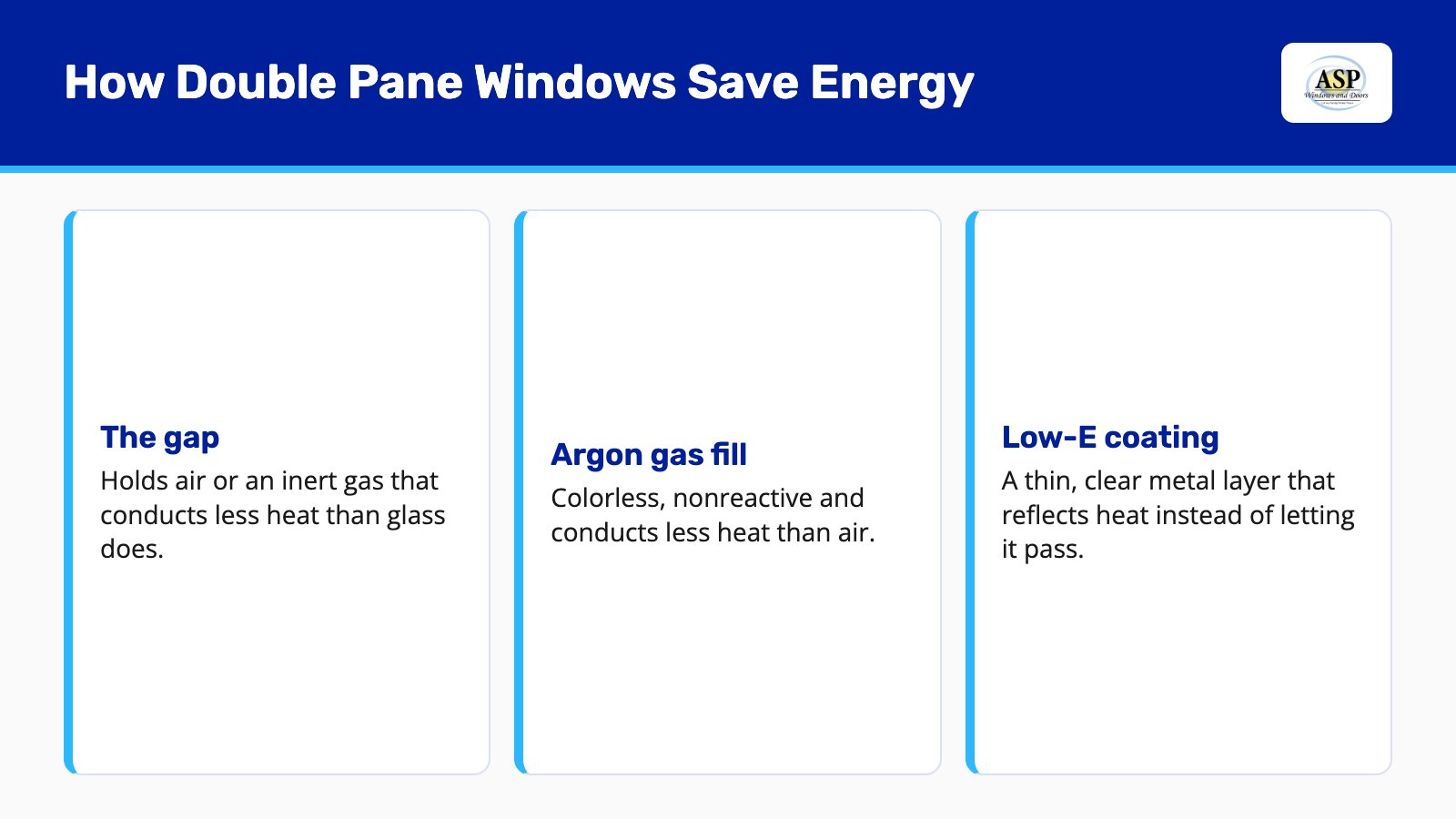
Three features set the performance of the unit:
- The gap between the panes holds air or an inert gas that conducts less heat than glass does.
- An argon gas fill is a common choice, because argon is colorless, nonreactive and conducts less heat than air.
- A Low-E coating is a thin, clear metal layer that reflects heat instead of letting it pass.
Low-E stands for low emissivity, which means the glass gives off less heat energy. The coating works with the gap, and that pairing explains much of the difference between old and new windows.
How Energy Efficient Are Double Pane Windows Compared to Single Pane
How energy efficient are double pane windows compared to single pane windows depends on climate, coating and window age. ENERGY STAR reports average savings of up to 13 percent on household energy bills when certified windows replace single pane windows. Savings in a hot climate come mainly from lower cooling use.
The comparison of double pane vs single pane windows also covers comfort. A single pane window feels hot on a sunny afternoon, which makes a room feel warmer than the thermostat reads. A double pane window keeps the inner glass closer to room temperature.
Double pane windows also reduce condensation on the inside glass and soften outdoor noise. Our post on window energy loss covers the other places where a home loses cooled air, such as gaps around frames.
The ratings on the window label show how much of this performance a specific product delivers.
What Do U-Factor and Solar Heat Gain Coefficient Mean on a Window Label
U-factor and solar heat gain coefficient are two energy ratings on the National Fenestration Rating Council (NFRC) label. The U-factor measures how well the window keeps heat from passing through, and a lower number means better insulation. The solar heat gain coefficient, or SHGC, measures how much of the sun's heat enters through the glass.
SHGC matters more than U-factor in a hot climate. ENERGY STAR states that a standard double pane window allows approximately 75 percent of the sun's heat into a home. A coating that lowers SHGC blocks a larger share of that heat before it reaches the room.
Homeowners ask whether a U-factor of .27 is good. A U-factor of .27 is a low number, which means strong insulation. ENERGY STAR sets its limits by climate zone, so the label rating should be checked against the zone for the home.
Shading also supports the glass. Our tips for summer cooling tips show how blinds, sun-facing rooms and window upgrades work together.
Should You Buy Double or Triple Pane Windows
You should buy double pane windows for Florida homes, because triple pane windows add cost and weight for cold-climate gains. A triple pane window adds a third glass layer and a second gap. That extra layer improves insulation, which pays off where winters are long and heating bills are high.
The double vs triple pane decision in a warm climate comes down to the sun. Cooling bills in Florida depend on SHGC more than on a third layer of insulation. A double pane unit with a low SHGC coating handles that job.
Triple pane glass also adds weight, which affects frame size and installation. For homes that need storm protection, a laminated impact unit answers a bigger need than a third pane does. The next section explains how those units fit the picture.
Are Impact Windows Double Pane Windows
Impact windows are not always double pane windows, but many can be built as insulated laminated glass. A laminated pane has a clear plastic interlayer bonded between two glass layers. That interlayer holds the glass together when debris strikes it during a storm.
An insulated laminated unit adds a second pane and a sealed gap to the laminated pane. The result gives hurricane protection and the insulating benefits of double pane glass in one window. Product options vary, so the specifications for each window show the exact makeup.
Three details to review when comparing impact glass units:
- Check that the product carries a Florida Product Approval or Miami-Dade Notice of Acceptance (NOA).
- Read the NFRC label for the U-factor and SHGC of the full window.
- Ask whether the glass is laminated only or insulated laminated, and whether it has a Low-E coating.
Our guide to impact window efficiency covers the energy side of those products.
The choices in impact glass types are explained in a separate post.
Our energy-saving impact windows page lists the window styles we install.
Homeowners with existing double pane windows may wonder how to recognize them, which is the next step.
How Can You Tell If a Window Is Double Pane
You can tell a window is double pane by checking for two glass layers and a spacer between them. A few quick tests give a reliable answer without tools.
- Hold a phone flashlight near the glass and count the reflections. Two panes show two or more reflections.
- Look at the glass edge, where a metal or foam spacer strip sits between the layers.
- Look at the corner of the frame, where two panes show two glass edges with a gap between them.
- Look for a stamp in the spacer or a corner label that lists the glass type.
A window with only one reflection and no spacer is a single pane. Once the type is clear, the next question is what a double pane window gives up.
What Are the Disadvantages of Double Pane Windows
The disadvantages of double pane windows are a higher cost than single pane glass, added weight and the risk of seal failure. Each drawback is manageable, and none cancels the energy benefit.
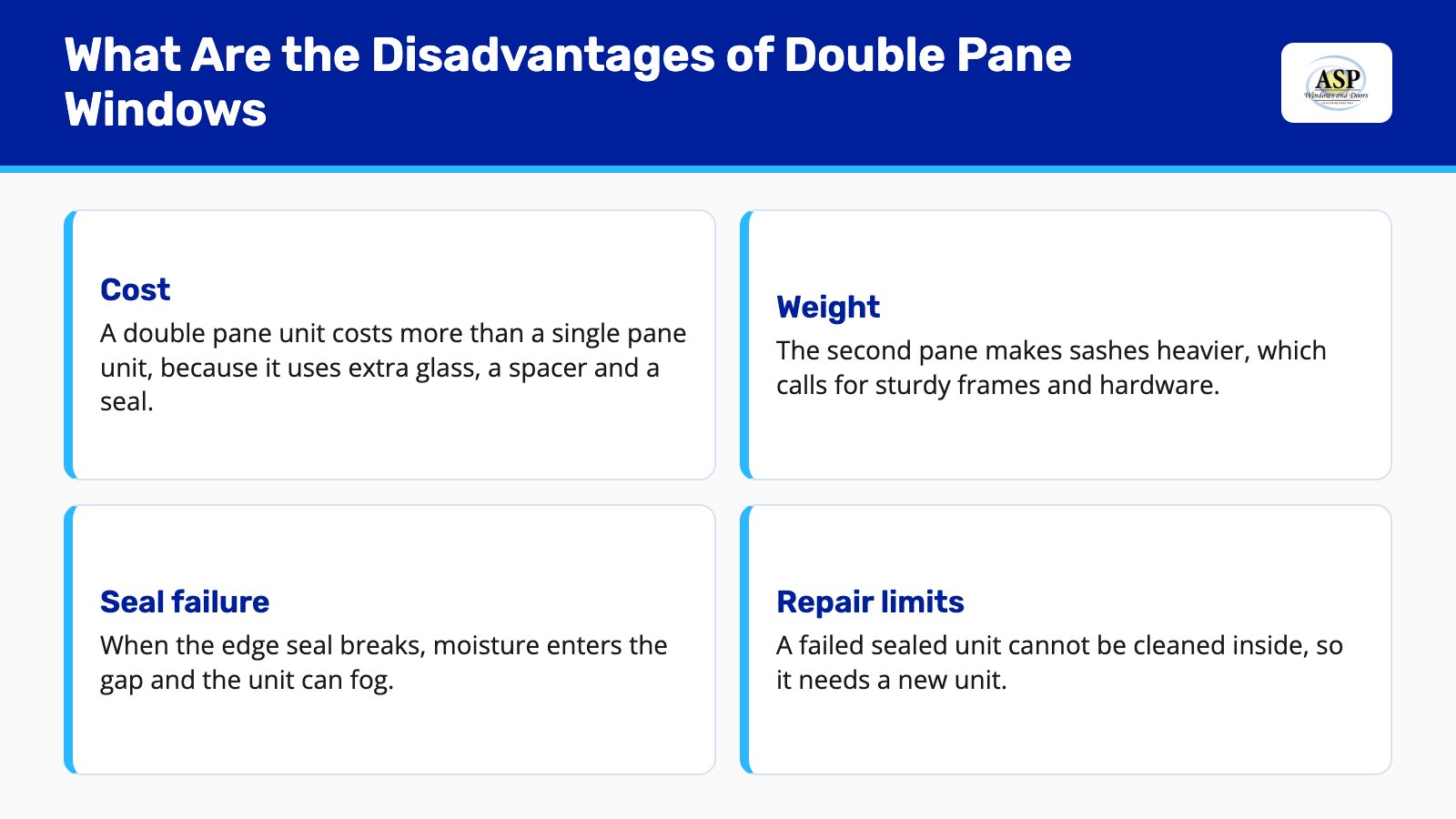
- Cost: a double pane unit costs more than a single pane unit, because it uses extra glass, a spacer and a seal.
- Weight: the second pane makes sashes heavier, which calls for sturdy frames and hardware.
- Seal failure: when the edge seal breaks, moisture enters the gap and the unit can fog.
- Repair limits: a failed sealed unit cannot be cleaned inside, so it needs a new unit.
Fogging between the panes signals the seal problem. Our guide to window fogging explains the causes. Wear from age raises the next question of whether older windows are worth replacing.
Is It Worth Replacing 20 Year Old Windows
Replacing 20 year old windows is worth it when they show seal failure, drafts, heat gain or storm vulnerability. Windows from that era may be single pane or early double pane with no Low-E coating. Today's coatings and seals perform better, and those upgrades lower cooling use.
Good value for the money comes from matching the window to the home's needs. A replacement window with a low SHGC and a proper product approval serves a Florida home better than a basic unit. Homeowners can compare windows by the label ratings, the frame and the installation quality.
Installation matters as much as the glass. The answer to "are double pane windows energy efficient" holds only when the fit is tight. A well-built window installed with gaps around the frame still leaks air. Quality installation seals those gaps and protects the rating printed on the label.
What Else Should You Know About Double Pane Window Efficiency
Double pane window efficiency also involves lifespan, cost, replacement methods, tax rules and timing. Each topic gets a brief answer below.
What Is the Average Lifespan of a Double Pane Window
The average lifespan of a double pane window is measured in decades, and the edge seal usually fails first. Sun exposure, heat and installation quality all affect how long the seal holds. Our guide on double pane lifespan covers the replacement signs.
What Is the Average Cost to Replace a Double Pane Window
The average cost to replace a double pane window depends on size, frame material, glass type and installation. Impact glass, large openings and added coatings raise the cost. A free window estimate gives a figure for the actual openings in your home.
Can You Replace a Double Pane Window Without Removing the Frame
You can replace a double pane window without removing the frame when only the glass unit has failed. A glazing contractor swaps the glass unit and keeps the frame. Our post on how to replace insulated windows explains the steps.
Do Double Pane Windows Qualify for an Energy Tax Credit
Double pane windows qualify for an energy tax credit only when federal rules in force at the time of installation allow it. Federal energy credit rules have changed in recent years, so a tax professional or the IRS can confirm the current status. Our overview of energy tax credits shows how the rules have worked.
What Is Better Than Double Pane Windows
Triple pane glass, or double pane glass with a Low-E coating and a gas fill, improves on a basic double pane unit. In Florida, impact-rated laminated glass adds storm protection on top of the insulation. The right choice depends on climate and risk.
What Is the Cheapest Time of Year to Replace Windows
No month is guaranteed cheapest, but ordering before demand rises helps. Demand for impact products tends to rise as hurricane season approaches, which runs June 1 through November 30. Planning early leaves time for permitting and product lead times.
How ASP Windows & Doors Helps With Energy Efficient Windows
ASP Windows & Doors helps homeowners choose windows that save energy and protect against storms. Our in-house team handles the consultation, permitting, installation and inspections, and each product we install meets Miami-Dade and Florida Building Code requirements. We install residential, commercial and high-rise impact products.
During a visit, we measure each opening and review the glass options with you.
To get started, request a free pricing estimate or call (888) 782-8342.
Homeowners and businesses in the region rely on ASP Windows & Doors for impact protection.
Now Accepting Appointments
Proudly serving homeowners and businesses across South Florida and Southwest Florida. Book your visit and let our experts help protect and upgrade your space.


Insights & Resources
Stay informed with expert tips on impact windows, hurricane protection, and South Florida building standards.