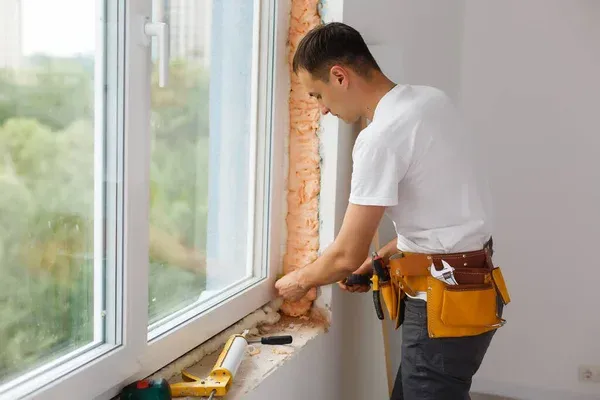
How Do You Replace Insulated Double Pane Windows
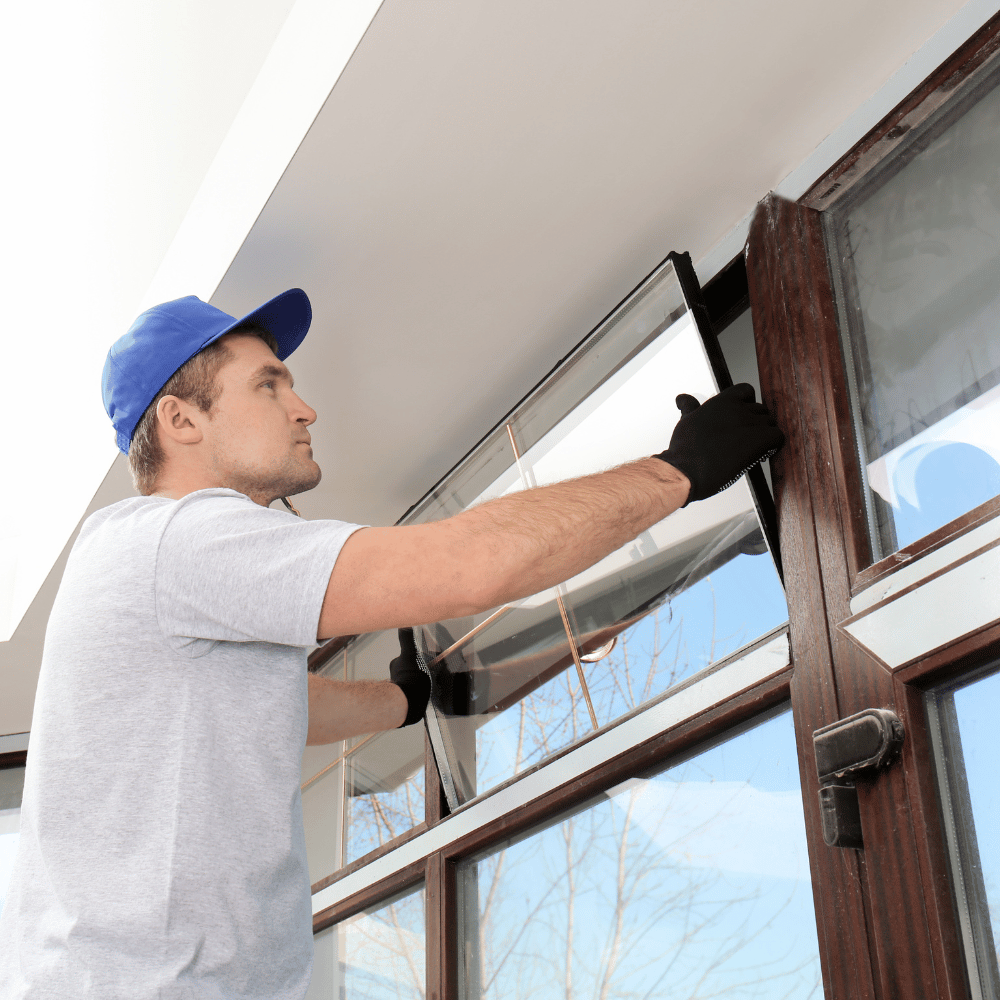

You replace insulated double pane windows one of two ways: by swapping the sealed glass unit inside the existing sash, or by replacing the entire window. The first path is usually available when the frame and sash are structurally sound and only the glass has failed, and it is the cheaper and faster of the two. The second becomes necessary when the frame has deteriorated, when the original unit is no longer manufactured, or when the opening sits in a wind-borne debris region where the replacement has to match an approved assembly rather than just a set of dimensions. This article covers how the sealed unit is actually replaced, how to tell which path your window is on, what has to be specified when ordering, and why the rules change once impact glass is involved.
Key Takeaways
- Most fogged or failed double pane windows need the sealed glass unit replaced, not the whole window.
- Glass-only replacement requires three conditions: a sound frame, a sound sash, and a glazing system designed to accept a replacement unit.
- Fog between the panes means the perimeter seal has failed, and no cleaning, drying, or venting restores the original performance.
- Certified sealed units lose roughly 1 percent of their gas fill per year under ASTM E2190, so gradual gas loss is normal rather than a defect.
- A replacement unit must match the original on dimensions, thickness, glass makeup, coating type and surface position, spacer, and tempering.
- Installing a low-emissivity unit with the coating on the wrong surface reverses its thermal behavior, which matters most in a cooling-dominated climate.
- In the High Velocity Hurricane Zone a replacement unit in an impact-rated opening has to match the approved assembly, or the opening loses its rating.
- Many manufacturers void glass warranty coverage when the unit is not installed by a professional.
How Do You Replace Insulated Double Pane Windows?
You replace insulated double pane windows by removing the failed sealed glass unit from the existing sash and setting a new one in its place, or by replacing the whole window when the frame no longer supports that. The frame is what decides. A sound frame makes the glass a serviceable component, and a deteriorated one makes the whole assembly the unit of replacement.
That distinction surprises most homeowners who call us about a fogged window. The glass looks like the problem, so the window looks like the purchase, when in practice the frame around it is often fine for another decade or more.
What sits inside that frame is where the answer starts, because the sealed unit behaves as a component with its own service life.
What Is an Insulated Glass Unit?
An insulated glass unit is two or more panes of glass held apart by a perimeter spacer and sealed at the edges to form a single sealed component. Sealing at the edges is what makes it a component rather than two separate pieces of glass, and it is why the whole unit is replaced together rather than one pane at a time.
Four parts do the work. The spacer sets the cavity width and holds a desiccant that absorbs the small amount of moisture trapped inside at manufacture. A primary seal of polyisobutylene blocks water vapor. A secondary structural sealant holds the assembly together. The cavity itself is usually filled with argon, which conducts heat more slowly than air.
A low-emissivity coating applied to one interior glass surface completes the system, reflecting radiant heat while letting visible light through. Every one of those parts depends on the edge seal holding, which is why seal failure takes the whole unit out at once.
Is a Double Pane the Same as Insulated Glass?
A double pane window is the most common type of insulated glass, so the terms overlap but are not identical. Insulated glass describes any sealed multi-pane assembly, which includes triple pane units and laminated insulated units alongside standard double pane construction.
The practical difference shows up on an order sheet. Asking a glass shop for a double pane unit tells them the pane count and nothing else, while a complete specification names the thickness, the coating, the spacer, and the gas fill as well.
Can You Replace Just the Glass on a Double-Pane Window?
You can replace just the glass on a double-pane window when the frame is sound, the sash still operates and locks correctly, and the window is built to accept a replacement unit. All three conditions have to hold, and the third one eliminates more windows than most homeowners expect.
Some glazing systems are assembled at the factory in a way that does not come apart in the field, and certain manufacturers build sashes that cannot be reglazed without specialized tooling. On those windows the sash or the whole unit is the replacement item regardless of frame condition.
When all three conditions do hold, glass-only replacement is substantially faster and less disruptive than full replacement, since no exterior finish is disturbed and no permit inspection of the rough opening is involved. Our glass glazing work covers exactly this assessment, because determining which path a window is on takes an inspection rather than a photograph.
Is It Possible to Replace a Double-Pane Window Without Removing the Frame?
It is possible to replace a double-pane window without removing the frame, and that is the standard approach whenever the frame is in good condition. Standard practice removes only the glazing beads and the sealed unit, leaving the frame, the exterior finish, and the interior trim untouched.
Removing the frame becomes necessary when the sill or jamb shows decay, when the opening is changing size, or when hidden moisture damage needs to be exposed and corrected. Those are full-frame conditions, and no amount of glass work addresses them.
How a Sealed Unit Is Replaced
A sealed unit is replaced by measuring the existing glass, ordering a matching unit, stripping the glazing system, setting the new unit on blocks, and resealing the perimeter. Measuring comes first and it comes before anything is disassembled, because the unit has to be fabricated before the window is opened up.
Here is the sequence a professional installation follows:
- Measure and document the existing unit. Width, height, and overall thickness, plus the glass makeup, coating type, spacer, and whether the unit is tempered or laminated.
- Order the replacement to specification. Fabrication typically takes one to three weeks, and the window stays intact and weathertight during that period.
- Remove the sash or prepare the opening. Many units come out more safely on a bench than in place, particularly on upper floors.
- Remove the glazing beads in sequence. Short sides first, long sides next, and the top bead last so the glass cannot fall forward during removal.
- Cut the sealant and extract the old unit. A thin blade releases the sealant or glazing tape on all four sides, and suction grips carry the weight of larger units.
- Strip and clean the glazing channel. Old sealant, tape residue, and debris come out completely, and the channel is wiped with a solvent and allowed to dry.
- Set the new blocks. Setting blocks carry the glass off the hard frame at the bottom and keep the unit from bearing directly on the channel.
- Apply new sealant or glazing tape around the perimeter of the channel, then set the unit onto the blocks and center it before pressing it home.
- Verify coating orientation before the unit is seated. A low-emissivity coating has a correct interior surface, and installing it reversed changes how the window handles heat.
- Reinstall the glazing beads and the sash, then allow the sealant to cure fully before operating the window normally.
Two steps in that list carry most of the risk. Step six decides whether the new seal bonds at all, and step nine is invisible once the unit is in, which is why both are worth confirming before the beads go back on.
Can Insulated Glass Be Repaired?
Insulated glass cannot be repaired in a way that restores its original performance, because the sealed cavity cannot be resealed or recharged in the field. Field conditions are the obstacle. Fabricating a sealed unit requires a controlled environment, a gas-filling process, and a desiccant-loaded spacer, none of which exist on a ladder outside a house.
Defogging services work differently than their name suggests. The process drills the glass, flushes the interior, and installs a small permanent vent. The haze clears and the view improves, which is a genuine cosmetic result, but the unit becomes a vented assembly rather than a sealed one. The insulating value does not come back, and the vent remains an open moisture path for the rest of the window's life.
One widely repeated claim deserves correcting here, because it circulates in contractor forums and homeowner threads alike. Gas fill is sometimes described as a marketing myth on the grounds that argon escapes quickly no matter what. The measured standard says otherwise. ASTM International's E2190 permits a certified unit to lose up to 10 percent of its fill across the equivalent of ten years of accelerated weathering, an average of about 1 percent per year, and the European standard EN 1279-3 caps the average at the same rate.
Manufacturing targets sit well above the threshold. Units are typically filled to roughly 90 percent argon and must hold a minimum average of 80 percent after the weathering cycle, which means a sound unit still carries most of its gas two decades in. Compliance with ASTM E2190 is also what makes a unit eligible for National Fenestration Rating Council certification and ENERGY STAR listing, so the standard is not optional for any unit carrying a performance label.
Slow gas loss is normal and barely noticeable. Seal failure is sudden in its effects and total, and only replacement addresses it.
Why Replacing Impact Glass Is Different in Florida
Replacing impact glass is different in Florida because the replacement unit has to match an approved assembly, not just a set of dimensions. Matching an approved assembly is a documentation requirement rather than a fitting one, and it has no equivalent in most of the country.
Impact-rated openings carry Florida Product Approval or a Miami-Dade Notice of Acceptance, earned by passing ASTM E1886 and E1996 testing and, in Miami-Dade, the TAS 201, TAS 202, and TAS 203 protocols. The approval document names the glass makeup that was tested, which means the laminated interlayer thickness, the ply thicknesses, and the overall construction all form part of what was approved. Dropping a standard insulated unit into that frame produces an opening that no longer matches any approved configuration, even if it fits perfectly.
The construction is also physically different. A laminated impact glass assembly bonds a polymer interlayer permanently between glass plies, and many impact units pair that laminated ply with an insulating cavity, making them both heavier and thicker than a standard double pane unit of the same face dimensions.
Weight changes the work. A laminated insulated unit can be two or three times the weight of the standard unit it replaces, which affects how it is carried, how many hands the job takes, and how the setting blocks are placed to support it without deflecting the frame. Miami-Dade and Broward counties sit inside the High Velocity Hurricane Zone, where this is the normal condition rather than the exception, and it is why glass replacement on an impact opening is specified against an approval number rather than a tape measure.
There is a consequence worth planning around. If the original assembly is no longer manufactured or its approval has lapsed, matching it may not be possible, and the opening moves to full window replacement by default rather than by choice.
Can I Replace Window Glass Myself?
You can replace window glass yourself on a standard non-impact unit, and doing so carries three consequences worth weighing first. Weighing them matters because none of the three are visible until something goes wrong.
Warranty coverage is the first. Many manufacturers will not honor glass warranties unless the unit was installed professionally, which means a self-installed unit that fails at year three is entirely your cost. The documentation that supports a claim later is produced at installation, which is part of why we put warranty terms in writing on every job and set them out in our warranties.
Safety is the second, and it applies to the removal more than the installation. Insulated units are heavy, broken edges are sharp, and a unit that releases unexpectedly during bead removal does so at chest height. Suction grips and a second person are standard practice for a reason.
Compliance is the third and it is decisive in an impact-rated opening. A replacement unit that does not match the approval takes the opening out of its rated condition, which affects the permit history of the house, the manufacturer warranty, and the wind mitigation credit on the insurance policy together. The terms that govern any of this sit in the paperwork, which is why reading the window warranty before starting is more useful than reading a tool list.
Is It Cheaper to Replace Glass or the Whole Window?
Replacing the glass is cheaper than replacing the whole window whenever the frame is sound and the unit is still available, and the full window becomes the better value once either of those fails. Availability is the variable most homeowners do not anticipate, since a twenty-year-old window may sit in a frame that is perfectly serviceable and still have no matching unit in production.
This is how the decision usually resolves:
That last row is the one that catches people. Putting laminated glass into an old non-impact frame does not produce an impact-rated opening, because the rating belongs to the tested assembly rather than to the glass alone. Upgrading to impact windows is a whole-window project by definition.
The general rule most contractors apply is proportional. Once the cost of glass work approaches roughly half the cost of replacing the window, replacing it buys a fresh service life and a fresh warranty period instead of extending an old one.
Is It Cheaper to Replace One Window at a Time?
It is not cheaper to replace one window at a time, because mobilization, measuring, and fabrication setup are charged against a single opening instead of spread across several. Spreading those fixed costs is where batch savings come from on any glass or window project.
Phasing still makes sense when budget requires it, and the sensible order is worst openings first. Storm or impact damage follows different rules again, and we walk through how homeowners insurance treats window glass damage in a separate article.
How to Order the Right Replacement Unit
You order the right replacement unit by matching every specification of the original, not just its width and height. Width and height alone produce a unit that fits the opening and performs differently from the one it replaced.
A complete specification covers all of these:
- Overall width and height, measured to the glass edge rather than to the sash, with the smallest of multiple readings used.
- Overall unit thickness, which is set by the glazing channel and determines whether the unit seats at all.
- Individual pane thickness, commonly 1/8 inch or 3/32 inch on standard residential units and heavier on laminated assemblies.
- Glass type. Annealed, tempered, or laminated, with safety glass required near doors, in wet rooms, and often on larger openings.
- Coating type and surface position. Hard coat or soft coat low-emissivity, and which numbered surface it sits on.
- Spacer type. Conventional metal or warm edge, which affects both appearance at the sightline and thermal performance at the edge.
- Gas fill. Air or argon, matched to the original so the window performs as designed.
- Grid pattern, if the original carried internal grids, matched in size, spacing, and profile.
- Tint or obscure pattern, matched so the replaced opening does not read differently from its neighbors.
- Approval number, on any impact-rated opening, naming the assembly the replacement has to match.
Coating surface position is the specification most often lost in translation. In a cooling-dominated climate the coating is positioned to reject incoming solar heat, and a unit installed with that coating facing the wrong way works against the air conditioning instead of with it. Large openings such as sliding glass doors show the difference fastest, because the glass area is large enough for the error to register as a comfort problem within one season.
What to Expect From a Professional Glass Replacement
A professional glass replacement takes one visit to measure, one to three weeks for fabrication, and a few hours on site per opening. Fabrication is the long part because sealed units are built to order rather than pulled from stock, and the existing window stays intact and weathertight throughout.
Installation day is short by comparison. A standard unit typically takes one to two hours per opening, larger or laminated units take longer, and the house is never left open since the glass goes in the same day the old unit comes out. Most insulated glass replacement work on a handful of openings finishes within a single day.
Cure time is the step homeowners most often miss. Wet sealant needs time to set before the window is operated normally, commonly 24 to 48 hours, and opening a sash early can break the new bond before it has strength.
Documentation closes the job. Expect the unit specification, the warranty terms on glass and labor, and on an impact-rated opening the approval number for the installed assembly, which is what an insurer or a buyer's inspector will ask for later. We supply all three across our residential services.
Verification takes about a minute per opening once the crew has finished. Check that the sash operates smoothly through its full travel, that the reveal is even around the glass, that the exterior bead or sealant line is continuous at the head and jambs, and that no weep holes have been sealed closed during trim work.
After that the routine is ordinary upkeep. Clearing weep holes, re-caulking exterior joints when the bead cracks, and rinsing frames and hardware on coastal elevations protect the new unit for its full service life, which we set out in detail in our piece on window maintenance.
Frequently Asked Questions
Why Do Double Pane Windows Fog Between the Panes?
Double pane windows fog between the panes because the perimeter seal has failed and humid outside air has entered the sealed cavity. The desiccant in the spacer absorbs moisture until it saturates, after which the remaining vapor condenses on the interior glass surfaces. Repeated condensation cycles eventually leave mineral staining etched into the glass, which is why an older failed unit looks cloudy even on dry days.
Does Replacing the Glass Restore the Argon Fill?
Replacing the glass does restore the argon fill, because the new sealed unit is fabricated and gas-filled at the factory before it ever reaches the house. What cannot be done is recharging an existing unit in the field, since gas filling requires a controlled fabrication environment. A new unit arrives at roughly 90 percent fill and loses it at about 1 percent per year under ASTM E2190.
Does Window Glass Replacement Need a Permit?
Glass-only replacement in an existing sound frame generally does not require a permit, while full window replacement almost always does because it alters the building envelope. Requirements vary by jurisdiction, and impact-rated openings carry additional documentation expectations regardless of scope. Confirm with your local building department before scheduling, since the answer differs between counties.
Does Replacing Glass Void the Window Warranty?
Replacing glass can void the window warranty when the work is not performed by an approved installer, since many manufacturers condition glass coverage on professional installation. Coverage terms differ between the glass, the frame, the finish, and the hardware, and each may carry a different duration. Check the original warranty document before deciding who performs the work.
What If the Replacement Unit Is No Longer Made?
When the replacement unit is no longer made, a glass fabricator can often build a matching unit to the original dimensions and specification even if the product line has been discontinued. That option disappears on impact-rated openings, where the replacement has to match a specific approved assembly rather than just the measurements. In that case the opening moves to full window replacement.
Does Homeowners Insurance Cover a Broken Window Pane?
Homeowners insurance generally covers a broken window pane when a covered peril caused it, such as storm damage, flying debris, or vandalism. Seal failure and age-related fogging fall outside nearly every policy because they are treated as wear rather than sudden accidental damage. Photographs taken before cleanup and a written contractor assessment carry most of the weight on these claims.
The Bottom Line
Replacing an insulated double pane window usually means replacing the sealed glass unit rather than the window, and that path stays open as long as the frame is sound, the sash still operates, and the glazing system accepts a replacement unit. The work itself is methodical: measure before anything comes apart, order to the full specification rather than to width and height, strip the channel clean, set the unit on blocks, seal the head and jambs, verify the coating orientation, and let the sealant cure before operating the window. Fogging is a seal failure, no field repair restores the sealed cavity, and defogging clears the view without bringing the performance back.
In South Florida one more rule sits on top of all of it. An impact-rated opening carries an approval that names the tested glass makeup, so the replacement has to match that assembly rather than just the opening, and a discontinued product sometimes forces a full window replacement that would otherwise have been a straightforward glass swap. If you want someone to look at a fogged unit and tell you honestly which of those two situations you are in, the team at ASP Windows & Doors is glad to take a look, and a free estimate comes with no obligation attached.
Now Accepting Appointments
Proudly serving homeowners and businesses across South Florida and Southwest Florida. Book your visit and let our experts help protect and upgrade your space.


Insights & Resources
Stay informed with expert tips on impact windows, hurricane protection, and South Florida building standards.