.avif)


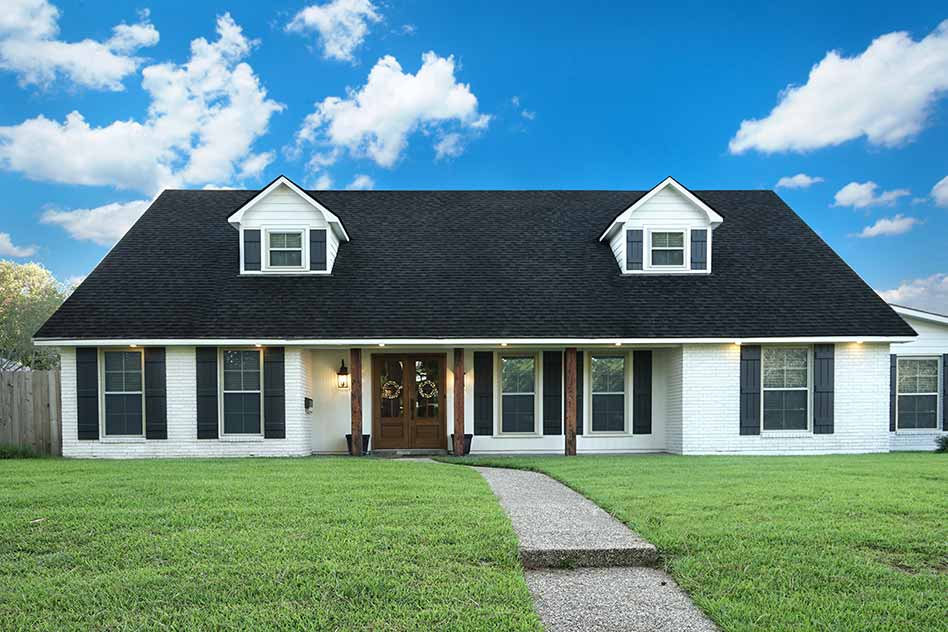

Double pane windows are two panes of glass sealed around a cavity that is filled with air or an inert gas, most often argon. That sealed cavity slows heat moving through the opening, which lowers cooling load, steadies indoor temperature, and cuts outside noise. Below we break down what sits inside the sealed unit, which gas fills it, how the performance actually gets measured, why the rating that matters in a cooling climate differs from the one northern homeowners chase, what makes a unit fog up, and where a double pane assembly stops being enough on its own.
Key Takeaways
- A double pane window is an insulated glass unit: two panes, a spacer, a desiccant, two seals, and a gas fill.
- Argon is the standard fill because it conducts heat about 34 percent more slowly than air and runs about 38 percent denser.
- Published R-values disagree. MI Windows puts a double pane unit near R-2.0, while Pella publishes R-3 to R-5. Both are correct under different measurement conditions.
- U-factor is the metric the industry actually rates windows by, and R-value is simply its inverse.
- In a cooling climate the governing number is Solar Heat Gain Coefficient. ENERGY STAR Version 7.0 sets the Southern zone at U-factor 0.32 or lower and SHGC 0.23 or lower.
- Sealed units typically last 15 to 25 years before the edge seal degrades, and a fogged unit is replaced rather than resealed.
- Two panes of ordinary glass add almost nothing to security or debris resistance. Lamination is what does that.
- A plain insulated unit does not satisfy opening protection in the High-Velocity Hurricane Zone. A laminated insulated glass unit handles thermal and structural duty in one assembly.
What Are Double Pane Windows?
Double pane windows are windows built with two panes of glass separated by a sealed insulating space rather than a single sheet of glass. The industry calls the finished assembly an insulated glass unit (IGU), and you will see both terms used for the same product.
The same product goes by several names in the field: double pane, dual pane, double glazed, and insulated glazing all describe identical construction. That construction gets glazed into a sash, and the sash sits in the frame, which means the glass package and the window are two separate specifications chosen independently of each other.
Choosing them independently matters more than most homeowners expect. A well-built frame carrying a weak glass package underperforms, and an excellent glass package in a poorly sealed frame leaks air around the perimeter regardless of what the glass can do.
What Is Between Double Pane Windows?
Between double pane windows sits a sealed cavity holding a gas fill, bounded by a spacer bar, a desiccant, and two separate seals. Most articles describe the airspace and stop there, which skips the parts that determine how long the unit lasts.
Lasting performance comes from six components working together:
- Two panes of glass, typically 1/8 inch to 1/4 inch each
- A spacer bar running the full perimeter, holding the panes at a fixed distance, commonly 1/2 inch
- A desiccant packed inside the hollow spacer, which absorbs residual moisture sealed in at the factory
- A primary seal of polyisobutylene (PIB), the gas barrier that keeps the fill in and water vapor out
- A secondary seal of silicone or polysulfide, which carries structural load and adds a second moisture barrier
- The gas fill itself, occupying the cavity between the panes
The primary seal decides the unit's service life, since everything visible about a failed window traces back to that one thin band of butyl giving up. That is also why the makeup of an impact glass assembly gets specified as a complete build rather than as a glass thickness alone.
What Gas Is in Double Pane Windows?
The gas in double pane windows is argon in most modern units, plain air in budget units, and krypton in a small number of high-performance ones. Argon has been the default fill for decades because it costs very little and performs measurably better than air.
Performing better than air comes down to two physical properties. Argon conducts heat roughly 34 percent more slowly than air, and it runs roughly 38 percent denser. Slower conduction reduces heat crossing the cavity directly, and higher density suppresses the convection currents that would otherwise circulate heat from the warm pane to the cool one. Published glazing data puts the result at a U-factor 10 to 15 percent lower than the same unit filled with air.
Air-filled units still exist, and they still outperform single pane glass. Krypton sits at the opposite end, performing better than argon in narrow cavities but costing enough that it appears mainly in triple pane assemblies. For most homes an argon fill paired with a coating does the work, and specifying it correctly is part of any glass glazing scope.
What Do Double Pane Windows Do?
Double pane windows slow the movement of heat through the opening, reduce outside noise, and keep the interior glass surface closer to room temperature. Those three effects come from the same sealed cavity doing the same job.
The job is resisting three modes of heat transfer at once. Conduction moves heat directly through solid glass, and a second pane plus a gas gap interrupts that path. Convection circulates heat within the cavity, and a dense fill suppresses it. Radiation passes straight through clear glass, which is where a Low-E coating enters, since the gas fill alone does nothing about radiant heat.
Radiant heat is the dominant load in a hot, sunny climate, which is why the coating matters more here than the gas does. The U.S. Department of Energy reports that heat gain and loss through windows accounts for 25 to 30 percent of residential heating and cooling energy use, and ENERGY STAR puts windows at 45 percent of a home's total heat gain or loss.
Are Double Pane Windows Insulated?
Yes, double pane windows are insulated, and insulated glass unit is the technical name for the assembly. The insulation is the sealed cavity rather than any material packed into the window.
Packed material would block the view, so the cavity does the work instead by trapping a still layer of low-conductivity gas. A still gas layer is a genuinely effective insulator, which is the same principle behind a thermos and behind the air pockets in fiberglass batt.
Batt insulation in a wall reaches R-13 or higher, and no window comes close to that figure. Glass will always be the weakest thermal point in the building envelope, which is why the goal with impact windows is minimizing a loss that cannot be eliminated rather than matching wall performance.
What Is the R-Value of Double Pane Windows?
The R-value of double pane windows runs from about R-2.0 for a plain air-filled unit to R-3 through R-5 for a Low-E unit with argon. Published figures disagree on this point, and the disagreement confuses a lot of homeowners.
Homeowners comparing sources will find MI Windows and Doors putting a double pane unit at roughly R-2.0 against R-1.7 for single pane, while Pella publishes R-3 to R-5 for double pane and R-6 to R-9 for triple pane. Neither source is wrong. Three variables explain the spread: whether the number describes the center of the glass or the whole window including frame and edge effects, whether a Low-E coating is included, and whether the cavity holds argon or air.
Air-filled clear double glazing genuinely lands near R-2. Low-E glazing with argon genuinely reaches R-3 to R-5. A quote listing an R-value with no qualifier attached gives you a number that is not comparable to anything, which is one reason the industry rates windows by a different measure entirely.
Why U-Factor and SHGC Matter More Than R-Value in Florida
U-factor and Solar Heat Gain Coefficient (SHGC) matter more than R-value in Florida because windows are rated by U-factor industry-wide and because solar heat, not conducted heat, drives the cooling load here. R-value is the inverse of U-factor, so a window rated U-0.25 works out to roughly R-4.
Roughly R-4 sounds modest, and the second number is where a hot-climate home is won or lost. SHGC measures how much solar radiation passes through the assembly on a scale of 0 to 1, and lower is better in a cooling climate. ENERGY STAR Version 7.0 sets the Southern climate zone at U-factor 0.32 or lower with SHGC 0.23 or lower, and the South-Central zone at U-factor 0.28 or lower with the same 0.23 ceiling on solar gain.
That ceiling does not apply up north. ENERGY STAR Version 7.0 sets the Northern zone at U-factor 0.22 or lower with a minimum SHGC of 0.17, because a northern home wants some free solar heat in January. Advice written for that climate optimizes the wrong variable for this one. Interior shading from window blinds handles the direct afternoon sun that no coating removes completely.
Glass Package
Typical R-Value
Typical U-Factor
Blocks Solar Heat
Meets HVHZ Opening Protection
Single pane clear
R-0.9 to R-1.7
0.90 to 1.10
No
No
Double pane clear, air filled
R-2.0
0.45 to 0.55
Minimal
No
Double pane Low-E, argon filled
R-3 to R-5
0.25 to 0.35
Yes
No
Triple pane Low-E, argon filled
R-6 to R-9
0.15 to 0.22
Yes
No
Laminated insulated impact glass
R-3 to R-5
0.25 to 0.35
Yes
Yes, with a valid product approval
Sources: R-value ranges for double and triple pane per published glass package data from Pella; the R-2.0 double pane and R-1.7 single pane figures per MI Windows and Doors; U-factor ranges derived from the inverse relationship between R-value and U-factor as published in fenestration rating guidance; opening protection status per Florida Building Code Chapter 16 and Miami-Dade TAS 201 product approval requirements. Values vary by manufacturer, coating, cavity width, and frame material.
Are Double Pane Windows Worth It?
Double pane windows are worth it as a replacement for single pane glass, and the published savings estimates vary widely enough to deserve a careful look. MI Windows and Doors puts the annual saving at roughly 12 percent against single pane. Feldco puts it at 20 to 30 percent.
Twenty to thirty percent and twelve percent describe very different outcomes, and neither source attaches a climate zone or a baseline home to the figure. That is the honest state of the published data. Savings depend on how many windows a home has, which direction they face, how leaky the existing units are, what the local climate demands, and how the home is conditioned.
Conditioning matters most in a cooling-dominated market. A South Florida home runs air conditioning most of the year, so a coating that rejects solar heat produces a larger and steadier return here than the same coating produces in a heating-dominated market. We decline to publish a savings percentage of our own, because an honest one would have to be calculated for a specific house.
Are New Double Pane Windows Better Than Old Ones?
Yes, new double pane windows are substantially better than old ones, and the improvements sit in three components older units did not have. A unit built in 1995 and a unit built today share a name and very little else.
Very little else starts with the coating. Low-E coatings are microscopically thin metallic layers applied to a glass surface, and modern solar-selective versions reject infrared radiation while passing visible light. Older double pane units frequently carried no coating at all, which left radiant heat completely unaddressed.
Unaddressed radiant heat is only the first gap. Older spacers were solid aluminum, which conducts heat straight around the edge of the glass and creates a hot or cold perimeter band. Warm-edge spacers made from stainless steel, foam, or composite cut that bridging substantially. Gas retention improved as well, with modern units built to hold their fill for decades. The number of glass layers is the one part that stayed the same while everything around it advanced.
What Is the Average Lifespan of a Double Pane Window?
The average lifespan of a double pane window is 15 to 25 years before the edge seal degrades, though the glass and frame often remain sound well past that point. The sealed unit is what ages, not the window as a whole.
Aging is driven by thermal cycling. Glass and seal materials expand through the heat of the day and contract overnight, and the primary seal absorbs that movement thousands of times a year until the bond fails. Coastal exposure accelerates it through salt air and constant humidity.
Humidity is also why the gas retention standards exist. ASTM E2188 and E2190 permit a unit to lose up to 10 percent of its gas over the equivalent of ten years of weathering, about 1 percent per year, and the European standard EN 1279-3 requires gas loss of 5 percent or less over 25 years. A twenty-year-old window is not automatically bad. It sits at the age where a fogged pane, a drafty perimeter, or a sash that no longer seals should prompt an inspection rather than an assumption either way.
What Causes Double Pane Windows to Fog Up?
Double pane windows fog up when the edge seal fails, letting the gas fill escape and humid outside air enter the cavity. The haze sits inside the sealed unit, which is why it cannot be wiped away from either face of the glass.
Inside the sealed unit, the failure runs in a predictable order. The primary seal cracks or pulls away. Argon leaves and moist air replaces it. The desiccant inside the spacer absorbs that moisture until it saturates, which can take months or years and explains why fogging often appears long after the seal actually failed. Once the desiccant is spent, water vapor condenses on the inner glass surfaces whenever temperature crosses the dew point.
Crossing the dew point repeatedly leaves mineral deposits etched into the glass, and that etching is the cloudiness that persists even on dry days. Catching seal failure early, before the etching sets in, keeps the problem confined to the sealed unit rather than spreading into the sash and frame.
Should Double Pane Windows Have Condensation?
Double pane windows should never have condensation between the panes, while condensation on either outer surface is normal. Three locations are possible and they mean three completely different things, which is a distinction almost no article draws.
The three locations break down as follows:
- On the exterior face: normal, and a good sign. It means the outer glass is cooler than the humid outdoor air, which indicates the unit is insulating well enough that indoor conditioning is not warming the outer pane.
- On the interior face: normal under specific conditions, and a signal about the room rather than the window. High indoor humidity meeting cool glass produces it. Running the air conditioning, using an exhaust fan, or removing an indoor moisture source resolves it.
- Between the panes: never normal. This is a failed seal, and no amount of ventilation or dehumidification will clear it.
Clearing it is not possible because the moisture sits inside a space with no path out. Sweating on the room side of the glass is a humidity conversation. Sweating inside the glass is a replacement conversation.
Can Double Pane Windows Be Repaired or Resealed?
Double pane windows cannot be meaningfully repaired or resealed once the unit fogs, because the fix is replacing the insulated glass unit rather than restoring it. Services advertising defogging exist, and they address the symptom rather than the cause.
The cause is a broken seal. Defogging works by drilling a small port through the glass, flushing the cavity, and fitting a vent. That removes the visible haze. It also leaves the unit permanently vented, which means the gas fill is gone for good, the desiccant is spent, and the assembly now performs closer to two sheets of single pane glass than to an insulated unit. Any etching already in the glass stays.
Staying with an etched, vented unit makes sense in very few situations. In most cases the sash receives a new insulated glass unit while the frame stays in place, which is a far smaller job than a full window replacement. Manufacturer coverage often applies here as well, and our product warranties address the sealed assembly separately from anything a homeowner's insurance policy covers.
At What Age Should Windows Be Replaced?
Windows should be replaced when they show functional failure rather than at any fixed age, though the 20 to 25 year mark is when most units start producing those signals. Age alone is a poor trigger.
Poor triggers waste money, so condition is the better test. Fogging between the panes, a sash that binds or will not lock, a perimeter you can feel air moving through, visible rot or corrosion in the frame, and rooms that never hold temperature all point toward replacement. Any one of them justifies an inspection.
Inspection also surfaces a trigger unrelated to condition. A home carrying original single pane or non-impact glazing sits outside current code requirements for its region, and that gap widens with every code cycle. In that situation the standard is driving the decision rather than the window, and the window's remaining service life becomes beside the point.
How Hard Is It to Break a Double Pane Window?
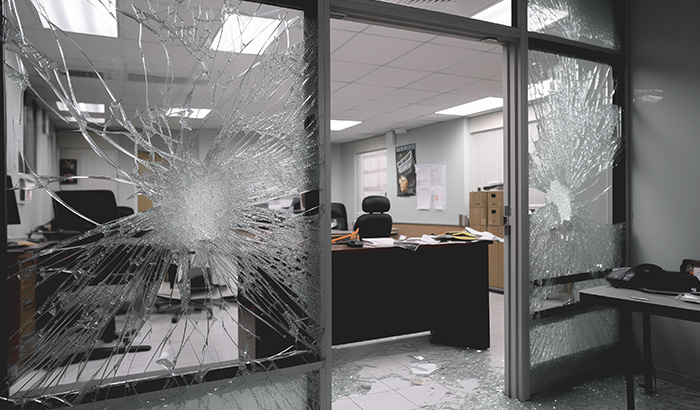
Breaking a double pane window is only marginally harder than breaking a single pane window, because two sheets of ordinary glass do not reinforce each other. This is where the thermal conversation and the safety conversation separate, and they separate sharply.
Sharp separation happens because a second pane adds a second thing to break, not a stronger thing. Both panes in a standard insulated unit are annealed or tempered glass. Annealed glass breaks into shards. Tempered glass is stronger under uniform load and crumbles into small fragments on impact, which is a safety improvement for people nearby and no obstacle at all to entry, since the entire pane clears the opening at once.
Clearing the opening at once is exactly what an intruder or a windborne projectile needs. Wind pressure behaves the same way, and once an opening fails during a storm, pressure enters the building and loads the roof from the inside. The hazards created by broken glass in that scenario extend well past the window itself.
What Is the Most Durable Glass for Windows?
The most durable glass for windows is laminated glass, which bonds two sheets of glass to a plastic interlayer that holds the assembly together after the glass cracks. Durability here means staying in the frame after impact rather than resisting impact without damage.
Damage is expected in the test that defines the category. Miami-Dade Testing Application Standard 201 fires a 9-pound 2x4 at 50 feet per second, which is 34 miles per hour, directly at the assembly. The glass is permitted to crack. What it may not do is allow penetration or leave the frame, and the interlayer is the component that makes that possible.
Making that possible also delivers three side effects homeowners notice more often than the storm performance. The interlayer blocks most ultraviolet radiation, which slows fading of floors and furnishings. It damps sound better than an equivalent thickness of monolithic glass. It resists forced entry, because a cracked laminated pane stays in place and keeps obstructing the opening. Specifying laminated glass buys all of that at once.
Do Double Pane Windows Meet Florida Building Code?
Plain double pane windows do not meet Florida Building Code requirements for opening protection in the High-Velocity Hurricane Zone (HVHZ), because pane count is not what the code evaluates. The code evaluates whether the assembly passed impact and cyclic pressure testing and carries a valid product approval for the design pressure calculated at that opening.
Design pressure comes from the code's wind speed. Florida Building Code Section 1620.2 sets a 3-second gust of 175 miles per hour for Risk Category II buildings in Miami-Dade County and 170 miles per hour in Broward County. An insulated unit built from two tempered panes can be superb thermally and still fail TAS 201 outright, which means a homeowner in Doral shopping on U-factor alone can buy an excellent window that cannot be permitted.
Reading a specification correctly avoids that outcome:
- Find the National Fenestration Rating Council (NFRC) label and record the U-factor and the SHGC.
- Read the glass makeup line and confirm whether the panes are laminated, tempered, or annealed. Laminated is the one that matters for opening protection.
- Locate the Florida Product Approval number or the Miami-Dade Notice of Acceptance (NOA) for the assembly.
- Confirm the approval covers the design pressure calculated for that specific opening.
- Confirm the approval covers the actual size being installed, since approvals list maximum tested dimensions.
The same five checks apply on business properties, where commercial impact glass gets reviewed against the permit set before installation begins.
Is There Something Better Than Double Pane Windows?
There is something better than a double pane window for this climate, and it is a laminated insulated glass unit rather than a triple pane one. The upgrade path most articles recommend is the wrong one for a cooling-dominated, storm-exposed market.
The wrong one is triple pane. Pella publishes R-6 to R-9 for triple pane against R-3 to R-5 for double pane, and that additional insulation genuinely pays off through a long northern winter. It pays off far less across a Florida year, where the load is solar rather than conductive, and a third pane does nothing about solar gain that a coating on a double pane unit does not already do. Triple pane also adds substantial weight, which matters on large openings.
Weight and marginal benefit together make lamination the better place to spend. A laminated insulated unit keeps the sealed cavity and the coating, adds the interlayer, and returns storm compliance, security, ultraviolet control, and sound damping on top of the thermal performance. Homes still carrying older windows gain more from that combination than from any amount of additional glazing.
How Double Pane Windows Improve Your Home
Double pane windows improve your home by lowering cooling load, steadying room-to-room temperature, cutting outside noise, and reducing condensation on the interior glass. Each improvement traces back to the same sealed cavity, and each one compounds when the right coating sits on the right surface.
Compounding is why specification order matters. Getting it right runs like this:
- Start with the code requirement for the opening, since that sets the floor and cannot be traded away.
- Set the SHGC target next, because solar gain is the dominant load in a cooling climate.
- Set the U-factor target after that, aiming at or below the ENERGY STAR Version 7.0 Southern zone threshold.
- Choose the spacer and gas fill, which govern how long the unit holds its rated performance.
- Verify the complete assembly carries the approval, not the glass alone, because frame and anchoring are part of what gets tested.
Testing the complete assembly is the step homeowners rarely hear about and the step that decides whether the rest of the work holds up. We specify impact glass systems carrying the thermal package and the structural approval together, because in this region a window has to do both jobs or it has not really done either.
Frequently Asked Questions
What Year Did Double Pane Windows Become Common?
Double pane windows became common in American residential construction through the 1970s and 1980s, after the energy crises of that era pushed insulation requirements into building codes. Insulated glass was invented decades earlier and used selectively, but widespread adoption in ordinary homes tracks the arrival of energy provisions in code. Homes built before roughly 1980 frequently still carry original single pane glass.
Does Window Glass Get Brittle With Age?
Window glass does not get brittle with age in any practical sense, because glass does not fatigue the way metals and polymers do. What ages around it are the seals, the spacer, the glazing compound, and the frame. A pane that breaks in an old window usually broke from frame movement, a failed setting block, or impact rather than from deterioration of the glass itself.
What Do Double Pane Windows Look Like?
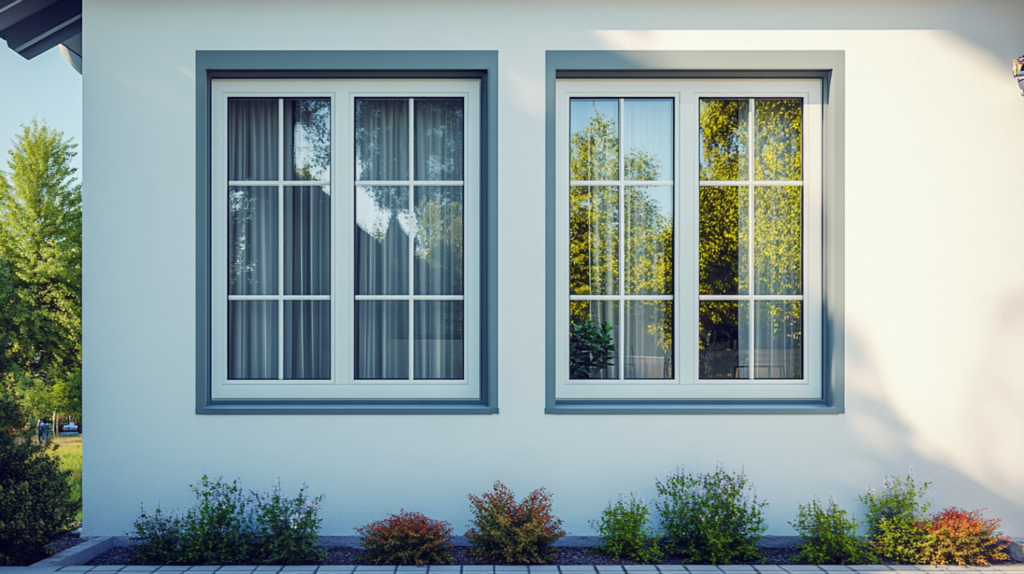
Double pane windows look nearly identical to single pane windows from a normal viewing distance. The visible difference sits at the edge of the glass, where a spacer bar separates the two panes and forms a narrow band just inside the sash. Looking at the glass edge-on from the side is the fastest way to spot it.
Can You Tell If a Window Is Double Pane Without Removing It?
You can tell if a window is double pane without removing it by holding a small flame or a lit phone screen close to the glass at an angle and counting the reflections. A single pane produces two reflections, one from each glass surface. A double pane produces four. A triple pane produces six.
Do Double Pane Windows Reduce Noise?
Double pane windows reduce noise modestly compared to single pane, and the reduction is smaller than most homeowners expect. Two panes of equal thickness resonate together and pass sound at similar frequencies. Meaningful sound control comes from unequal pane thicknesses, a wider cavity, or a laminated interlayer, which damps vibration rather than simply adding a barrier.
What Are Double Pane Storm Windows?
Double pane storm windows are secondary units installed over an existing window to add an insulating air space without replacing the primary window. They are a retrofit approach common in cold climates and in historic properties where the original sash has to stay. They should not be confused with impact-rated windows, which are tested assemblies rather than add-on panels.
Can You Tint Double Pane Windows?
You can tint double pane windows, and applied film carries risks a factory coating does not. Aftermarket film absorbs heat at the glass surface, which raises thermal stress on the pane and can void a manufacturer's glass warranty. Factory-applied Low-E coatings sit on an interior surface inside the sealed cavity and deliver solar control without those tradeoffs, so confirm warranty terms before adding film to a sealed unit.
The Bottom Line
A double pane window is two panes of glass sealed around a gas-filled cavity, held apart by a spacer and held together by two seals, and it improves a home by slowing heat transfer, softening noise, and keeping the interior glass closer to room temperature. Published R-values disagree because they measure different things, U-factor is the metric the industry actually uses, and in a cooling climate Solar Heat Gain Coefficient is the number that decides your summer electric bill. Sealed units last 15 to 25 years, a fogged one gets replaced rather than resealed, and the coating and spacer matter more than the pane count.
Where the standard advice breaks down is on strength. Two panes of ordinary glass are barely harder to break than one, and a plain insulated unit cannot be permitted as opening protection here no matter how well it performs thermally. The assembly satisfying both requirements at once is a laminated insulated glass unit, which keeps every thermal advantage of double glazing and adds an interlayer that holds the glass in the frame after impact.
Our team at ASP Windows & Doors has spent two decades specifying glass packages that have to clear a product approval and an energy target in the same submittal.
If you want to compare glass makeups side by side rather than on a spec sheet, the Doral showroom keeps them cut and sectioned so you can see the interlayer and the spacer for yourself. When you are ready to talk through your openings, request a free estimate and we will take it from there.
Now Accepting Appointments
Proudly serving homeowners and businesses across South Florida and Southwest Florida. Book your visit and let our experts help protect and upgrade your space.
.avif)
.avif)
.avif)
%201.avif)
Insights & Resources
Stay informed with expert tips on impact windows, hurricane protection, and South Florida building standards.


%201.webp)
%201%20(1).webp)
%201.svg)
%201%20(1)%20(1).webp)
.png%20(1).webp)
.png.webp)
.avif)
.avif)


.avif)


.png)
.png)