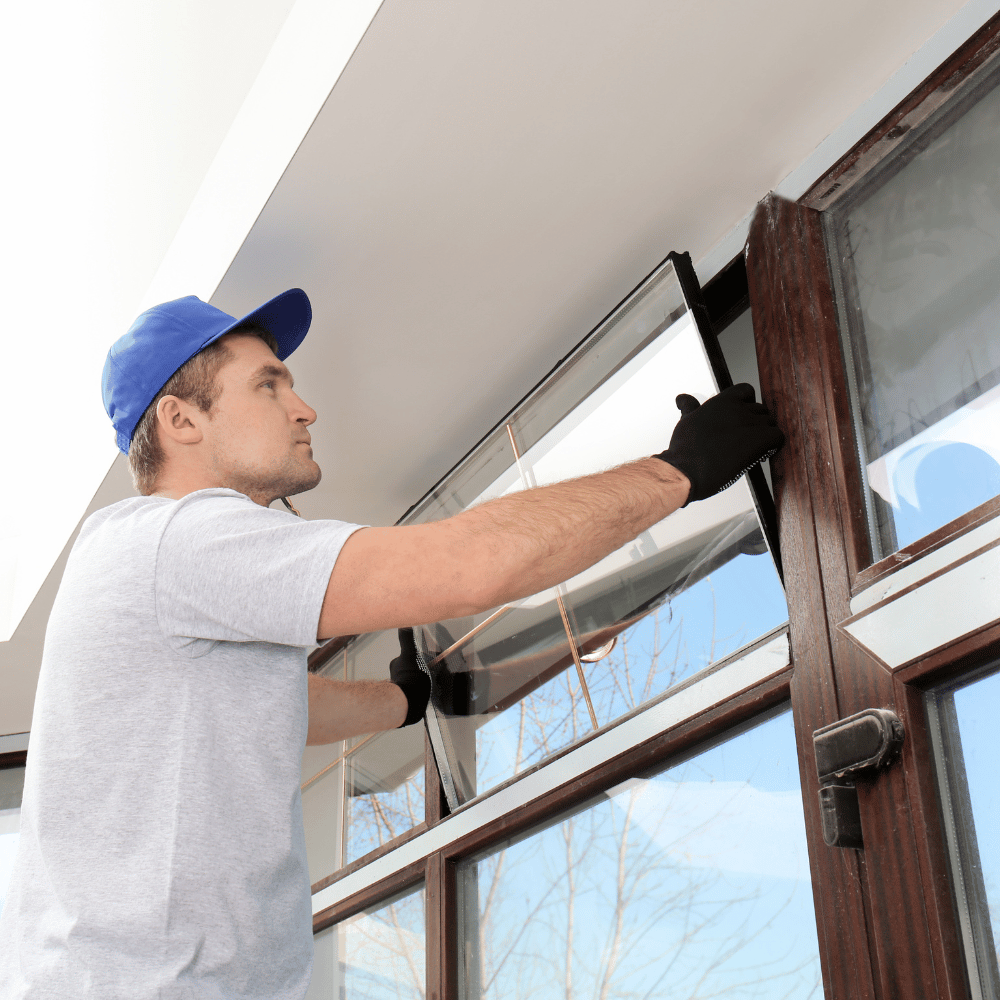
How Do You Repair French Doors and What to Know
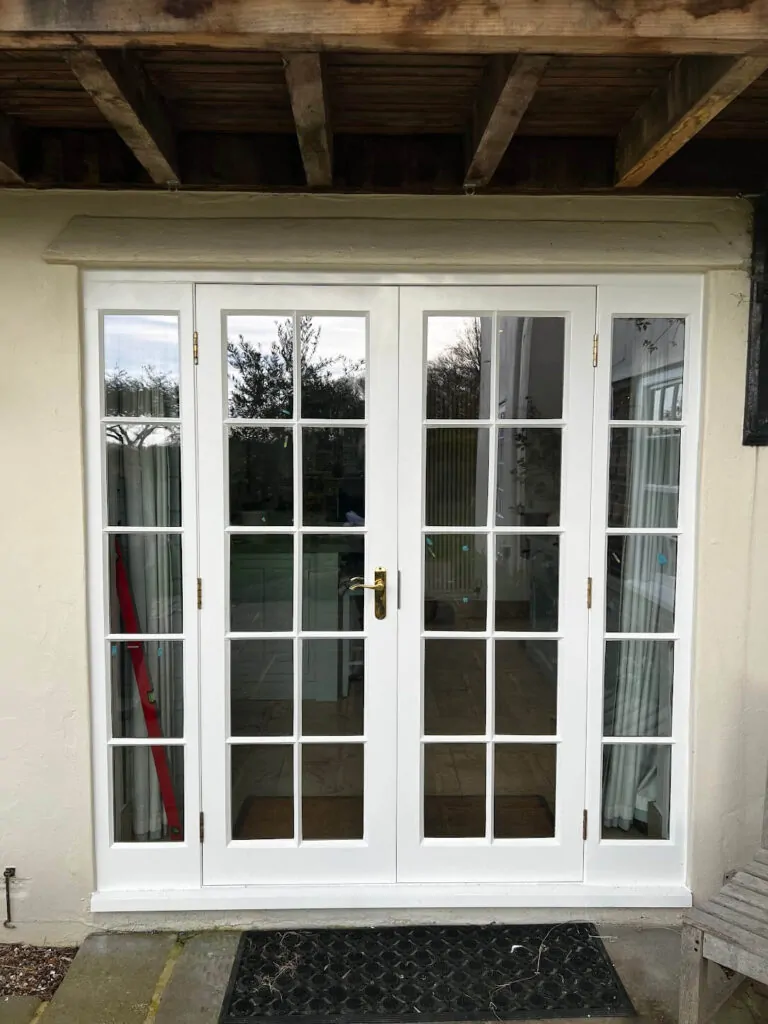

You repair French doors by diagnosing the alignment before replacing anything, because alignment causes most of the symptoms homeowners describe as separate problems. A door that sticks at one corner, refuses to latch, drags on the threshold, and leaks air at the center is usually one problem wearing four disguises, and that problem is normally a hinge that has lost its grip on the frame. This article walks through the symptoms in the order they actually cascade, explains how to read the gap around the doors to find the cause, covers the seal and hardware fixes that follow, and ends with the conditions that mean a door is past repairing. Along the way it answers the sizing, security, and replacement questions most people ask once the repair conversation starts.
Key Takeaways
- Diagnose alignment before replacing weatherstripping, hardware, or anything else, since misalignment is what makes good seals and good locks fail.
- A correctly hung pair of French doors shows an even reveal of roughly 1/8 inch all the way around.
- Where the gap is tight tells you the cause: tight at the top latch corner points to a sagging hinge, tight at the bottom points to the threshold or the rail, uneven side to side points to a racked frame.
- The standard first fix for sagging is replacing short hinge screws with longer ones, roughly 1.5 to 3 inches, that reach solid framing behind the jamb.
- Drafts at the center where the two doors meet are an astragal problem, not a weatherstripping problem.
- Near the coast, hardware fails before structure does, because salt aerosol attacks multi-point locks, shoot bolts, and hinges first.
- On an impact-rated door the hardware is part of the approved assembly, so generic replacement parts can take the opening out of its rating.
- Planing a swollen door is a northern-climate fix that backfires in year-round humidity, since the door shrinks back and leaves a permanent gap.
How Do You Repair French Doors?
You repair French doors by working through four problem families in order: alignment, sealing, hardware, and material damage. Order matters more than technique here, because three of those four families produce symptoms that look like the others.
Alignment comes first every time. A door hanging even a quarter inch out of position will bind on the jamb, miss the strike plate, compress its weatherstripping unevenly, and let air through at the center, which is four complaints from one cause. Replacing the weatherstripping on a misaligned door wastes the weatherstripping.
Sealing comes second, hardware third, and material damage last, because material damage is the family that usually ends the repair conversation rather than continuing it. Working in that order also saves money, since the alignment fixes are the cheapest ones on the list.
Why Won't My French Doors Close?
French doors won't close because something has moved: the hinges, the frame, the threshold, or the door panels themselves. Something moving is the common thread, and the gap around the doors records which one it was.
That gap is called the reveal, and reading it is the fastest diagnosis available. Work through this sequence before touching a tool:
- Close both doors and look at the reveal all the way around. A correctly hung pair shows a consistent gap of roughly 1/8 inch at the top, sides, and center.
- Find where the gap closes up. The tight spot is where the door is making contact, and its location identifies the cause.
- Tight at the top of the latch side means the door has dropped on its hinges, which is the most common condition by a wide margin.
- Tight at the bottom points to the threshold, a settled frame, or a swollen bottom rail rather than to the hinges.
- Uneven side to side, with the center gap tapering, means the frame itself is out of square, usually from settling.
- Check the hinge screws by hand. Turn each one. A screw that spins without tightening has lost its grip, which is the single most frequent root cause.
- Check whether the latch meets the strike plate with the door held closed by hand. If it lines up when pushed, the problem is the door position rather than the hardware.
- Open and close each door separately. A door that operates fine alone but binds against its partner points to the astragal or the meeting stiles rather than to either hinge set.
Eight checks take about five minutes and they prevent the most common mistake in French door repair, which is fixing the symptom that is easiest to see rather than the one causing it.
How to Fix French Doors That Don't Line Up
French doors that don't line up are corrected by adjusting the hinges first, then the strike plate, and only then by anything more invasive. Hinge adjustment moves the whole door, which is why it comes before adjusting the piece the door is supposed to meet.
Shimming behind a hinge leaf shifts the door slightly within the frame, and most modern hinges on aluminum and fiberglass doors carry adjustment screws that move the panel vertically or laterally without any shimming at all. Those adjustments are designed to be made and remade over the life of the door.
What Are the Common Reasons a Door Won't Close?
The common reasons a door won't close are loose hinge screws, a settled or racked frame, a swollen panel, a misaligned strike plate, and obstruction in the threshold track. Obstruction is worth checking first because it costs nothing: debris, a displaced sweep, or a lifted threshold section will stop a door that is otherwise perfectly hung.
After that the list runs in order of frequency. Loose hinge screws account for most cases, frame movement for most of the rest, and panel swelling almost exclusively on wood doors.
My French Door Is Sagging. What Can I Do to Fix It?
You fix a sagging French door by tightening the hinge screws, and when they will not hold, by replacing them with longer screws that reach the framing behind the jamb. Reaching the framing is the whole point. Short factory screws bite only into the jamb, and once that wood compresses they cannot hold a heavy glazed door.
Longer screws in the range of 1.5 to 3 inches pass through the jamb into the structural framing behind it, which is why the fix lasts where retightening does not. Start with the top hinge, since the top hinge carries the most load and is almost always the one that lets go first.
A stripped screw hole has its own remedy. Filling the hole with wood glue and a hardwood sliver or a matchstick, letting it set, then driving a new screw gives the threads something fresh to bite. Adjustable hinges skip all of this, since turning the adjustment screw lifts a drooping corner directly.
My French Doors Are Catching at the Bottom. How Can I Fix This?
French doors catching at the bottom usually need the threshold adjusted or the sweep replaced rather than the door altered. Altering the door is the irreversible option and it is rarely the right one, which is why it sits at the end of this list rather than the start.
Most exterior French door thresholds are adjustable, with screws along the top that raise or lower the sill cap. Lowering it slightly clears a dragging door and keeps the seal contact that a worn sweep has lost. Check the sweep at the same time, since a compressed or torn sweep drags without sealing.
Planing the bottom of the door is where the standard advice goes wrong in this climate. In a region with year-round humidity a door planed during a swollen period comes back to size later and leaves a permanent gap that no sweep closes properly. If the door is genuinely too tall for its opening, that is a frame or threshold problem, and a service request gets someone out to measure before anything is cut.
How to Fix a Small Gap at the Bottom of French Doors
You fix a small gap at the bottom of French doors by raising the adjustable threshold or installing a door sweep sized to the gap. Sized to the gap is the operative phrase, since a sweep that is too deep drags and wears out while one too shallow seals nothing.
Measure the gap at several points along the bottom before buying anything, because an uneven gap indicates a sagging door or a settled threshold that needs correcting first. Sealing an uneven gap with a thicker sweep treats the symptom and accelerates the wear.
Why Won't My French Doors Latch?
French doors won't latch when the latch and the strike plate no longer line up, which is nearly always a door position problem rather than a hardware failure. Position problems come from the same sagging and settling covered above, which is why latching complaints so often resolve themselves once the hinges are fixed.
Test it directly. Hold the door closed by hand and operate the latch. If it engages under hand pressure, the hardware is fine and the door is sitting low or proud. If it does not engage even then, the mechanism itself needs attention.
Multi-point systems add their own wrinkle. Those locks drive rods into the head and the sill, so all three engagement points have to line up at once, and a door that is slightly out of position will throw the deadbolt while the top rod misses its keeper entirely. The flush bolts on the inactive door are the other frequent culprit, since a bent or seized flush bolt stops the active door from ever seating correctly.
My French Door Is Stuck. What Can I Do to Fix It?
A stuck French door usually needs the lock mechanism lubricated and the inactive panel checked before anything is dismantled. Checking the inactive panel first catches the most common cause, which is a flush bolt that has dropped partway and is holding the pair shut.
Lubrication is the next step and it has a wrong answer. A dry graphite or silicone-based lubricant is correct for locks and latches, while general-purpose penetrating sprays attract dust and grit that gum up the mechanism within months. If the cylinder still will not turn after lubrication, the mechanism is failing internally and needs replacement rather than repair.
My French Doors Don't Seal. What Can I Do to Fix This?
French doors that don't seal need their alignment confirmed first, then their weatherstripping, astragal, and sweep checked in that order. Confirming alignment first matters because a door that does not close squarely cannot compress its seals evenly no matter how new those seals are.
Once alignment is verified, work through the seal points in order of likelihood:
- Perimeter weatherstripping. Compressed flat, torn, or pulled out of its kerf. This is consumable and gets replaced on a cycle rather than when it fails completely.
- The astragal at the center. The vertical strip on the inactive door that the active door closes against. A worn or missing astragal seal is the single most common source of center drafts.
- The door sweep at the bottom. Compressed, torn, or set at the wrong height for the current gap.
- The threshold seal. The gasket the sweep meets, which flattens over time and loses contact.
- Exterior caulk at the frame perimeter. Cracked or pulled away where the frame meets the wall, which leaks air and water without the door being involved at all.
- Glazing seals around the lites. Cracked glazing bead or sealant around the glass panels, more common on older wood doors.
- Weep paths at the sill. Blocked drainage holes push water inward rather than out, which reads as a leak but is a drainage problem.
In this climate weatherstripping is worth inspecting twice a year and planning to replace every two to three years, which is considerably faster than the schedule published for temperate regions.
What Is the Best Door Seal for French Doors?
The best door seal for French doors is a compression seal set into a kerf in the frame rather than an adhesive-backed foam strip. Kerf-in seals stay put, compress consistently, and pull out for replacement without residue, where adhesive foam releases in heat and humidity.
Silicone and EPDM compression seals hold up far better than foam in high heat and sustained UV exposure, both of which are routine here. Match the profile to the existing kerf rather than choosing by material alone, since a seal that does not fit the channel will not compress correctly.
What Can I Use to Fill the Gap Between My Double Doors?
You fill the gap between double doors with an astragal, which is the vertical molding mounted on the inactive door that the active door seals against. An astragal is the purpose-built answer, and it is what manufacturers install for exactly this condition.
Most astragals carry a replaceable gasket, so a center draft often needs only the gasket rather than the whole molding. Foam strips, draft stoppers, and caulk are not substitutes, since the center joint has to open and close daily and anything permanent there stops the doors from working.
What Should the Gap Be Between French Doors?
The gap between French doors should measure roughly 1/8 inch, consistent from top to bottom. Consistency matters more than the exact figure, because a tapering center gap is the clearest sign that one panel has dropped or the frame has racked.
Too tight and the doors rub at the meeting stiles and bind in humid weather. Too wide and the astragal cannot bridge the opening, which no amount of weatherstripping corrects.
Why French Door Repairs Fail Faster Near the Coast
French door repairs fail faster near the coast because salt aerosol attacks the hardware long before anything structural gives out. Hardware failing first inverts the usual pattern, where homeowners expect frames and panels to wear out and hardware to keep working.
Chloride deposits work into hinge barrels, lock cylinders, multi-point gearboxes, and shoot bolt channels, where they hold moisture against metal and seize moving parts. A lock that worked smoothly for years can bind within a single season on an elevation facing open water. Sustained ultraviolet load does the same thing to seals, breaking down gaskets and astragal strips faster than the published replacement intervals assume, which is why coastal French doors need a shorter maintenance cycle than the manufacturer schedule suggests.
Material matters too, and the standard repair advice assumes a door this market rarely has. Wood rot fixes, hand planing, and epoxy consolidation are written for wood doors in temperate climates. Aluminum and fiberglass doors fail through finish degradation, hardware corrosion, and seal fatigue instead, and none of those respond to a wood repair.
There is one more constraint worth knowing before buying any replacement part. On an impact-rated assembly the hardware is part of what was tested and approved, so hinges, locks, and astragals are specified in the approval document. Fitting a generic multi-point lock to an approved door takes the opening outside its tested configuration, which is why replacement hardware for impact doors comes from the manufacturer rather than from a hardware aisle.
When to Repair and When to Replace French Doors
You repair French doors when the problem is isolated and the frame is sound, and you replace them when failures stack or the frame itself has moved. Failures stacking is the clearest signal, because each repair on a compromised door buys less time than the last one.
This is how the decision usually resolves:
That last row carries more weight here than anywhere else in the country. A French door is a large glazed opening, and in Miami-Dade and Broward an unprotected one is both a storm vulnerability and a gap in the wind mitigation credit, which is why replacement with impact French doors is a different decision than a cosmetic upgrade would be.
The working rule the rest of the time is proportional. Once projected repairs over the next few years would exceed roughly half the cost of replacing the door, replacing it starts a fresh service life and a fresh warranty period, and the terms of that period are set out in our warranties.
Storm or impact damage follows different rules again, since a covered peril may put the cost on the policy rather than on the homeowner, and we walk through how homeowners insurance handles that separately.
What to Know Before You Repair or Replace
Before repairing or replacing French doors, know what you actually have: the door type, the opening size, the hardware configuration, and whether the assembly carries a product approval. Knowing the approval status comes first in this market, because it determines whether parts can be swapped freely or have to match a tested configuration.
Opening size is the next thing to establish, and it is where most replacement conversations start. A French door replacement that keeps the existing rough opening is a far simpler project than one that changes it, since changing the opening brings framing, header, and permitting into the job. Any French door installation begins with measuring the opening rather than picking a door.
Configuration is the third piece. Two panels, a panel plus sidelights, inswing or outswing, and which panel is active all affect both the hardware and the price, and outswing configurations are common in coastal construction because wind pressure pushes them closed rather than open.
What's the Difference Between a Double Door and a French Door?
A French door is a type of double door distinguished by glass across most of the panel, while a double door is any pair of doors hung in one opening. Glass area is the distinguishing feature, and it is why French doors are grouped with glazed openings rather than with solid entry doors for code and insurance purposes.
A pair of solid panel doors is a double door and not a French door. That distinction matters practically because glazed openings carry safety glass requirements and, in a wind-borne debris region, opening protection requirements that solid entry doors handle differently.
How Wide Are French Doors?
French doors most commonly span 5 to 6 feet in total width, built as a pair of panels each 30 to 36 inches wide. Pairing is what sets the math: a 5-foot opening takes two 30-inch panels, and a 6-foot opening takes two 36-inch panels.
Wider openings run to 8 feet and beyond, usually by adding fixed sidelights rather than by widening the operating panels, since a very wide swinging panel sags under its own weight over time. Standard panel height is 80 inches, with 96-inch panels common in newer construction. Where an opening is wider than a pair can comfortably cover, sliding glass doors handle the span without the swing clearance a French pair requires.
How Do You Lock French Doors Securely?
You lock French doors securely with a multi-point locking system that engages the head and the sill in addition to the center, rather than with a single deadbolt. Engaging at three points removes the weakness of a pair of doors, which is that the center joint has no frame behind it.
Three elements do the work together. The multi-point mechanism drives rods into keepers at the top and bottom, flush bolts secure the inactive panel into the head and threshold, and long screws through the strike plates into the framing stop the hardware from being pulled through the jamb. Laminated impact glass adds a fourth layer, since it holds together under a strike rather than releasing, and we cover the broader picture in our write-up on door security.
How to Keep French Doors Working
You keep French doors working by lubricating the hardware, clearing the sill, and checking the reveal on a schedule rather than waiting for a symptom. Waiting for a symptom is how a five-minute hinge adjustment becomes a seized lock and a worn-out gasket.
Twice a year, rinse the hardware and the frame with fresh water if you are near open water, clear the weep paths at the sill, and check that the reveal is still even around both panels. Once a year, lubricate hinges, lock cylinders, and multi-point gearboxes with a dry silicone or graphite product, and retighten hinge and strike screws before they loosen enough to let the door drop.
Weatherstripping, astragal gaskets, and sweeps are the consumables. Replacing them on a cycle costs very little and prevents the alignment stress that comes from a door closing against a hardened seal. We lay out the full seasonal routine in our piece on door maintenance.
Frequently Asked Questions
How Long Do French Doors Last?
French doors last 20 to 30 years as a complete assembly, with hardware and seals needing service well before that. Wood doors sit at the lower end in humid coastal conditions without consistent maintenance, while aluminum and fiberglass doors reach the upper end. The sealed glass units inside the panels carry their own shorter life of roughly 15 to 25 years.
Can You Replace French Door Hardware With Any Brand?
You cannot freely replace hardware on an impact-rated French door, because hinges, locks, and astragals are named in the product approval that the assembly was tested under. Fitting non-matching hardware takes the opening outside its approved configuration, which affects the permit record, the manufacturer warranty, and the wind mitigation credit. Non-rated interior doors have no such constraint.
Do French Doors Need to Be Impact Rated in Florida?
Exterior French doors in wind-borne debris regions must carry impact rating or equivalent opening protection, since they are large glazed openings in the building envelope. Miami-Dade and Broward sit inside the High Velocity Hurricane Zone, where products must hold a Florida Product Approval or Notice of Acceptance. Interior French doors used as room dividers carry no such requirement.
Does a Sagging Door Affect the Weather Seal?
A sagging door absolutely affects the weather seal, because the panel no longer compresses its weatherstripping evenly around the perimeter. The gasket flattens permanently where the door presses hard and never contacts where the door pulls away, which is why new weatherstripping on a sagging door fails within a season. Correct the alignment first, then assess the seals.
Can You Replace Just One of Two French Doors?
You can replace just one of two French doors, though matching the existing panel in size, thickness, material, finish, and hardware is often difficult on an older set. The replacement also has to hang and operate identically, since any difference shows immediately at the center joint. On impact-rated assemblies a single-panel swap is generally not possible, because the approval covers the pair as one tested unit.
Does Homeowners Insurance Cover French Door Damage?
Homeowners insurance generally covers French door damage caused by a covered peril such as a storm, flying debris, or forced entry. Wear items including worn weatherstripping, loose hinges, and seized hardware fall outside nearly every policy because they are treated as maintenance. Photographs taken before any cleanup and a written contractor assessment carry the most weight on these claims.
The Bottom Line
Most French door repairs start and end with alignment. Close both panels, read the reveal, find where the gap closes up, and check whether the hinge screws still bite. A door that is tight at the top latch corner has dropped and needs longer hinge screws reaching the framing. One tight at the bottom needs the threshold adjusted or the sweep replaced rather than the panel planed. Drafts at the center are an astragal problem, and a door that will not latch is usually a door that is sitting in the wrong place rather than a lock that has failed. Fix the position first and a surprising number of separate complaints disappear together.
What changes here is how long those fixes hold. Salt aerosol goes after multi-point locks, shoot bolts, and hinges before it touches anything structural, sun breaks down gaskets faster than the published intervals assume, and the hardware on an impact-rated door has to match the approval rather than whatever fits. If your doors are stacking symptoms rather than showing one, or you want someone to tell you honestly whether an adjustment will hold, the team at ASP Windows & Doors is glad to take a look, and a free estimate comes with no obligation attached.
Now Accepting Appointments
Proudly serving homeowners and businesses across South Florida and Southwest Florida. Book your visit and let our experts help protect and upgrade your space.


Insights & Resources
Stay informed with expert tips on impact windows, hurricane protection, and South Florida building standards.