.avif)


How Accurate Are Hurricane Season Predictions?
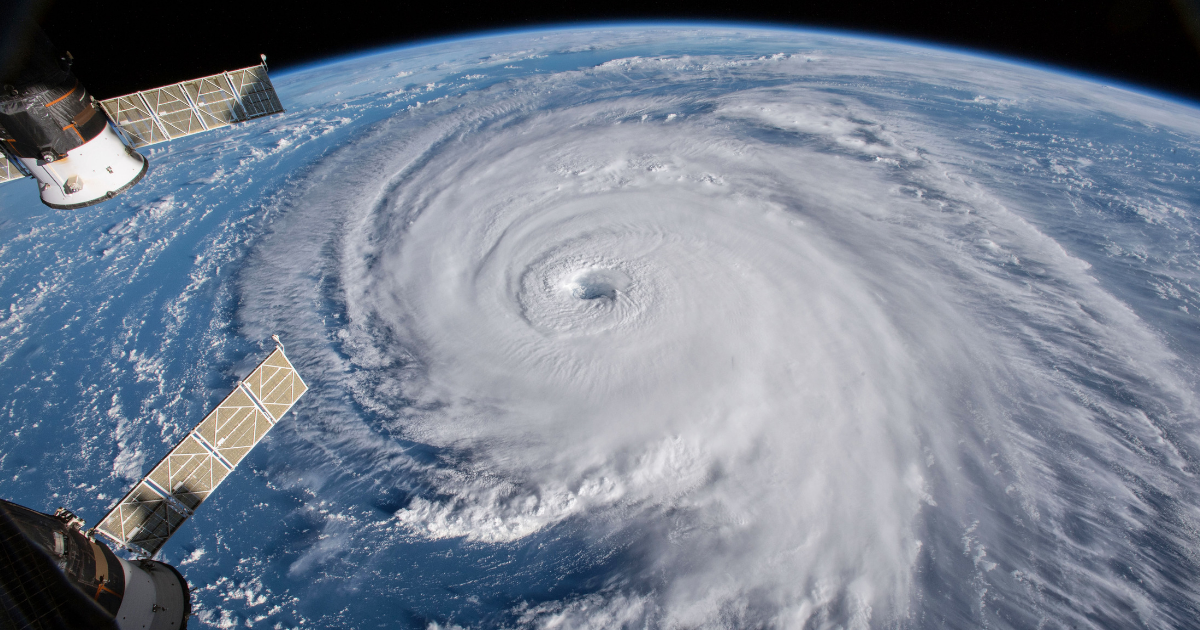

Hurricane season predictions prove 70-80% accurate for total storm counts but only 30-50% accurate for individual storm paths beyond 3 days, with 5-day forecasts averaging 200-mile radius error margins and 24-hour forecasts narrowing to 40-50 mile margins according to National Hurricane Center verification studies. Colorado State University and National Oceanic and Atmospheric Administration issue seasonal predictions 6 months ahead forecasting storm counts within 2-3 storms accuracy while track forecasts improve dramatically as storms develop. The Weather Prediction Center reports modern technology reduced track forecast errors by 50% over past 30 years but intensity prediction accuracy improved only 10-15% demonstrating persistent forecasting challenges.
Hurricane prediction involves two distinct forecast types requiring different methodologies: seasonal predictions estimating total storm activity months ahead, and operational forecasts tracking individual storms providing 5-day path and intensity projections. Each forecast type serves specific purposes with seasonal predictions guiding preparation planning while operational forecasts enable evacuation decisions and emergency response. Understanding forecast accuracy limitations prevents both complacency from inaccurate predictions and unnecessary panic from worst-case scenarios.
This guide explains hurricane prediction methodologies, accuracy statistics, forecast improvement trends, limitation factors, and preparation strategies for Doral, Kendall, and Fort Lauderdale residents navigating forecast uncertainty while protecting families and property.
How Do Meteorologists Predict Hurricane Seasons?
Meteorologists predict hurricane seasons analyzing El Niño/La Niña patterns, Atlantic sea surface temperatures, West African monsoon rainfall, wind shear levels, and atmospheric pressure systems using statistical models correlating these factors with historical storm activity from 170+ years of records. Colorado State University and NOAA issue primary seasonal forecasts in April, May, and August predicting named storm counts, hurricane counts, and major hurricane counts for upcoming seasons. The Climate Prediction Center reports these predictions achieve 70-80% accuracy for total storm counts but cannot predict individual storm locations or timing requiring different forecasting approaches.
Climate Pattern Analysis
El Niño conditions featuring warm Pacific Ocean temperatures increase wind shear over Atlantic Basin suppressing hurricane formation. The increased shear tears apart developing storms preventing organization into hurricanes. El Niño years average 9-10 named storms compared to 14-15 during neutral years. The 2023 El Niño contributed to below-average season despite initial predictions for above-average activity.
La Niña conditions with cool Pacific temperatures reduce Atlantic wind shear enabling storm development. La Niña years produce more frequent and intense hurricanes with 2020 La Niña contributing to record 30 named storms. The Climate Prediction Center monitors Pacific temperatures from August through following May determining El Niño/La Niña status affecting hurricane predictions.
Atlantic sea surface temperatures drive storm intensity with waters above 80°F providing energy for hurricane development. The 2024 season featured record-warm Atlantic temperatures supporting predictions for above-average activity. However, other factors including wind shear and atmospheric dust moderate temperature impacts creating complex interactions.
Statistical Modeling Techniques
Colorado State University pioneered seasonal forecasting in 1984 using statistical relationships between climate indicators and historical storm activity. The models correlate 20+ climate variables with past seasons identifying patterns predicting future activity. Updated forecasts in April, May, and August incorporate latest climate data refining predictions as season approaches.
The statistical approach achieves 75-80% accuracy predicting total named storms within 2-3 storms of actual counts. However, accuracy varies significantly by season with some years showing perfect predictions while others miss by 5-7 storms. The forecasts prove most valuable for emergency planning and insurance industry risk assessment rather than individual storm warnings.
Ensemble forecasting combines multiple models averaging predictions improving accuracy versus single-model approaches. NOAA uses 10+ different statistical and dynamical models generating consensus forecasts. The ensemble approach reduces individual model biases and errors providing more reliable guidance.
Forecast Accuracy Statistics
Seasonal predictions for 2010-2023 averaged 2.8 storms error comparing predicted versus actual named storm counts. The predictions correctly identified above-average, near-average, or below-average seasons in 11 of 14 years achieving 79% directional accuracy. However, specific storm count predictions ranged from perfect matches to 7-storm errors demonstrating inherent uncertainty.
Major hurricane predictions (Category 3+) show lower accuracy averaging 1.2 storm error with wider variability. The 2013 season predicted 3-5 major hurricanes but produced zero while 2020 predicted 3-4 major hurricanes and produced 7. Intensity predictions prove more difficult than frequency predictions due to rapid intensification phenomena.
Landfall location predictions remain impossible at seasonal timeframes. Forecasts predict total basin activity without identifying which areas face threats. The 2017 season correctly predicted above-average activity but couldn't anticipate Harvey's Texas landfall, Irma's Florida strike, or Maria's Puerto Rico devastation. This limitation requires continuous vigilance regardless of seasonal predictions.
Forecast Limitations
Seasonal forecasts cannot predict individual storm tracks, timing, or specific impacts. The 2024 forecast predicting 17-25 named storms provides no information about Florida threat levels. A season with 25 storms all tracking toward Caribbean might produce zero Florida impacts while season with 10 storms featuring two Florida direct hits proves far more damaging locally.
Late-season climate shifts change storm activity mid-season invalidating early predictions. The 2023 season initially predicted above-average activity but El Niño development suppressed storm formation producing below-average results. August forecast updates incorporate these changes improving accuracy but highlighting initial forecast limitations.
Rapid intensification events remain poorly predicted with storms strengthening unexpectedly 24-48 hours before landfall. Hurricane Michael intensified from Category 2 to Category 5 in 24 hours before 2018 Florida Panhandle landfall. These sudden changes complicate evacuation decisions and emergency preparations.
How Accurate Are 5-Day Hurricane Track Forecasts?
Five-day hurricane track forecasts average 200-mile radius errors meaning actual storm center typically falls within 200 miles of predicted location 67% of the time according to National Hurricane Center verification data. Three-day forecasts narrow to 100-mile average errors while 24-hour forecasts achieve 40-50 mile accuracy. The Weather Prediction Center reports track forecast accuracy improved 50% over past 30 years through better satellite data, improved computer models, and enhanced understanding of atmospheric dynamics. However, forecast cones showing potential paths create misconceptions because entire cone areas face threats rather than only predicted center line.
Track Prediction Methodology
Satellite imagery provides continuous storm monitoring tracking location, size, intensity, and structure. Geostationary satellites positioned 22,000 miles above Earth capture images every 5-10 minutes showing cloud patterns and storm evolution. Polar-orbiting satellites provide detailed views during periodic passes collecting temperature and moisture data.
Hurricane hunter aircraft fly through storms collecting wind speed, pressure, temperature, and humidity measurements at various altitudes. The reconnaissance missions occur every 6-12 hours during active storms providing ground truth data validating satellite observations. Dropsondes released from aircraft measure atmospheric conditions surrounding storms informing computer models.
Computer models simulate atmospheric physics calculating storm movement based on steering currents, pressure patterns, and ocean temperatures. The Global Forecast System, European Centre for Medium-Range Weather Forecasts, and Hurricane Weather Research and Forecasting models generate multiple predictions. Forecasters analyze model consensus and outliers creating official National Hurricane Center forecasts.
Forecast Cone Interpretation
Forecast cones represent probable track paths with storm centers expected within cones 67% of the time historically. The 67% probability means one-third of storms fall outside cones requiring broader preparation areas. Many residents mistakenly believe only predicted center line faces danger ignoring threats across entire cone widths.
Five-day cones span 300-400 miles width at furthest extent creating large threatened areas. A forecast showing Miami in cone center threatens areas from Key West to West Palm Beach and inland to Lake Okeechobee. The wide cone reflects forecast uncertainty increasing with longer time horizons.
Cones show only center track predictions without indicating storm size. Large hurricanes with 150-mile wind fields extend impacts 75+ miles beyond predicted centers. Hurricane Irma's 2017 Florida approach showed center tracking up east coast while west coast experienced major impacts from storm's extensive width.
Historical Accuracy Trends
Track forecast errors decreased from 350-mile 5-day averages in 1990s to 200-mile averages in 2020s representing 43% improvement. The National Hurricane Center credits improved satellite coverage, better computer models, and enhanced understanding of tropical meteorology. However, improvements plateau in recent years suggesting diminishing returns from additional technology.
Individual storm forecasts vary widely from historical averages. The 2018 Hurricane Florence featured exceptional track forecasts with 5-day predictions within 100 miles of actual landfall. Conversely, 2019 Hurricane Dorian stalled unexpectedly over Bahamas for 24 hours invalidating all previous track forecasts. Recent good performance doesn't guarantee future accuracy.
Right-of-center track bias means storms frequently track north of predicted paths affecting Florida's east coast more than forecasts suggest. Meteorologists account for this bias in forecast discussions but official tracks show most-likely paths. Understanding systematic biases helps residents evaluate personal risk beyond centerline predictions.
Intensity Prediction Challenges
Intensity forecasts show 10-15 mph average error at 24 hours and 20-25 mph error at 5 days demonstrating slower improvement than track predictions. Rapid intensification events catching meteorologists by surprise occur in 20-30% of major hurricanes. Hurricane Michael, Ian, and others strengthened unexpectedly causing underpredicted impacts.
Maximum sustained wind predictions prove difficult because small core structure changes create large intensity variations. Eyewall replacement cycles, dry air intrusion, or ocean temperature changes alter intensity within hours. Computer models struggle capturing these small-scale processes affecting storm strength.
Storm surge predictions depend on accurate track and intensity forecasts plus local geography and tide timing. Small track errors shift maximum surge locations by 50-100 miles dramatically changing threatened communities. The 2017 Hurricane Irma surge predictions showed Tampa Bay facing 10-15 feet but track shift east reduced Tampa surge to 3-5 feet while Naples experienced higher values.
What Factors Make Hurricane Predictions Difficult?
Factors making hurricane predictions difficult include atmospheric chaos theory limiting predictability beyond 5-7 days, rapid intensification from ocean heat content changes, unpredictable storm structure modifications, complex land interactions, and insufficient observations over oceans according to National Hurricane Center research. The American Meteorological Society reports inherent atmospheric uncertainty prevents deterministic forecasts beyond certain time horizons regardless of technology improvements. Understanding these limitations explains why some storms follow predicted paths while others deviate dramatically.
Chaos Theory and Butterfly Effect
Atmospheric systems exhibit sensitive dependence on initial conditions where tiny measurement errors compound exponentially over time. Edward Lorenz's chaos theory research demonstrated weather prediction fundamental limits at 10-14 days regardless of measurement precision or computing power. Hurricane forecasts face similar constraints with small initial condition errors creating large long-range prediction differences.
Computer models require initial atmospheric state data from satellite and aircraft observations. Measurement gaps over oceans and imperfect instrument accuracy create uncertainties. These small errors magnify through model calculations producing divergent predictions. Ensemble forecasting using multiple initial conditions provides probability ranges rather than single deterministic predictions.
Forecast skill decreases rapidly beyond 5 days with 7-day predictions showing limited value for specific locations. However, general threat areas emerge at 7-10 days enabling preliminary preparations. Residents should monitor forecasts continuously as storms approach incorporating updated information into preparation decisions.
Rapid Intensification Events
Rapid intensification defined as 35+ mph wind speed increases within 24 hours occurs through complex ocean-atmosphere interactions. Warm ocean eddies containing deep heat reservoirs provide energy fueling unexpected strengthening. These features measuring 50-100 miles diameter prove difficult detecting with existing ocean observation networks.
Hurricane Michael intensified from 75 mph to 160 mph in 48 hours before 2018 Florida Panhandle landfall. Hurricane Ian strengthened from 120 mph to 155 mph in 24 hours before 2022 Southwest Florida landfall. These events caught forecasters by surprise causing underpredicted impacts and inadequate evacuations.
Improved ocean heat content observations through autonomous underwater vehicles and enhanced satellite measurements show promise for better intensity predictions. However, operational implementation requires years and substantial funding. Current intensity predictions should be viewed skeptically with residents preparing for worst-case scenarios.
Storm Structure Variability
Eyewall replacement cycles occur when outer rain bands organize into secondary eyewalls replacing original structures. This process temporarily weakens storms before reintensification creating 12-36 hour intensity fluctuations. Predicting these cycles proves difficult because small-scale processes trigger replacements unpredictably.
Asymmetric storm structures develop from wind shear, dry air intrusion, or land interaction creating unequal wind distributions. These asymmetries shift strongest winds and heaviest rainfall away from storm centers complicating impact predictions. Computer models struggle simulating asymmetries causing forecast errors.
Size changes affect impact areas independent of intensity. Compact hurricanes with 30-mile wind fields create concentrated damage while expansive systems with 100+ mile fields distribute impacts broadly. Size predictions prove unreliable because expansion and contraction mechanisms remain poorly understood.
Data Gaps and Observation Challenges
Ocean observations remain sparse with most Atlantic lacking routine measurements. Satellite data provides surface information but subsurface heat content requires in-situ measurements from ships, buoys, or autonomous vehicles. The limited ocean observation network creates model initialization uncertainties.
Aircraft reconnaissance occurs only for named storms threatening land leaving many storms insufficiently observed. Pacific and Indian Ocean basins lack routine aircraft missions relying on satellite estimates containing larger uncertainties. Atlantic storms receive more attention but still face observation gaps between aircraft passes.
Remote sensing technology improvements including microwave and scatterometer satellites enhanced observations but cannot replace in-situ measurements. Proposed observation network expansions would improve forecasts but require sustained funding commitments. Current observation limitations constrain forecast accuracy regardless of model sophistication.
How Should Floridians Prepare Despite Forecast Uncertainty?
Floridians should prepare despite forecast uncertainty by installing permanent impact windows and doors eliminating pre-storm boarding stress, maintaining 7-day emergency supplies, creating evacuation plans with multiple routes, obtaining adequate insurance with reviewed coverage limits, and monitoring forecasts from reliable sources beginning June 1 annually. The Federal Emergency Management Agency reports households completing comprehensive preparation experience 70% less property damage and 90% fewer injuries regardless of forecast accuracy. Preparation activities beginning in May ensure readiness before season starts preventing emergency scrambles when storms threaten.
Permanent Home Protection
Impact windows and doors provide Category 5 hurricane protection without pre-storm installation requirements. The permanent systems withstand 150-200 mph winds and debris impacts preventing window failures causing 60% of hurricane damage. Installation costs $15,000-40,000 create peace of mind eliminating forecast-dependent preparation timing.
Impact protection qualifies for 8-45% insurance discounts partially offsetting installation costs within 3-5 years. The combined protection and savings justify investments for homeowners planning 7+ year residency. Properties with impact systems sell faster and command premiums reflecting buyer demand for hurricane preparedness.
Alternative protection using storm shutters requires deployment before each threat. Forecast uncertainty complicates deployment timing with early deployment creating living inconvenience while delayed deployment risks inadequate protection. Many homeowners delay until threats appear imminent then face sold-out supplies and unavailable contractors.
Emergency Supply Maintenance
Seventy-two hour supplies including water (1 gallon per person daily), non-perishable food, medications, first aid kits, flashlights, batteries, and important documents enable self-sufficiency during post-storm recovery. Store supplies in waterproof containers checking expiration dates semi-annually. Rotate stored food and batteries preventing waste from expired items.
Generator backup power maintains refrigeration, air conditioning, and communication during extended outages. Portable generators cost $500-2,000 while whole-house systems cost $5,000-15,000 installed. Include generator fuel in emergency supplies calculating consumption rates for expected outage durations.
Cash reserves of $500-1,000 provide purchasing power when electronic payment systems fail. ATMs and credit card readers require electricity unavailable for days or weeks after major hurricanes. Store cash securely in waterproof containers within grab bags enabling rapid evacuation.
Evacuation Planning
Identify evacuation routes from your neighborhood using multiple paths reaching inland safe zones. Drive routes familiarizing family members with landmarks, gas stations, and shelter locations. Download offline maps functioning without cellular data. Book pet-friendly hotels in advance because availability diminishes rapidly when storms threaten.
Determine evacuation triggers based on official orders, forecast confidence, and personal risk tolerance. Residents in mobile homes, low-lying areas, or historic flood zones should evacuate for Category 1+ storms. Elevated homes with impact protection may shelter in place for Category 2-3 storms but should evacuate for Category 4-5 threats.
If you need certified impact window and door installation providing permanent hurricane protection eliminating forecast-dependent preparation stress for your Doral, Kendall, or Fort Lauderdale property, ASP Windows & Doors provides complete solutions meeting Miami-Dade County High Velocity Hurricane Zone requirements. Our experienced team helps homeowners achieve worry-free hurricane preparedness through professional installation and comprehensive product warranties. Call (888) 782-8342 to schedule your free consultation with protection analysis and project estimates. We serve residential and commercial properties throughout Miami-Dade, Broward, and Palm Beach counties with flexible financing enabling protection regardless of forecast accuracy.
Now Accepting Appointments
Proudly serving homeowners and businesses across South Florida and Southwest Florida. Book your visit and let our experts help protect and upgrade your space.
.avif)
.avif)
.avif)
%201.avif)
Insights & Resources
Stay informed with expert tips on impact windows, hurricane protection, and South Florida building standards.



%201.webp)
%201%20(1).webp)


%201.svg)
%201%20(1)%20(1).webp)
.png%20(1).webp)
.png.webp)
.avif)
.avif)


.avif)


.png)
.png)