.avif)


Homes Versus Condos In South Florida: Which Is Right for You?
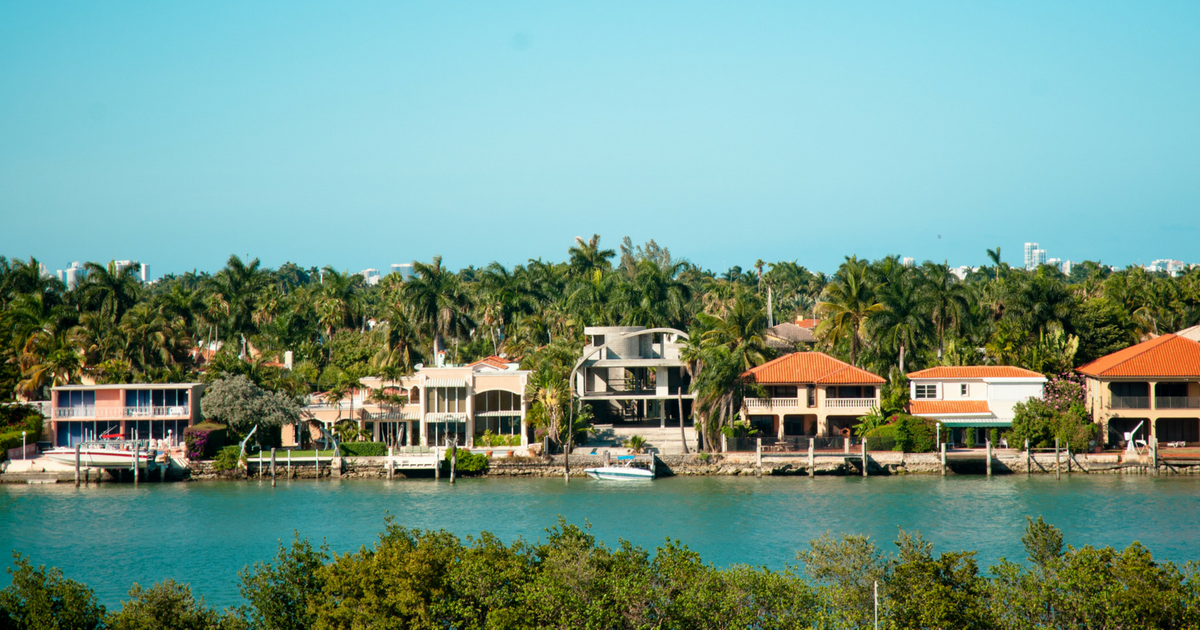

Homes versus condos in South Florida offer distinct advantages with single-family homes providing 2,000-4,000 square feet living space, yard ownership, renovation freedom, and 15-20% better long-term appreciation while condos offer $200,000-400,000 lower purchase prices, maintenance-free living, resort-style amenities, and downtown Miami Beach locations inaccessible to single-family buyers. The Miami Association of Realtors reports median single-family home prices of $620,000 versus median condo prices of $385,000 in 2024 representing $235,000 price differential. Each property type suits different lifestyles, investment strategies, and budget constraints requiring careful analysis before purchasing decisions.
South Florida's real estate market encompasses Miami-Dade, Broward, and Palm Beach counties offering diverse housing options from waterfront mansions to high-rise luxury condos. The National Association of Realtors reports first-time buyers favor condos for affordability while families prefer single-family homes for space and privacy. Understanding advantages and disadvantages of each property type prevents costly mistakes and ensures satisfaction with housing decisions lasting 7-10 years average ownership periods.
This guide compares homes versus condos across purchase price, maintenance responsibilities, appreciation potential, lifestyle considerations, and hidden costs for Doral, Kendall, Fort Lauderdale, and Miami Beach buyers evaluating South Florida real estate options.
Why Do People Buy Condos Instead of Houses?
People buy condos instead of houses for $200,000-300,000 lower purchase prices enabling homeownership otherwise unaffordable, maintenance-free living with exterior upkeep handled by associations, luxury amenities including pools and fitness centers costing $50,000-100,000 individually, prime urban locations in walkable neighborhoods, and simplified vacation home management for seasonal residents. The Urban Land Institute reports millennials and baby boomers drive 65% of condo purchases seeking low-maintenance lifestyles without yard work, exterior repairs, or property management responsibilities.
Affordability and Entry Barriers
Median condo prices of $385,000 in South Florida require $77,000 down payment (20%) and $2,200 monthly mortgage payment at 7% interest rates. Comparable single-family homes averaging $620,000 need $124,000 down payment and $3,500 monthly mortgage creating $47,000 additional down payment burden and $1,300 higher monthly obligations. The lower financial barriers enable younger buyers and single professionals entering real estate markets.
Condo ownership requires HOA fees averaging $400-800 monthly covering exterior maintenance, amenities, insurance, and reserves. While these fees increase housing costs, they replace homeowner responsibilities for roof repairs, painting, landscaping, and pool maintenance costing $3,000-8,000 annually. The predictable monthly expense simplifies budgeting compared to unexpected major repairs depleting savings.
First-time buyer programs including FHA loans accept 3.5% down payments on condos reducing entry barriers to $13,500 on $385,000 purchases. These government-backed programs require lower credit scores and debt-to-income ratios than conventional financing. However, FHA condo approval requires building certification meeting specific standards limiting eligible properties.
Maintenance-Free Living
HOA fees cover all exterior maintenance including roofing, painting, landscaping, pest control, and common area upkeep. Condo owners avoid $5,000-15,000 annual home maintenance expenses itemized as roof repairs ($3,000-8,000), exterior painting ($2,000-5,000), landscaping ($1,200-2,400), and pest control ($300-600). The Florida Climate Action Coalition reports South Florida's humidity, salt air, and intense sun create aggressive maintenance demands exceeding national averages by 40-50%.
Association maintenance staff handle repairs without owner involvement. Call maintenance hotlines reporting issues then staff schedule and complete repairs. This convenience appeals to busy professionals, frequent travelers, and retirees avoiding contractor management hassles. However, response times vary by association efficiency with some buildings addressing issues within 24-48 hours while others require weeks.
Reserve funds accumulated through HOA fees cover major capital improvements including roof replacement, exterior painting, and infrastructure upgrades. Properly funded reserves prevent special assessments requiring $5,000-25,000 lump-sum payments for unexpected major repairs. Review association financial statements and reserve studies during purchase evaluating funding adequacy protecting from future assessments.
Amenities and Lifestyle
Luxury condo buildings offer resort-style amenities including pools, hot tubs, fitness centers, tennis courts, clubhouses, business centers, and concierge services. Constructing equivalent facilities at single-family homes costs $50,000-150,000 plus $3,000-8,000 annual maintenance. The shared cost structure through HOA fees provides amenities unaffordable individually.
Miami Beach and downtown Fort Lauderdale waterfront condos offer direct ocean access, rooftop pools, and marina slips creating vacation home atmosphere. These locations provide walkability to restaurants, entertainment, and beaches eliminating vehicle dependence. Single-family homes in equivalent locations cost $2-5 million exceeding most buyer budgets.
Social aspects including community events, resident parties, and neighbor interactions appeal to singles and empty-nesters seeking social connections. Building lobbies, pools, and amenity areas facilitate casual encounters building friendships. However, mandatory social proximity frustrates privacy-oriented individuals preferring single-family detached living.
Urban Location Access
Downtown Miami, Brickell, South Beach, and Las Olas condos provide walking access to employment, dining, entertainment, and cultural attractions. Commute time reductions of 30-90 minutes daily improve work-life balance and reduce vehicle expenses. The Congress for New Urbanism reports walkable neighborhoods reduce household transportation costs by $5,000-10,000 annually.
Parking challenges in urban cores favor condo living with assigned garage spaces eliminating daily parking searches and fees. Single-family homes in these locations suffer limited street parking and $200-400 monthly garage rental costs. The included parking in condo pricing provides convenience and security.
Public transportation access from urban condos enables car-free or single-vehicle households saving $8,000-12,000 annually on vehicle ownership. Metrorail, Brightline, and bus networks serve major condo concentrations throughout South Florida. However, suburban single-family neighborhoods require vehicle ownership for daily activities.
What Does Dave Ramsey Say About Condos?
Dave Ramsey says condos carry higher financial risks than single-family homes due to HOA fee unpredictability, special assessment potential, association mismanagement, difficult resale during market downturns, and limited appreciation compared to detached housing according to his radio show guidance and published books. Ramsey recommends single-family homes for primary residences and investment properties citing superior long-term wealth building. However, financial experts including Suze Orman and Robert Kiyosaki present more nuanced views recognizing condo benefits for specific situations and buyer profiles.
Ramsey's Condo Concerns
HOA fee increases averaging 3-5% annually compound over ownership periods creating affordability pressure. A $400 monthly fee grows to $720 over 20 years through 3% annual increases. Ramsey emphasizes this unpredictable escalation strains fixed-income retirees and budget-conscious homeowners. Associations can raise fees without individual owner control frustrating cost-conscious buyers.
Special assessments for major repairs or capital improvements require lump-sum payments of $5,000-50,000 with 30-90 days notice. Ramsey cites assessment risk as major condo disadvantage because homeowners cannot control timing or amounts. Underfunded reserve accounts cause frequent assessments in poorly managed buildings. The financial surprise contradicts Ramsey's debt-free living philosophy requiring substantial emergency funds.
Mismanaged associations through board incompetence or corruption create declining property values and quality-of-life issues. Ramsey highlights owner lack of control over building operations as fundamental flaw. While homeowners vote for board members, volunteer boards often lack professional management expertise. Problem associations prove difficult escaping without selling at losses.
Appreciation and Investment Concerns
Single-family home appreciation averages 4-6% annually while condos appreciate 2-4% annually according to National Association of Realtors historical data. The 2% annual difference creates substantial wealth disparities over 20-30 year ownership periods. A $400,000 single-family home appreciating at 5% reaches $1.06 million in 20 years while equivalent condo at 3% appreciation reaches only $722,000 creating $338,000 wealth differential.
Condo oversupply in South Florida markets creates downward price pressure during economic downturns. The 2008-2012 housing crisis saw condo values decline 50-60% while single-family homes dropped 30-40% demonstrating higher volatility. Miami condo inventory exceeds single-family home inventory by 3:1 ratios creating competitive resale environments.
Investor-heavy condo buildings with 30-50% rental units struggle appreciating due to lender financing restrictions. Fannie Mae and Freddie Mac limit purchases in buildings exceeding 25% investor ownership. This financing restriction reduces buyer pools depressing values. Ramsey emphasizes primary residence purchases in owner-occupied neighborhoods avoiding investor concentrations.
Alternative Perspectives
Suze Orman acknowledges condo benefits for young professionals prioritizing urban lifestyle over wealth building. She recommends limiting HOA fees below 25% of mortgage payment and reviewing association financials carefully. Orman suggests 5-7 year ownership plans for condos versus 10+ years for single-family homes recognizing limited appreciation potential.
Robert Kiyosaki views condos as acceptable cash-flow investments when purchase prices enable positive monthly returns after all expenses. He calculates total costs including mortgage, HOA fees, property taxes, and insurance comparing against rental income. Positive cash flow justifies investment despite slower appreciation. However, he prefers single-family rentals for long-term wealth building.
Local real estate experts recognize South Florida condo market nuances including waterfront premium pricing, luxury building resilience, and international buyer demand supporting values. Miami Beach and Sunny Isles luxury condos appreciate competitively with single-family homes in some market cycles. Blanket condemnation ignores market segment differences.
Are Condo Prices Dropping in South Florida?
Condo prices in South Florida show mixed trends with luxury buildings ($1M+) appreciating 5-8% annually while mid-range units ($300K-600K) remain flat or decline 2-5% depending on location, age, and building quality according to Miami Association of Realtors Q4 2024 data. The market bifurcation reflects foreign investment in luxury segments while domestic buyers face affordability challenges and rising insurance costs. Overall median condo prices decreased 3% year-over-year but specific building performance varies dramatically requiring property-level analysis.
Market Segment Analysis
Luxury condos in Miami Beach, Brickell, and Sunny Isles maintain strong pricing supported by international buyers from Latin America, Europe, and Asia seeking safe-haven investments. Buildings exceeding $2M average price show 6-8% annual appreciation with foreign buyers representing 40-50% of purchases. These segments prove resilient during domestic economic uncertainty.
Mid-market condos ($300K-600K) struggle with oversupply from development boom creating 15,000+ new units 2020-2024. Absorption rates lag new construction causing inventory buildup. Developers offer incentives including closing cost assistance, furniture packages, and reduced down payments attempting to move units. These incentives effectively reduce prices 3-5% below asking.
Older buildings requiring major capital improvements suffer 5-10% annual declines as deferred maintenance becomes apparent. Buildings needing roof replacement, concrete restoration, or infrastructure upgrades face special assessments deterring buyers. Savvy investors target these properties for discounts then renovate competing with new construction.
Insurance Cost Impact
Condo insurance rates increased 40-100% during 2022-2024 following Hurricane Ian and industry reforms. Buildings in coastal flood zones experience highest increases with some associations paying $500K-2M annual premiums. These costs pass through HOA fees increasing monthly obligations by $100-300 per unit.
Some insurance carriers exited Florida market reducing competition and increasing rates. Buildings struggle obtaining coverage forcing them into Citizens Property Insurance (state insurer of last resort) at premium rates. The insurance crisis affects condo marketability more than single-family homes due to association-level policy complications.
Buyers increasingly scrutinize building insurance costs during due diligence. Properties with escalating premiums or coverage challenges face buyer resistance. Some lenders require insurance cost disclosure before loan approval. The insurance situation creates headwinds for condo values particularly in coastal zones.
Location-Specific Trends
Miami Beach luxury condos maintain strength with median prices of $850K showing 4% annual appreciation. The limited supply on barrier island with development constraints supports pricing. International buyers view Miami Beach as premier destination justifying premium pricing despite economic uncertainties.
Broward County condos decline 5-8% year-over-year particularly in Fort Lauderdale inland areas. Oversupply from development boom creates buyer markets with inventory exceeding 12-month supply. Buyers negotiate 5-10% below asking prices in competitive situations.
Palm Beach County luxury markets including Boca Raton and Palm Beach show resilience with 2-4% appreciation. Retiree demand and limited new construction support values. However, older buildings face challenges similar to broader market patterns.
If you're purchasing a home or condo in Doral, Kendall, Fort Lauderdale, or Miami Beach and need certified impact window and door installation meeting building requirements, ASP Windows & Doors provides complete solutions for both single-family homes and condominium units. Our experienced team navigates condo association approval processes and building-specific requirements ensuring compliant installations. Call (888) 782-8342 to schedule your free consultation with product recommendations and project estimates for your property type. We serve residential properties throughout Miami-Dade, Broward, and Palm Beach counties with flexible scheduling accommodating both homeowners and condo associations.
Now Accepting Appointments
Proudly serving homeowners and businesses across South Florida and Southwest Florida. Book your visit and let our experts help protect and upgrade your space.
.avif)
.avif)
.avif)
%201.avif)
Insights & Resources
Stay informed with expert tips on impact windows, hurricane protection, and South Florida building standards.


%201.webp)
%201%20(1).webp)


%201.svg)
%201%20(1)%20(1).webp)
.png%20(1).webp)
.png.webp)
.avif)
.avif)


.avif)


.png)
.png)