.avif)


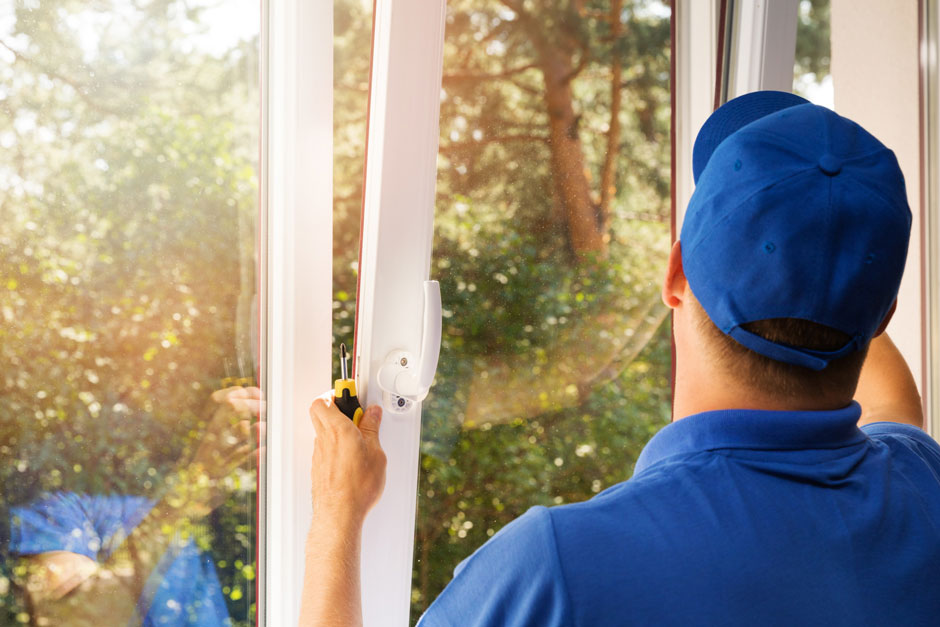

Home insurance covers window replacement when a covered peril caused the damage, and it does not cover windows that failed from age, weather exposure, or lack of maintenance. Wind, hail, fire, theft, vandalism, and falling trees generally trigger coverage. Worn frames, failed seals, and cosmetic wear generally do not. Below we walk through which part of a policy pays, what gets excluded, how a hurricane deductible changes the math in a way most articles skip, how long you have to report the loss, and what a replacement means for your premium afterward. We install windows and doors for a living. We do not sell or administer insurance, so treat this as general background and let your own policy and your own agent settle what your coverage actually does.
Key Takeaways
- Coverage turns on cause. Sudden damage from a listed peril is generally covered; gradual deterioration is not.
- Three parts of a standard policy can apply: dwelling coverage, other structures coverage, and personal liability coverage.
- Failed insulated glass seals are excluded from home insurance. Manufacturer warranties on window seals run up to 20 years, according to This Old House.
- Florida hurricane losses carry a separate percentage deductible. Insurers must offer options of $500, 2 percent, 5 percent, and 10 percent of dwelling limits under Florida Statute 627.701.
- That hurricane deductible applies once per calendar year, not once per storm.
- Florida bars a new or reopened property claim unless notice reaches the insurer within one year of the date of loss, and bars supplemental claims after 18 months.
- Insurance typically pays for like-for-like replacement, which can conflict with current code requirements. Ordinance or law coverage is the endorsement that addresses that gap.
- Florida insurers are required to notify policyholders of available hurricane mitigation discounts, and impact-rated openings are one of the features an inspection documents.
Does Home Insurance Cover Window Replacement?
Home insurance covers window replacement when a covered peril broke the window, and excludes replacement when the window simply wore out. That single distinction resolves the majority of questions homeowners bring to us after a storm.
The distinction exists because property insurance is built to absorb sudden, unexpected events rather than the predictable aging of a building. A hailstone through a pane is sudden. A frame that has been swelling and shrinking through twenty South Florida summers is predictable. Insurers price the first and exclude the second, and every carrier we have seen writes the policy that way.
Writing the policy that way produces a practical rule for homeowners. Before asking whether a claim will pay, identify what caused the damage and when. Cause and timing drive everything that follows.
What Is a Covered Peril for Window Damage?
A covered peril for window damage is a specific risk your policy names as insured, and the common ones are wind, hail, fire, theft, vandalism, and falling objects. Insurance documents use the word peril where most people would say cause.
The causes that appear across standard policies fall into a short list. Storms bring wind, hail, lightning, and windborne debris. Trees and branches come down onto an elevation. Fire and smoke damage glazing directly. Break-ins and attempted break-ins shatter glass at entry points. Vandalism does the same without the theft. Vehicle impact appears on most policies as well.
Most of those causes share a mechanism worth naming: something strikes the glass hard enough to break it. That is the reason a pane's construction matters so much to the outcome, and it is why laminated glass behaves so differently from ordinary glazing when a projectile arrives.
Which Part of Your Policy Pays for Window Replacement?
Three parts of your policy can pay for window replacement: dwelling coverage, other structures coverage, and personal liability coverage. Which one applies depends on where the window sits and whose property it is.
Dwelling coverage handles windows that form part of the main house, and it is the section that pays in most claims. Other structures coverage handles windows on a detached garage, shed, or guest structure. Personal liability coverage handles the case where you or a household member breaks somebody else's window, and it usually carries no deductible at all, according to Allstate.
The table below maps common causes to the section that typically responds.
Cause of Damage
Typically Covered
Policy Section That Applies
Deductible Applies
Wind or hail during a storm
Yes
Dwelling
Yes, hurricane deductible if a named storm
Falling tree or branch
Yes
Dwelling
Yes
Fire
Yes
Dwelling
Yes
Theft or attempted break-in
Yes
Dwelling
Yes
Vandalism
Yes
Dwelling
Yes
Window on a detached shed or garage
Yes
Other structures
Yes
You break a neighbor's window
Yes
Personal liability
Typically no
Failed insulated glass seal
No
Manufacturer warranty instead
Not applicable
Rot, warping, or discoloration
No
Excluded as wear and tear
Not applicable
Cosmetic scratches or chips
No
Excluded as cosmetic
Not applicable
Flood
No
Separate flood policy required
Not applicable
Earthquake
No
Separate policy or endorsement
Not applicable
Sources: coverage sections and peril treatment per published homeowners insurance guidance from Allstate, Progressive, Openly, and Grange Insurance. Hurricane deductible treatment per Florida Statute 627.701. Coverage varies by policy, by carrier, and by state, and this table describes typical treatment rather than the terms of any particular policy.
What Window Damage Is Not Covered by Insurance?
Window damage that is not covered by insurance includes wear and tear, failed seals, cosmetic imperfections, damage traced to poor maintenance, and losses from flood or earthquake. Each exclusion has a reason behind it, and the reasons are consistent across carriers.
Wear and tear covers gradual cracking, aging seals, deteriorating frames, warping, and discolored glass, according to Openly. Poor maintenance covers damage a homeowner could have prevented by addressing a small problem early. Cosmetic damage covers anything that changes how a window looks without affecting how it works or how the structure performs.
Flood and earthquake sit in a different category. Both are excluded from standard homeowners policies as a matter of policy design rather than as a judgment about your upkeep, and both require separate coverage. Storm surge that pushes water through an opening falls under flood, which is a distinction that surprises many coastal homeowners after a hurricane.
Among all of these, one exclusion generates more calls to us than the rest combined. Fog or moisture appearing between two panes points to a broken seal, and the visible seal failure that results is treated as deterioration rather than damage.
Does Home Insurance Cover Broken Window Seals?
Home insurance does not cover broken window seals, because seal failure is classified as wear and tear rather than sudden accidental damage. Both Allstate and Progressive state this directly, and it holds across the carriers we encounter in the field.
Wear and tear is the correct classification from an engineering standpoint. An insulated glass unit relies on a perimeter seal to hold inert gas between the panes, and that seal degrades under repeated thermal cycling. Heat expands the assembly, night cooling contracts it, and after enough cycles the bond gives up. Nothing struck the window. It simply reached the end of its service life.
Service life is where a different instrument takes over. Manufacturers offer seal warranties running up to 20 years, according to This Old House, and that warranty rather than your policy is the document to reach for when condensation appears between panes. Our own product warranties cover the assembly separately from anything your insurer does or does not do.
Does Home Insurance Cover Hurricane Window Damage?
Home insurance covers hurricane window damage, and it applies a different deductible to that loss than it applies to everything else. Wind and windborne debris are covered perils on a standard policy, so the coverage question is usually straightforward. The payout question is not.
The payout question changes because Florida policies carry a separate hurricane deductible that only activates for named storms. Every other claim on the same policy runs against the standard deductible, which is typically a modest flat dollar figure. A hurricane claim runs against a percentage of your dwelling limit instead, and the gap between the two is enormous.
An enormous gap between deductibles is the reason so many South Florida homeowners discover after a storm that a covered loss produced no payment at all. That outcome applies to every opening in the building envelope, windows and impact doors alike, because they all sit under the same dwelling coverage and the same deductible.
How Does a Hurricane Deductible Work?
A hurricane deductible works as a percentage of your Coverage A dwelling limit rather than as a flat dollar amount. Florida Statute 627.701 requires insurers to offer personal residential policyholders hurricane deductible options of $500, 2 percent, 5 percent, and 10 percent of the policy dwelling limits.
Dwelling limits are the figure to run the percentage against, and that figure is printed on your declarations page. It reflects the cost to rebuild the structure, so it is not your purchase price and not your market value. A policy written with a $400,000 dwelling limit and a 5 percent hurricane deductible puts $20,000 of storm damage on the homeowner before the carrier owes anything. The same policy at 2 percent puts $8,000 on the homeowner.
One provision works in your favor here. Under Florida Statute 627.701, the hurricane deductible applies once per calendar year rather than once per storm. A homeowner who absorbs the full deductible after the first named storm of the year does not absorb it again for a second storm in the same calendar year, and that calendar year runs January through December rather than tracking hurricane season.
Should You File a Claim for Window Damage?
You should file a claim for window damage when the loss clearly exceeds your deductible, and you should consider absorbing the cost when it does not. Grange Insurance and Openly both make the same point, and it is honest advice even though it comes from carriers.
Carriers make that point because a claim below the deductible produces no payment while still appearing in your claims history. Claims history is one input insurers weigh at renewal, so a filing that pays nothing can still carry a cost. A single small claim may have little effect, according to Openly, while several claims together can move a premium.
The arithmetic is worth doing before you pick up the phone. Get a written estimate first, compare it against the deductible that actually applies to that specific cause, and file when the gap is meaningful. A single broken pane from a stray ball almost never clears a hurricane deductible, and it frequently does not clear a standard one either.
How Long Do You Have to File a Window Damage Claim?
In Florida you have one year from the date of loss to file a window damage claim, and 18 months to file a supplemental claim on that same loss. Florida Statute 627.70132 states that a claim is barred outright if notice does not reach the insurer inside that window.
The window opens on the date of loss rather than the date you noticed the damage, which is the detail that catches people. For hurricanes, tornadoes, windstorms, and severe rain, the statute defines the date of loss as the date the hurricane made landfall or the date the event was verified by the National Oceanic and Atmospheric Administration. Hidden damage discovered eleven months later runs against the same clock as damage you saw the morning after.
That same clock argues for inspecting the full envelope after any significant storm rather than only the openings that visibly failed. Frames, tracks, and anchors on sliding glass doors take heavy wind loading and can be compromised without a single crack appearing in the glass.
How to Get Insurance to Pay for Window Replacement
To get insurance to pay for window replacement, document the damage thoroughly, report it inside the statutory deadline, and support the claim with a written estimate from a licensed contractor. Documentation quality is what separates a smooth claim from a disputed one.
The sequence below reflects what adjusters ask for on the window claims we get called into:
- Make temporary repairs that prevent further damage, such as boarding an opening or covering it against rain, and keep every receipt. Policies generally require you to mitigate further loss.
- Photograph and video the damage before anything is moved, cleaned, or covered. Capture wide shots showing the opening in context and close shots showing the failure itself.
- Record the date of loss precisely, along with the storm name or the police report number where one applies.
- Report the loss to your agent or carrier. Vandalism and burglary should also go to police, ideally within 24 to 48 hours, according to Openly.
- Obtain a written repair or replacement estimate from a licensed contractor so the file contains an independent figure.
- Keep permits, invoices, product approval documents, and installation records together once work begins.
Records kept this way also serve you long after the claim closes, because they establish what was installed and when.
Will Insurance Pay to Upgrade to Impact Windows?
Insurance typically pays for like-for-like replacement rather than an upgrade, which means a standard claim will not fund a voluntary move to impact-rated glass. Openly states the general rule plainly: a carrier owes windows of similar quality and type to those damaged, and a homeowner wanting better pays the difference.
The difference gets complicated where current code no longer permits the original product. A carrier owing like-for-like replacement of a non-impact window in a jurisdiction that now requires impact-rated openings is owing something that cannot legally be permitted or installed. That conflict is real, and it has a name in policy language.
The name is ordinance or law coverage. This endorsement addresses the additional cost of bringing a repaired or replaced portion of a building up to current code, and it is the provision that determines whether a code-driven upgrade lands on the carrier or on the homeowner. Coverage limits on it vary widely and some policies carry very little, so it is worth locating on your declarations page before a storm rather than after. Where it applies, the path to impact windows after a covered loss can look very different than the like-for-like rule suggests.
Does the Florida Building Code Require Impact Windows on Replacement?
The Florida Building Code requires opening protection on replacement windows throughout the High-Velocity Hurricane Zone, which covers all of Miami-Dade and Broward counties. A permitted replacement in that zone has to use a product carrying a valid approval for the calculated design pressure at that opening.
Design pressure comes from the code's wind speed. Florida Building Code Section 1620.2 sets a 3-second gust of 175 miles per hour for Risk Category II buildings in Miami-Dade County and 170 miles per hour in Broward County. Products earn approval by surviving physical testing against those loads, including the Miami-Dade large missile test under TAS 201, which fires a 9-pound 2x4 at 50 feet per second directly at the assembly.
Assemblies that pass carry documentation, and the permit office checks it. For a homeowner in Doral this turns the upgrade question into a compliance question, because the replacement has to meet the standard regardless of what the damaged window was. The same requirement governs commercial impact windows on business properties, with the permit set specifying anchoring before anything gets ordered.
How Do Impact Windows Affect Your Insurance Premium?
Impact windows affect your insurance premium by qualifying your home for hurricane loss mitigation discounts that Florida insurers are required to offer. Florida Statute 627.711 requires insurers to notify every personal lines residential policyholder, at issuance and at each renewal, of the availability and range of premium discounts for construction features demonstrated to reduce windstorm loss.
Windstorm loss reduction gets assessed across a defined set of features. A mitigation inspection documents:
- Opening protection, meaning impact-rated glazing or approved shutters across windows, doors, and garage doors
- Roof covering and whether it meets current code
- Roof deck attachment, meaning the fastener type and nailing pattern
- Roof-to-wall connection, meaning clips, single wraps, or double wraps
- Roof geometry, meaning hip versus gable
- Secondary water resistance, meaning a sealed roof deck layer
Opening protection sits at the top of that list for a reason, and it is the one category a window and door project can move on its own. We do not quote premium figures, because the discount is set by each carrier's filed rates and by the rest of your home's profile. What we can say is that the framework exists in statute, and that impact-rated windows are one of the features it recognizes.
Who Can Sign a Wind Mitigation Form?
A wind mitigation form can be signed by a licensed general, building, or residential contractor, a licensed professional engineer, a licensed architect, a certified building code inspector, or a qualified home inspector. Florida Statute 627.711(2)(a) lists the authorized signers, and the statute requires that person to inspect the structure personally.
Personal inspection is documented on a specific state form. The Uniform Mitigation Verification Inspection Form, designated OIR-B1-1802 by the Florida Office of Insurance Regulation, remains valid for up to five years provided no material changes are made to the structure and no inaccuracies are found. The Office updated that form effective April 1, 2026 following its most recent mitigation study.
Turning finished work into a documented discount follows a fixed order:
- Complete the installation under a pulled permit and pass the final inspection.
- Collect the product approval documentation for every unit installed.
- Have an inspector authorized under the statute personally inspect the home and complete form OIR-B1-1802.
- Submit the completed form to your insurer.
- Ask the carrier when the credit takes effect, since practice differs on whether it applies mid-term or at renewal.
What Funding Exists If Insurance Does Not Cover Replacement?
The funding that exists if insurance does not cover replacement is a state grant program called My Safe Florida Home, which helps eligible homeowners pay for hurricane hardening improvements including impact-rated windows and doors. The program provides matching grants up to $10,000, with the state contributing two dollars for every dollar the homeowner contributes.
Homeowner eligibility carries several conditions. The published requirements call for a homestead exemption on file with the county property appraiser, an insured value of $700,000 or less, and an original building permit issued before January 1, 2008. Income limits have applied in recent funding cycles, and available funding moves through a priority queue that changes as the Legislature appropriates money.
Money and eligibility rules on state programs shift between cycles, so verify current terms with the program directly rather than relying on any contractor's summary, including ours. One rule holds steady across cycles and is worth stating: work started before grant approval generally disqualifies the application.
Who Pays for Window Replacement in a Condo?
Who pays for window replacement in a condo depends on how the governing documents divide the building envelope between the association and the unit owner. That division is set in the declaration of condominium, and it varies building to building rather than following one statewide rule.
One arrangement treats windows as part of the common elements or limited common elements, which puts replacement on the association and its master policy. Another treats them as part of the unit, which puts replacement on the owner and the owner's HO-6 policy. Many South Florida buildings sit somewhere between the two, assigning the glass to one party and the frame or the exterior finish to the other.
Between the two, association-managed replacements tend to run building-wide rather than unit by unit, because the exterior has to stay uniform and the structural attachments have to be engineered together. That is also true of high-rise windows, where access, staging, and wind loading at elevation make a coordinated project the only practical approach.
Does a Home Warranty Cover Windows?
A home warranty does not cover windows, because home warranty plans exclude structural features of the building. Progressive states this directly: a warranty typically addresses the wear and tear of household appliances and systems rather than structural elements like windows and doors.
Windows and doors therefore fall into a gap between two instruments. Home insurance declines them because seal and frame failure is wear rather than sudden damage. Home warranty plans decline them because they are structure rather than appliance. Homeowners who assume one of the two will respond often find that neither does.
Neither responding is exactly why the manufacturer warranty matters more on windows than on most building components. It is the one instrument written specifically for the failure modes that actually occur, and it carries through on the frame and hardware as well as the glass, including on assemblies like balcony enclosures that combine several systems into one opening.
How to Prevent Window Damage Claims
You prevent window damage claims by maintaining the assembly on a schedule and by removing the hazards most likely to strike it. Insurers expect maintenance, and a claim can be denied where the damage traces back to neglected upkeep, according to Openly.
Upkeep on a South Florida window is a short list:
- Inspect perimeter seals, weatherstripping, and caulking at least twice a year and reapply where they have pulled away.
- Trim trees and overhanging branches back from every elevation before storm season.
- Secure or store outdoor furniture, planters, and grills that can become projectiles in high wind.
- Clean sill tracks so grit does not grind against rollers and hardware.
- Address small cracks and chips promptly rather than waiting for them to propagate.
- Photograph every window while it is intact, once a year, so you hold a dated baseline record if you ever need one.
That last item is the one homeowners skip and later wish they had done. A dated photograph of an undamaged elevation is the cleanest evidence that a loss was sudden, particularly after a storm where windborne debris produced damage across a whole neighborhood at once.
What to Consider Before Replacing Windows After Damage
Before replacing windows after damage, consider four things: what caused the loss, which deductible applies, what current code requires, and what the replacement will do to your premium. Those four questions determine both the cost split and the product.
Cause determines coverage, and it is settled before anything else. Deductible determines whether a covered loss actually pays, and on a named storm that figure can run into five digits on a mid-sized policy. Code determines what product may legally be installed, which in a High-Velocity Hurricane Zone means opening protection regardless of what was there before. Premium determines what the upgrade returns over the years that follow, through the mitigation discount framework in statute.
Timing sits underneath all four. Florida's one-year notice deadline runs from the date of loss, permitting and product lead times add weeks, and grant programs require approval before work begins. Sequencing a window replacement around those constraints is far easier before a storm than during the weeks after one, when every contractor and every adjuster in the region is oversubscribed.
Frequently Asked Questions
Will Filing a Window Claim Raise My Rates?
Filing a window claim may raise your rates, since claims history is one of the factors insurers weigh at renewal. A single small claim tends to have limited effect, while multiple claims can move a premium more noticeably, according to Openly. Comparing the loss against your deductible before filing is the practical safeguard.
Does Home Insurance Cover a Baseball Through My Window?
Home insurance typically covers a baseball through your window when someone else threw it, and typically does not when a member of your own household did. If a neighbor's child breaks your glass, that neighbor's personal liability coverage may respond. Either way the repair often falls below the deductible, which frequently makes the claim not worth filing.
Does Home Insurance Cover Windows on a Detached Garage or Shed?
Home insurance covers windows on a detached garage or shed under other structures coverage rather than dwelling coverage. Other structures coverage carries its own limit, commonly set as a percentage of the dwelling limit, and the same covered perils and deductible rules apply to it.
Does Home Insurance Cover Window Screens?
Home insurance may cover window screens when a covered peril damaged them, and will not cover screens that simply wore out or tore with age. Screens are inexpensive enough that replacement almost always costs less than a deductible, so most screen damage ends up paid out of pocket even when technically covered.
Does Renters Insurance Cover Broken Windows?
Renters insurance does not cover broken windows in the structure itself, because the building belongs to the landlord and falls under the landlord's policy. A renters policy covers personal belongings and personal liability. If a renter breaks a window, the liability portion of that policy may respond to the landlord's claim.
Does Home Insurance Cover Windows Broken by Flooding?
Home insurance does not cover windows broken by flooding, because flood is excluded from standard homeowners policies and requires separate flood coverage. Storm surge is classified as flood rather than as wind, which is a distinction that decides many coastal claims after a hurricane.
Why Do Insurance Companies Deny Window Claims?
Insurance companies deny window claims most often because the damage is classified as wear and tear, because notice arrived after the filing deadline, or because the loss fell below the applicable deductible. Denials also follow where documentation is thin enough that the carrier cannot establish when or how the damage occurred.
Putting It All Together
Home insurance pays for window replacement when a covered peril broke the window, and stops short of paying when the window wore out. The exclusions are consistent across carriers, the hurricane deductible in Florida is large enough to swallow many legitimate claims whole, and the one-year notice deadline in Florida Statute 627.70132 ends the conversation for anyone who waits. Where a claim does pay, it pays like-for-like, and ordinance or law coverage is the provision that decides who absorbs the cost of meeting current code.
The other half of the picture runs in the opposite direction. Impact-rated openings sit at the top of the wind mitigation feature list, Florida insurers are required to disclose the discounts tied to those features, and a state grant program exists for homeowners whose replacement will never be a covered loss at all. Reading your declarations page today, while nothing is broken, is what makes all of that usable later.
Our team at ASP Windows & Doors has spent two decades replacing openings across South Florida, most of them after a storm and some of them well before one.
If you are weighing a replacement and want to see impact-rated assemblies in person, the Doral showroom is open six days a week. Whenever you are ready to talk through your openings, request a free estimate and we will take a look.
Now Accepting Appointments
Proudly serving homeowners and businesses across South Florida and Southwest Florida. Book your visit and let our experts help protect and upgrade your space.
.avif)
.avif)
.avif)
%201.avif)
Insights & Resources
Stay informed with expert tips on impact windows, hurricane protection, and South Florida building standards.



%201.webp)
%201%20(1).webp)
%201.svg)
%201%20(1)%20(1).webp)
.png%20(1).webp)
.png.webp)
.avif)
.avif)


.avif)


.png)
.png)