.avif)


Causes of Window Air Leaks
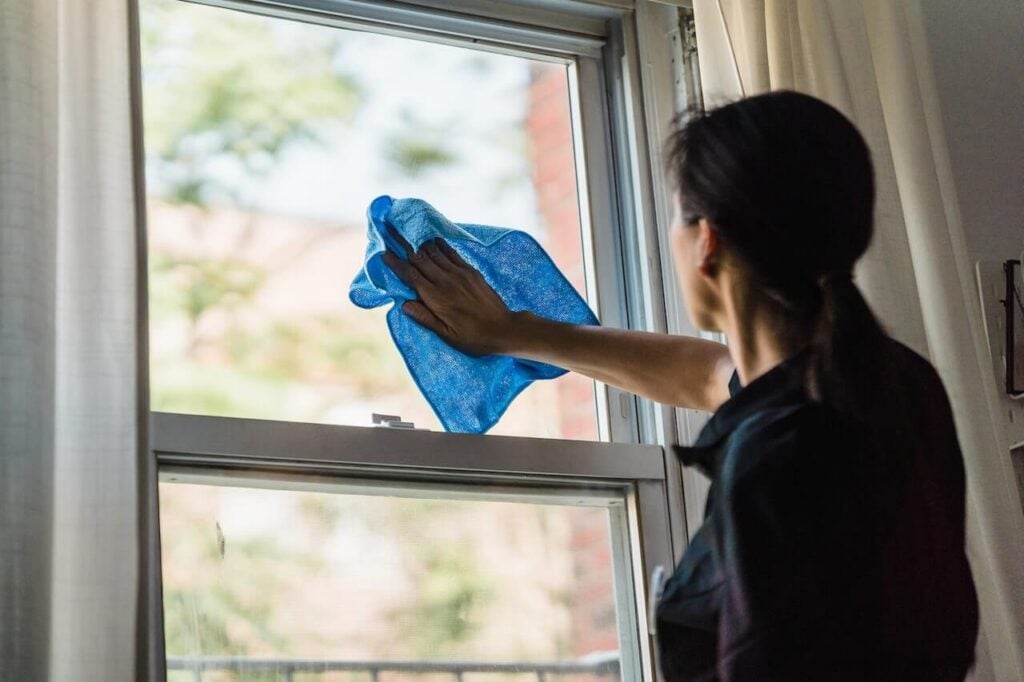

The most common causes of window air leaks are deteriorated caulk, worn-out weatherstripping, failed seals between glass panes, poor installation, warped or damaged frames, house settling, and outdated single-pane glass. According to the U.S. Department of Energy, heat gain and heat loss through windows account for 25% to 30% of residential heating and cooling energy use, and air leaks are a major contributor to that waste. This article breaks down every cause of window air leaks, explains how to identify each one, and covers what it takes to fix them for good.
What Causes Window Air Leaks?
Window air leaks are caused by any gap, crack, or deterioration that allows outside air to pass through or around the window. Some causes develop slowly over years of wear and weather. Others are the result of mistakes made during the original installation. In humid, storm-prone regions like South Florida, the combination of heat, salt air, UV radiation, and high winds accelerates every one of these problems.
According to Energy Star, air leakage accounts for up to 25% to 40% of the energy used for heating and cooling in a typical home. Even a small gap, as thin as 1/8 of an inch under an exterior window, can let in as much outside air as a 2.5-inch hole punched through your wall. That is why finding and fixing the source of the leak matters so much. Here are the most common causes.
Cracked or Deteriorated Caulk
Caulk is the flexible sealant applied where the window frame meets the wall. Over time, caulk dries out, cracks, shrinks, and peels away from the surface. UV radiation from the sun speeds up this process, especially on south- and west-facing windows. Once the caulk cracks, air has a direct path into your home. According to Infinity by Marvin, faulty caulk is the most common cause of window drafts, and it is also one of the easiest to fix.
Silicone caulk lasts longer than acrylic latex, but even the best sealant breaks down after 10 to 20 years of exposure to the elements. In coastal environments, salt air corrodes the bond between the caulk and the frame even faster. If you can see visible gaps, cracks, or peeling around the edges of your window frame, the caulk needs to be removed and replaced.
Worn or Missing Weatherstripping
Weatherstripping is the soft, compressible material that seals the gap between the movable parts of a window, like the sash, and the fixed frame. It is designed to compress when the window closes and spring back when it opens. Over years of use, weatherstripping flattens out, hardens, cracks, and loses its ability to form a tight seal. This allows air to leak through every time the window is closed.
According to the U.S. Department of Energy, adding or replacing weatherstripping is one of the most cost-effective ways to reduce air leakage. Felt, foam, and V-strip are the most common types. Foam tape is the easiest to install but wears out the fastest. V-strip and compression weatherstripping last longer but require more precise installation. If your windows rattle in the wind or you feel a breeze along the edges when the window is shut, the weatherstripping has likely failed.
Failed Insulated Glass Seals
Double-pane and triple-pane windows have factory-sealed glass units filled with insulating gas like argon or krypton. The seal around the edges of the glass holds that gas in place. When the seal breaks, the gas escapes and gets replaced by regular air and moisture. This destroys the window's insulating ability and often causes visible fog between the panes.
According to window industry data, quality glass seals typically last 10 to 20 years. South- and west-facing windows fail sooner because of a process called solar pumping, where daily heating and cooling cycles cause the glass to expand and contract, fatiguing the seal over time. Once the seal fails, the impact glass unit or the entire window needs to be replaced. There is no reliable way to reseal a failed IGU on site.
Poor Installation
A window that was not installed correctly will leak air from day one. Common installation mistakes include uneven shimming, missing insulation around the frame, improperly applied flashing, and gaps between the window unit and the rough opening in the wall. According to Thompson Creek, a window can be brand new and still be drafty if the installation was done poorly.
Installation-related leaks are especially frustrating because they are not visible from the surface. The air enters through hidden gaps behind the interior trim, through wall cavities, or through poorly sealed flashing joints. These problems do not get better over time. They get worse. Professional window installation with proper shimming, sealing, and insulation is the only way to prevent this type of air leak.
Warped or Damaged Frames
Window frames can warp, rot, crack, or swell depending on the material they are made from and the conditions they are exposed to. Wood frames absorb moisture and can rot, swell, or shrink with humidity changes. Vinyl frames can warp under extreme heat. Aluminum frames can corrode, especially in salt-air environments. Any change in the frame shape creates gaps between the sash and the frame that air leaks through.
A warped frame can also prevent the window from closing fully, leaving a gap that no amount of weatherstripping can fix. If your windows are hard to open, hard to close, or do not latch securely, the frame may be the problem. In many cases, the only permanent fix is replacing the entire window with a product built for your specific climate. We often recommend impact-rated impact windows with aluminum or fiberglass frames because they hold their shape in heat, resist corrosion from salt air, and provide superior structural integrity.
House Settling
As a house ages, the foundation shifts and the structure settles. This is a normal process, but it can cause walls to move slightly, which changes the shape of the window openings. When the rough opening shifts, it puts stress on the window frame and can create gaps between the window and the wall that were not there before.
Settlement-related leaks are most common in older homes and in areas with sandy or clay-heavy soil. You may notice that windows that used to close smoothly now stick or leave visible gaps. If multiple windows in your home have started leaking around the same time, house settling could be the underlying cause. A professional inspection can determine whether the windows need to be re-shimmed, re-sealed, or fully replaced.
Aging Single-Pane Windows
Single-pane windows provide almost no insulation. They have an R-value of about 1, compared to R-2 to R-3 for standard double-pane windows and R-5 to R-7 for modern low-E insulated units. According to Energy Star, about 40% of residential windows on existing homes in the United States are still single-pane. These windows do not just feel cold or hot to the touch. They actively allow air and heat to move freely through the glass.
Upgrading from single-pane to double- or triple-pane windows is one of the biggest improvements a homeowner can make. According to the U.S. Department of Energy, replacing single-pane windows with Energy Star certified models can save homeowners $126 to $465 per year in energy costs. For homes in hurricane zones, upgrading to hurricane impact windows provides both energy savings and storm protection in a single product.
Where Do Windows Usually Leak the Most Air From?
Windows usually leak the most air from the junction between the window frame and the wall, the meeting rail where two sashes come together, the bottom of the sash where it meets the sill, and the corners of the frame where caulk tends to fail first. These are the areas with the most joints, the most movement, and the most exposure to weather.
The perimeter of the window, where the frame meets the wall, is the most common leak point. This is where caulk and insulation are supposed to create an airtight barrier. If the insulation behind the trim has settled or was never installed properly, air can travel through the wall cavity and enter the room around the window, even if the window itself is in good condition.
On operable windows like single-hung, double-hung, and sliding doors, the tracks and rails where the sash moves are another common leak zone. These areas rely on weatherstripping and tight tolerances to stay sealed. As the window ages and the hardware loosens, those tolerances widen, and air begins to pass through.
How to Stop Air Leaking From Windows
To stop air leaking from windows, you need to identify the source of the leak first and then apply the right fix. Different causes require different solutions. A caulk problem is not fixed with weatherstripping, and a failed glass seal is not fixed with caulk. Here is what works for each situation.
For cracked or missing caulk, remove the old caulk completely, clean the surface, and apply a fresh bead of high-quality silicone or polyurethane sealant. For worn weatherstripping, peel off the old material and replace it with new weatherstripping rated for your window type. For failed glass seals with fog between the panes, the insulated glass unit or the full window needs to be replaced. For installation-related leaks, a professional needs to remove the trim, inspect the insulation and flashing, and correct the original installation errors.
For older single-pane windows or windows with multiple problems, full replacement is the most cost-effective solution long term. Modern windows with low-E coatings, argon gas fills, and dual-seal construction deliver dramatically better performance. According to the EPA, replacing old drafty windows with Energy Star certified models can lower household energy bills by a national average of 13%.
How Do You Fix a Leaking Window During Heavy Rain?
To fix a leaking window during heavy rain, start by placing towels or a shallow pan under the leak to catch water and prevent floor damage. Then identify where the water is entering. Common entry points include cracked caulk along the exterior frame, deteriorated flashing above the window, a clogged or misaligned drip cap, or a damaged window sill that slopes inward instead of outward.
For a temporary fix, apply waterproof tape or a bead of silicone caulk to the exterior where the water is entering. This can stop the leak until a permanent repair can be made. For a permanent fix, the exterior caulk should be fully replaced, the flashing should be inspected and repaired, and the sill should be checked for proper drainage slope. If the window frame itself is rotted or warped, the window may need to be replaced entirely.
Rain leaks are different from air leaks, but they often share the same root causes: deteriorated caulk, failed seals, and poor flashing. Addressing the underlying issue rather than just patching the symptom is the key to a lasting fix. Our custom design team can evaluate your specific situation and recommend the right solution.
Can I Fix Drafty Windows Myself?
Yes, you can fix drafty windows yourself if the problem is limited to worn caulk or weatherstripping. These are surface-level repairs that require basic tools and materials available at any hardware store. Removing old caulk, cleaning the surface, and applying a new bead of sealant takes about 15 to 30 minutes per window. Replacing weatherstripping is similarly straightforward for most window types.
However, if the air leak is caused by a failed glass seal, a warped frame, poor original installation, or house settling, DIY fixes will not solve the problem. These issues require professional diagnosis and repair. Attempting to fix an installation-related leak without removing the trim and inspecting the underlying flashing and insulation can actually make things worse by trapping moisture inside the wall cavity.
As a general rule, if you can see the source of the draft and it is on the surface, you can probably fix it yourself. If you cannot see where the air is coming from, or if the leak persists after you have re-caulked and replaced the weatherstripping, it is time to call a professional. A proper inspection can pinpoint the exact source and determine whether repair or replacement is the better path.
Common Causes of Window Air Leaks Compared
Sources: U.S. Department of Energy, Energy Star, Thompson Creek, Window Genie, Infinity by Marvin.
Do You Reseal Windows From the Inside or Outside?
You reseal windows from both the inside and outside, depending on where the leak is. Exterior caulking seals the gap between the window frame and the outer wall, keeping rain, wind, and humidity out. Interior caulking seals the gap between the frame and the interior wall, preventing conditioned air from escaping into the wall cavity.
Most air leaks enter from the outside, so exterior resealing is usually the priority. However, interior sealing is just as important for energy efficiency. According to the Chicago Window Expert, air that leaks through interior gaps is often "cavity air," meaning it travels through the wall before reaching the window. Installing gaskets behind electrical outlet covers and switch plates near windows can also help reduce this type of infiltration.
For glass glazing systems in commercial and high-rise buildings, sealing from the exterior requires specialized equipment and professionals trained to work at height. We handle both residential and commercial resealing and replacement across South Florida.
Is It Better to Caulk or Seal Windows?
It is better to use caulk for stationary joints and seals (weatherstripping) for movable parts. Caulk works best where the window frame meets the wall because those surfaces do not move. Weatherstripping works best on sashes, rails, and any part of the window that opens and closes, because it needs to compress and decompress with each use.
Using caulk on a movable joint will prevent the window from operating properly and will crack the first time the window is opened. Using weatherstripping on a stationary joint will not form a tight enough seal. Matching the right product to the right location is the key to a long-lasting, airtight result. If you are sealing both areas at the same time, start with the caulk on the exterior perimeter and then replace the weatherstripping on the operable parts.
How to Check if Home Windows Need Resealed
To check if your home windows need resealed, start with a visual inspection. Walk around the exterior of your home and look at the caulk around every window. If you see cracks, gaps, peeling, or missing sections, the window needs resealing. On the inside, look for condensation between the glass panes, mold or mildew on the frame, peeling paint, or water stains on the sill.
Next, do a draft test. On a windy day, hold your hand near the edges of a closed window and feel for moving air. You can also use a candle or a thin piece of tissue paper. If the flame flickers or the tissue moves, air is getting through. For a more thorough assessment, a professional blower door test can measure exactly how much air your home is losing and pinpoint which windows are the worst offenders.
A good rule of thumb is to inspect your windows at least once a year, ideally before the start of hurricane season or the hottest months. Catching small leaks early prevents them from turning into bigger, more expensive problems. If your windows are more than 15 years old, scheduling a professional inspection is a smart investment. Upgrading aging windows to impact-rated windows is one of the most effective ways to eliminate air leaks, lower energy costs, and protect your home from storm damage all at the same time.
How to Identify a Window Leak
To identify a window leak, look for visible signs first: fog between panes, water stains on the sill or wall below the window, cracked caulk, damaged weatherstripping, or mold growth on or near the frame. Then use one or more of these testing methods to confirm the source.
The candle test is the simplest. Light a candle or incense stick and slowly move it around the perimeter of a closed window. Watch for any flicker or change in the smoke direction. Any movement tells you exactly where the air is entering. The hand test works the same way, using the sensitivity of your skin to detect moving air along the edges and corners of the frame.
For a more precise diagnosis, a thermal imaging camera can detect temperature differences along the window frame and surrounding wall that are invisible to the naked eye. A commercial building with many windows may benefit from a full blower door test combined with thermal imaging to identify every leak point efficiently. These tools take the guesswork out of the process and help prioritize which windows need attention first.
Frequently Asked Questions
Will Homeowners Insurance Cover a Leaky Window?
Homeowners insurance will typically cover a leaky window only if the damage was caused by a sudden, accidental event like a hurricane, fallen tree, or severe storm. Insurance does not cover leaks caused by normal wear and tear, aging, deferred maintenance, or gradual deterioration. If your window was damaged during a storm, file a claim with your insurer and document the damage with photos before making any repairs.
Who Should I Call if My Window Is Leaking?
You should call a licensed window contractor or installer if your window is leaking. A general handyman can handle basic caulking, but if the leak involves a failed glass seal, damaged flashing, frame damage, or installation issues, you need a professional with experience in window systems. For entry doors and windows in hurricane zones, choosing a contractor with Miami-Dade approval experience is especially important.
Can a Handyman Reseal Windows?
A handyman can reseal windows if the job involves replacing exterior caulk or weatherstripping on a standard window. However, if the leak involves a failed insulated glass unit, structural frame damage, or improper flashing, the repair should be handled by a licensed window professional. Incorrect repairs can trap moisture inside the wall and create mold or structural damage that costs far more to fix later.
What Is the Average Cost to Reseal Windows?
The average cost to reseal windows ranges from $50 to $150 per window for professional caulking and weatherstripping work. DIY materials cost about $10 to $20 per window. If the insulated glass unit needs to be replaced, costs are higher and depend on the size and type of window. Full window replacement provides the most comprehensive and long-lasting solution, especially for windows that are more than 15 years old or have multiple issues.
How Much Does It Cost to Have a Leak Detected?
The cost to have a window leak professionally detected ranges from $100 to $400 depending on the method used. A basic visual inspection by a window contractor is often included at no charge as part of a replacement estimate. A blower door test, which measures total home air leakage, typically costs $200 to $400. Thermal imaging can add to the cost but provides the most precise results for pinpointing hidden leaks.
What Is the Cheapest Time of Year to Replace Windows?
The cheapest time of year to replace windows is typically late fall through early spring, when demand for window installation is lower. In South Florida, the months between November and April are ideal because hurricane season has ended, humidity is lower, and contractors have more availability. Scheduling your French doors or window upgrades during the off-season can sometimes result in shorter wait times and better scheduling flexibility.
The Bottom Line
Window air leaks waste energy, drive up utility bills, let in moisture, and make your home less comfortable. The causes range from simple caulk failure to deeper structural issues like poor installation, warped frames, and aging glass. Identifying the source of the leak is the first step. Fixing it with the right solution, whether that is resealing, weatherstripping, or full replacement, is what makes the difference long term.
If you are dealing with drafty or leaky windows, ASP Windows & Doors can help. We have been solving window problems for South Florida homeowners and building owners for over 20 years. Call us at (888) 782-8342 for a free estimate.
Now Accepting Appointments
Proudly serving homeowners and businesses across South Florida and Southwest Florida. Book your visit and let our experts help protect and upgrade your space.
.avif)
.avif)
.avif)
%201.avif)
Insights & Resources
Stay informed with expert tips on impact windows, hurricane protection, and South Florida building standards.


%201.webp)
%201%20(1).webp)

%201.svg)
%201%20(1)%20(1).webp)
.png%20(1).webp)
.png.webp)
.avif)
.avif)


.avif)


.png)
.png)