.avif)


Can a Bullet Go Through Impact Windows?

Yes, a bullet can go through impact windows in most situations. Impact windows are built to stop hurricane debris and resist high winds, not to stop bullets. While their laminated glass construction may slow down, deflect, or partially stop certain low-caliber rounds under specific conditions, they are not designed, tested, or rated for ballistic resistance. Bullet-resistant glass is a completely different product that is thicker, heavier, and engineered to absorb the kinetic energy of a fired round. According to Underwriters Laboratories (UL), the organization that sets the UL 752 ballistic resistance standard, a product must pass specific live-fire testing to earn any level of bullet resistance rating. Impact windows are never tested against bullets. They are tested against simulated flying debris and cyclic wind pressure. This article explains the real differences between impact windows and bulletproof glass, what impact windows actually protect against, and why they are still the best investment for homeowners across South Florida.
Are Impact Windows Bulletproof?
No, impact windows are not bulletproof. Impact windows are designed and tested to resist hurricane-force winds and flying debris, not bullets. The terms "impact resistant" and "bulletproof" describe two entirely different performance standards and two entirely different products.
Impact windows use laminated glass made of two panes bonded together with a polyvinyl butyral (PVB) or ethylene-vinyl acetate (EVA) interlayer. This interlayer is typically 0.030 to 0.090 inches thick, depending on the product and its wind rating. That construction keeps the glass from shattering into dangerous pieces during a storm and holds the window together even after a direct hit from debris.
Bullet-resistant glass, on the other hand, uses multiple layers of glass and polycarbonate materials that can be 0.75 inches to over 2 inches thick, depending on the ballistic rating level. According to Total Security Solutions, a leading manufacturer of bullet-resistant products, no window should be considered bulletproof unless it is independently tested and rated to a known ballistic standard like UL 752.
The difference comes down to the type of force involved. A 2x4 piece of lumber launched at 50 feet per second during a hurricane impact test delivers blunt-force energy spread across a wide area. A bullet from a 9mm handgun travels at approximately 1,175 feet per second and concentrates all its energy into a tiny point. These are fundamentally different threats, and impact windows are engineered for the first one, not the second.
Will Hurricane Impact Windows Stop a Bullet?
Hurricane impact windows will not reliably stop a bullet. There are anecdotal reports of thick hurricane glass slowing or stopping low-caliber rounds under very specific circumstances, but this is not something homeowners should count on or expect.
The outcome depends on many variables: the caliber of the bullet, the velocity at impact, the angle of impact, the thickness of the glass, and the type of interlayer used. A small, low-velocity round hitting at a steep angle might crack the outer glass and get caught in the interlayer. A high-caliber round from a rifle would pass through most residential impact glass with little resistance.
According to the UL 752 standard, even the lowest level of bullet-resistant glass (Level 1) must withstand at least three shots from a 9mm handgun at 1,175 feet per second without any penetration or spall on the protected side. Standard impact glass used in residential hurricane windows has never been tested or rated to this standard. The PVB interlayer in a typical impact window is between 0.030 and 0.090 inches. Bullet-resistant glass at UL 752 Level 1 requires significantly thicker layered construction with specialized materials designed to absorb and distribute that ballistic energy.
For homeowners in Doral, Miami, and across South Florida, the takeaway is clear: impact windows provide world-class protection against hurricanes, break-ins, noise, and UV damage. They are not a substitute for bullet-resistant glass if ballistic protection is your primary concern.
What Is the Difference Between Impact Glass and Bulletproof Glass?
The difference between impact glass and bulletproof glass is in the type of threat each product is designed to stop, the materials used, the thickness of the glass, and the testing standards applied.
Impact glass is made with two panes of glass bonded with a PVB or EVA interlayer. The total thickness of a typical residential impact window unit ranges from about 7/16 inch to 9/16 inch for the laminated glass alone. It is tested according to standards like the Miami-Dade County large missile impact test and the Florida Building Code pressure cycling test. These tests simulate a 9-pound 2x4 lumber piece striking the glass at 50 feet per second, followed by thousands of cycles of positive and negative wind pressure.
Bulletproof glass, more accurately called bullet-resistant glass, is made with multiple layers of glass, polycarbonate sheets, and specialized interlayers. The total thickness ranges from about 0.75 inches at UL 752 Level 1 (rated for 9mm handguns) to over 2.5 inches at Level 8 (rated for 7.62mm rifle rounds). According to U.S. Bullet Proofing, the glass does not bounce bullets. It absorbs the kinetic energy across its multiple layers, gradually slowing the bullet until it stops or becomes embedded in the material.
The weight difference is also significant. Bullet-resistant glass can weigh three to ten times more than standard impact glass of the same dimensions. That extra weight requires heavier frames, stronger wall anchoring, and specialized installation, which is why bullet-resistant glass is found in banks, embassies, government buildings, and military installations rather than in typical homes. For residential hurricane protection in South Florida, impact windows and doors from trusted manufacturers provide the best balance of protection, performance, and practicality.
What Type of Glass Can Stop a Bullet?
The type of glass that can stop a bullet is bullet-resistant laminated glass made with multiple layers of glass and polycarbonate, specifically tested and rated to the UL 752 ballistic standard. No standard window glass, tempered glass, or hurricane impact glass is rated to stop bullets.
According to Underwriters Laboratories, there are 10 levels of ballistic resistance under the UL 752 standard. Level 1 protects against small-caliber handgun rounds like 9mm. Level 3 protects against .44 Magnum rounds. Levels 4 through 8 protect against various rifle calibers, with Level 8 rated to withstand five shots from a 7.62mm rifle traveling at 2,750 feet per second.
The construction of bullet-resistant glass works by distributing the bullet's energy across multiple layers. When a bullet strikes the outer "threat side" glass, it pierces that layer but loses velocity as it encounters the inner layers of glass and polycarbonate. The polycarbonate layers flex and absorb the remaining energy, preventing full penetration. According to Ray-Bar Engineering, the thicker the glass and the more layers it contains, the higher the ballistic rating it achieves.
For most residential applications in the Doral and Miami area, bullet-resistant glass is not necessary or practical. The cost, weight, and thickness make it impractical for standard home windows. Impact glass provides exceptional protection against the threats that Florida homeowners actually face every day: hurricanes, break-ins, and severe weather.
Can Burglars Break Impact Windows?
No, burglars cannot easily break impact windows. While impact windows are not bulletproof, they are extremely effective at preventing forced entry. The laminated glass and reinforced frames make it very difficult for anyone to break through quickly, which is exactly what deters burglars.
A standard window can be smashed in seconds with a rock, brick, or simple tool. Impact windows, by contrast, require sustained, repeated heavy blows to breach. Even then, the PVB interlayer keeps the glass bonded together in the frame, preventing a burglar from creating a clean opening to climb through. The noise, time, and visibility of the attempt make it a high-risk proposition for any criminal.
According to FBI crime data, most residential burglaries are crimes of opportunity. Burglars look for homes they can enter quickly and quietly. When they see impact windows and impact doors, many simply move on to an easier target. Impact windows are also rated under forced-entry testing standards such as ASTM F588, which measures resistance to physical attack using common burglary tools.
For homeowners across Miami-Dade County, Broward County, and the rest of South Florida, the security benefit of impact windows is constant and year-round. While they are not designed to stop bullets, they absolutely make your home one of the hardest targets on the block for break-ins. Combining impact windows with reinforced entry doors creates a comprehensive security barrier.
Can Impact Windows Withstand Category 5?
Yes, impact windows can withstand Category 5 hurricane conditions when they carry the proper ratings and are installed correctly. Category 5 hurricanes produce sustained winds of 157 miles per hour or more, and Miami-Dade County approved impact windows are tested to endure wind pressures and debris impacts that exceed these conditions.
The Miami-Dade large missile impact test fires a 9-pound 2x4 at the glass at 50 feet per second (about 34 miles per hour). After the impact, the window must survive 9,000 cycles of positive and negative pressure to simulate the sustained push-and-pull forces of a hurricane. This testing protocol is the most stringent in the country and exceeds what most Category 5 storms produce in terms of combined debris impact and wind loading.
The U.S. Department of Energy estimates that heat gain and loss through windows accounts for 25% to 30% of residential energy use. Impact windows address that as well, with insulated glass units and low-emissivity coatings that reduce heat transfer significantly. So while stopping hurricanes is the primary purpose, the energy efficiency benefit is a major bonus for South Florida homeowners.
For properties in the High Velocity Hurricane Zone, which includes all of Miami-Dade and Broward counties, Miami-Dade approved products are required by the building code. High-rise impact windows installed by ASP Windows & Doors meet these strict standards and are built to protect against the most severe storms.
Can 70 MPH Winds Break Impact Windows?
No, 70 mph winds alone cannot break impact windows. Impact windows rated for hurricane zones are engineered to withstand wind speeds well over 150 miles per hour. Seventy mile-per-hour winds would not come close to exceeding the design pressure ratings of a properly installed impact window system.
The danger during any windstorm is not the wind itself but the debris the wind carries. A 70 mph gust can pick up a tree branch, a piece of fence, or a lawn chair and turn it into a projectile. Standard glass shatters on impact. Impact glass is built to take the hit and stay in the frame. According to FEMA, one of the most common failure points in buildings during storms is the windows. Once a window breaks, wind enters the structure, pressurizes the interior, and can blow the roof off.
This is why the Florida Building Code requires impact-rated products in the state's High Velocity Hurricane Zone. It is not just about wind speed. It is about the combination of wind, debris, and sustained pressure cycles. Impact glass installed in homes across Doral, Fort Lauderdale, and Naples is built to handle all three of these forces simultaneously.
Can a Tornado Break Bullet-Proof Glass?
A tornado can potentially break bullet-proof glass depending on the size and speed of the debris it hurls. Bullet-resistant glass is rated against specific firearms at specific velocities, not against random objects of unknown size and weight traveling at unpredictable speeds.
A powerful tornado (EF4 or EF5 on the Enhanced Fujita Scale) can produce wind speeds over 200 miles per hour and launch large, heavy objects like vehicles, steel beams, and sections of buildings. These objects carry enormous kinetic energy that can exceed even the highest ballistic ratings. No glass product on the market is guaranteed to survive a direct hit from debris at those speeds.
That said, bullet-resistant glass would perform significantly better than standard glass or even hurricane impact glass against tornado debris because of its much greater thickness and layered construction. For most South Florida homes, tornadoes are a secondary concern compared to hurricanes. Impact windows rated to the Miami-Dade standard provide the level of protection appropriate for the region's actual risk profile.
What Material Can a Bullet Not Penetrate?
Materials that a bullet cannot penetrate include hardened steel, ceramic armor plates, ultra-high-molecular-weight polyethylene (UHMWPE), Kevlar (in layered vest form), and specialized ballistic composites. No single consumer-grade glass product is entirely impenetrable to all types of bullets.
According to the National Institute of Justice (NIJ), body armor and ballistic barriers are rated in levels based on the specific rounds they can stop. Level IIIA soft armor can stop most handgun rounds. Level III hard armor plates can stop rifle rounds. Level IV plates can stop armor-piercing rifle rounds.
For architectural applications, glass-clad polycarbonate is one of the strongest transparent materials available. It combines layers of glass with polycarbonate sheets to create a barrier that can stop multiple rounds from rifles at UL 752 Level 8. These products can be over 2 inches thick and weigh several times more than standard window glass.
For residential use in Doral and across South Florida, the practical solution is impact glass designed for the real threats homeowners face: hurricanes, severe storms, and break-in attempts. Bullet-resistant materials are reserved for government, military, and high-security commercial applications where the threat level demands it.
What Are the Negatives of Impact Windows?
The negatives of impact windows are the higher upfront cost, heavier weight that may require reinforced framing, longer manufacturing lead times, and the fact that they are not bulletproof.
According to HomeAdvisor, the average cost for a full home set of 10 impact windows including installation is approximately $12,400, with most homeowners paying between $4,590 and $20,431 depending on size, material, and design specifications. That is significantly more than standard replacement windows.
The laminated glass in impact windows is thicker and heavier than standard glass. This can affect the operation of certain window styles and requires proper frame support. Custom sizes and configurations may take several weeks to manufacture, especially during the busy hurricane preparation season.
Despite these drawbacks, the benefits of impact windows overwhelmingly outweigh the negatives for Florida homeowners. They provide permanent hurricane protection, reduce energy bills by blocking heat transfer (the U.S. Department of Energy reports up to 30% of energy loss occurs through windows), lower insurance premiums by up to 45% on windstorm coverage according to the Florida Department of Financial Services, increase home value by 7% to 10%, reduce noise, block 99% of UV rays, and deter break-ins 365 days a year. ASP Windows & Doors has been installing impact products across South Florida for over 20 years and can help you choose the right solution for your property.
Do Impact Windows Lower Homeowners Insurance?
Yes, impact windows lower homeowners insurance in Florida. Florida law requires insurance companies to offer wind mitigation credits to homeowners who install approved hurricane-resistant features, including impact-rated windows and doors. According to the Florida Department of Financial Services, homeowners can save between 10% and 45% on the windstorm portion of their insurance premium.
To qualify for the full discount, all exterior openings, including every window, door, skylight, and garage door, must be protected with impact-rated products or approved shutters. A licensed inspector completes a wind mitigation inspection and fills out the Uniform Mitigation Verification Inspection Form (OIR-B1-1802), which is submitted to your insurance company.
In high-risk coastal areas like Miami-Dade and Broward counties, the savings can translate to $900 or more per year when impact windows are combined with other mitigation features. Over the 25- to 30-year lifespan of quality impact windows, those annual savings add up to a major portion of the original investment. The My Safe Florida Home program also offers matching grants of up to $10,000 for eligible homeowners making approved wind mitigation upgrades.
What Is the Life Expectancy of Impact Windows?
The life expectancy of impact windows is typically 25 to 30 years or longer with proper installation and maintenance. Standard windows often last only about 15 years before seals fail, frames degrade, and efficiency drops.
Impact windows are built with heavier frames (typically aluminum or vinyl), thicker laminated glass, and stronger seals designed to withstand the punishing South Florida environment of intense sun, salt air, high humidity, and storm forces. According to ClimatePro, only about 1% of dual-pane windows experience seal failure within the first 10 years, and that rate rises to about 15% after 15 years. Quality impact windows with proper installation push that timeline even further.
To maximize lifespan, homeowners should clean the glass and frames regularly, inspect seals and weatherstripping annually, and keep tracks and hardware lubricated on sliding doors and operable windows. Choosing a licensed, experienced installer like ASP Windows & Doors also makes a significant difference because proper installation is just as important as the quality of the product itself.
Impact Windows vs. Bulletproof Glass: A Side-by-Side Comparison
Sources: UL 752 Standard, Total Security Solutions, U.S. Bullet Proofing, Miami-Dade County Building Code, Florida Building Code
Frequently Asked Questions
Are Impact Windows in Doral, Florida Bulletproof?
No, impact windows in Doral, Florida are not bulletproof. They are hurricane-rated products tested to the Miami-Dade County large missile impact standard. They protect against flying debris, wind pressure, break-ins, noise, and UV rays. They are not tested or rated to stop bullets. If ballistic protection is needed, a separate bullet-resistant glass product rated to the UL 752 standard is required.
Can a 9mm Go Through an Impact Window?
Yes, a 9mm round can go through a standard residential impact window. A 9mm bullet travels at approximately 1,175 feet per second and concentrates its energy into a very small area. While the laminated glass may slow the bullet or cause it to fragment, it is not thick enough or designed to stop penetration. Even the lowest level of UL 752 bullet-resistant glass (Level 1) requires significantly more material than a typical impact window to stop a 9mm.
Do Impact Windows Protect Against Break-Ins in Miami?
Yes, impact windows protect against break-ins in Miami very effectively. The laminated glass and reinforced frames resist smashing, prying, and sustained physical attacks. Burglars cannot quickly break through impact windows, and the time, noise, and effort required make most criminals move on to easier targets. According to FBI data, most residential burglaries are crimes of opportunity, and impact windows eliminate that opportunity.
How Strong Are Impact Windows Against Flying Debris in South Florida?
Impact windows in South Florida are very strong against flying debris. Miami-Dade approved impact windows must survive a direct hit from a 9-pound 2x4 traveling at 50 feet per second, followed by 9,000 cycles of alternating positive and negative pressure. This testing simulates conditions that exceed Category 5 hurricane forces. For homeowners in Doral, Miami, and Fort Lauderdale, this level of protection is exactly what the Florida Building Code requires.
What Happens If a Bullet Hits an Impact Window?
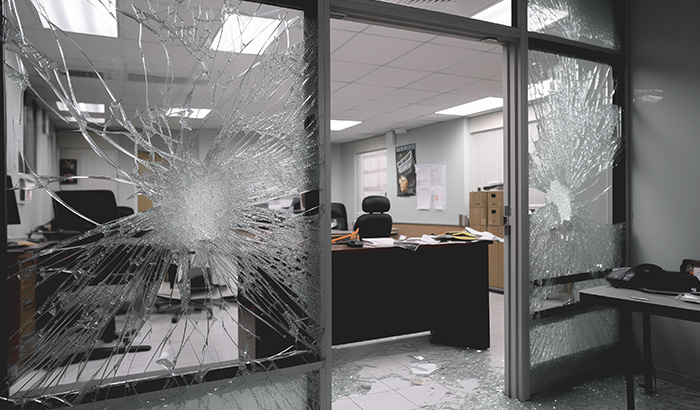
If a bullet hits an impact window, the outer layer of glass will crack or shatter at the point of impact. The PVB interlayer may slow the bullet or cause it to deform, but in most cases, a standard-caliber round will penetrate through the glass. The laminated construction will keep the glass from falling out of the frame in large shards, which reduces the risk of secondary injury from glass fragments. The window will need to be replaced after a ballistic impact.
Should I Get Bulletproof Glass or Impact Windows for My Florida Home?
You should get impact windows for your Florida home. Bullet-resistant glass is designed for banks, embassies, government buildings, and military installations where the threat of gunfire is real and ongoing. For residential properties in South Florida, the actual daily threats are hurricanes, severe storms, break-ins, and energy loss. Impact windows from ASP Windows & Doors are specifically engineered for these threats and are the practical, code-compliant, and cost-effective choice.
Can I Add Security Film to Impact Windows for Extra Bullet Protection?
You can add security film to impact windows for extra forced-entry resistance, but security film will not make impact windows bulletproof. According to Total Security Solutions, there is no window film on the market that can turn a standard window into bullet-resistant glass. Security film strengthens the glass against blunt-force attacks and can slow down intruders, but it does not change the fundamental ballistic performance of the window.
Final Thoughts
Impact windows and bulletproof glass are built for two very different jobs. Impact windows are engineered to protect your home from hurricanes, flying debris, forced entry, UV damage, and energy loss. Bulletproof glass is engineered to stop bullets in high-security environments. Understanding the difference helps you make the right investment for your home.
For the overwhelming majority of homeowners in Doral, Miami, Fort Lauderdale, Broward County, Naples, and throughout South Florida, impact windows are the right choice. They meet the Florida Building Code and Miami-Dade County requirements, they lower your insurance premiums by up to 45%, they reduce your energy bills, they increase your home value by 7% to 10%, and they provide security against break-ins every day of the year. No other single home improvement delivers that many benefits at once.
If you are ready to protect your home with the best impact products on the market, ASP Windows & Doors has been serving South Florida for over 20 years. Every product is Miami-Dade approved, every installation is backed by manufacturer and workmanship warranties, and the team handles residential, commercial, and high-rise projects across the region. Call (888) 782-8342 or visit the ASP Windows & Doors website to schedule your free estimate today.
Now Accepting Appointments
Proudly serving homeowners and businesses across South Florida and Southwest Florida. Book your visit and let our experts help protect and upgrade your space.
.avif)
.avif)
.avif)
%201.avif)
Insights & Resources
Stay informed with expert tips on impact windows, hurricane protection, and South Florida building standards.


%201.webp)
%201%20(1).webp)
%201.svg)
%201%20(1)%20(1).webp)
.png%20(1).webp)
.png.webp)
.avif)
.avif)


.avif)


.png)
.png)