.avif)


Everything You Need to Know About Hurricane Windows in Miami
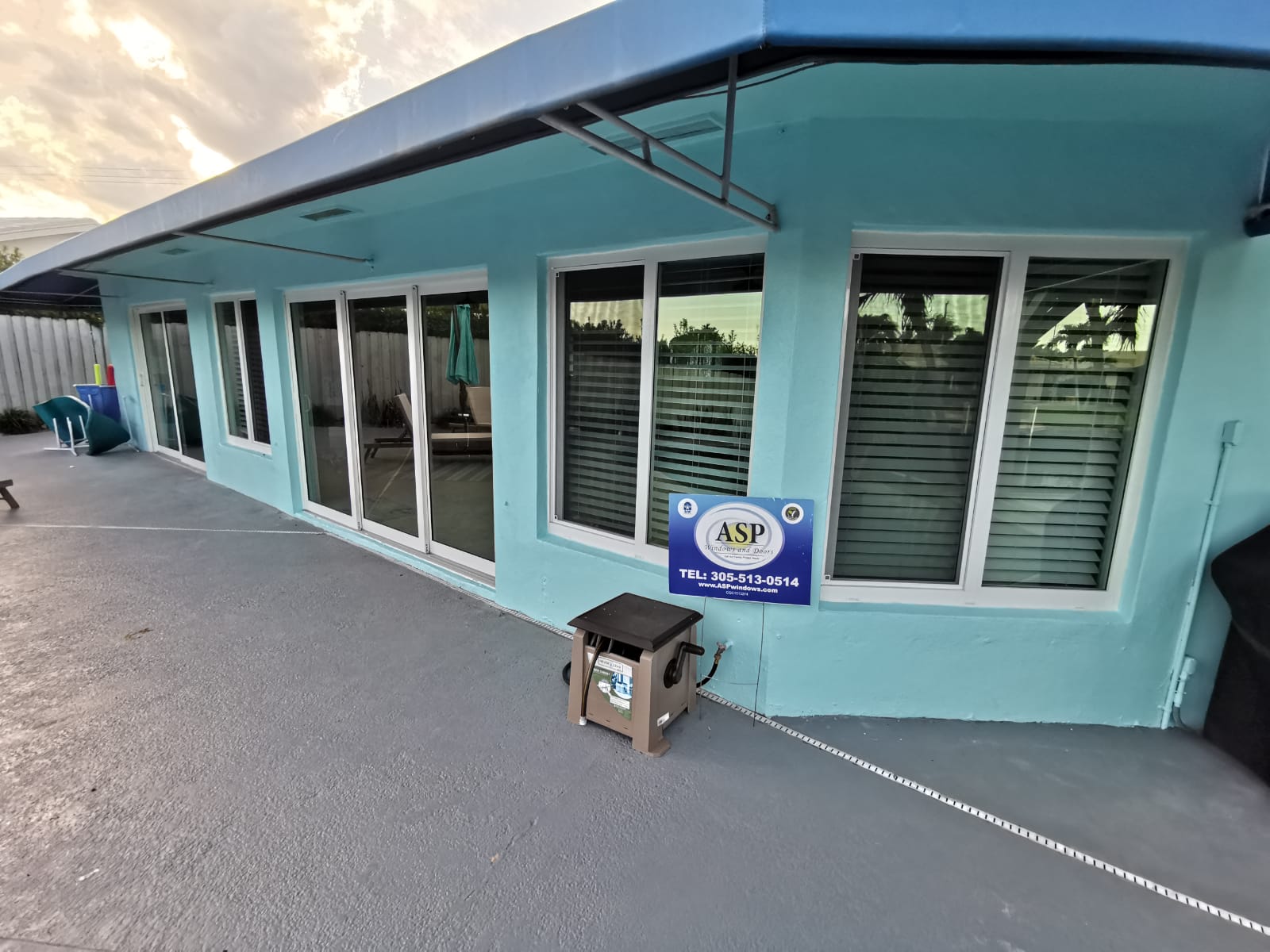
Hurricane windows in Miami, Florida are laminated glass systems using two sheets of tempered glass bonded to polyvinyl butyral interlayers that withstand 150-180 mph winds, survive 9-pound debris impacts at 50 feet per second, and meet Miami-Dade County High Velocity Hurricane Zone certification requirements. These windows prevent the catastrophic structural failures that occur when standard windows breach during hurricanes allowing interior pressurization. The Federal Alliance for Safe Homes reports Miami-Dade County properties with certified impact windows experience 85% less hurricane damage compared to homes with standard windows or temporary protection systems.
Miami's location on Florida's southeastern coast places the city directly in paths of Atlantic basin hurricanes forming from June through November annually. The National Hurricane Center reports Miami faces hurricane threats every 2-3 years with major hurricanes (Category 3+) striking every 10-15 years. Hurricane Andrew's 165 mph winds in 1992 caused $27 billion damage destroying 25,000+ homes, prompting strict building codes requiring impact protection for all new construction and substantial renovations.
This guide explains Miami hurricane window requirements, product specifications, installation standards, cost considerations, and protection benefits for Doral, Kendall, and Fort Lauderdale properties.
Are Hurricane Impact Windows Required in Florida?
Yes, hurricane impact windows or approved opening protection systems are required in Florida Wind-Borne Debris Regions defined as areas within one mile of coastal mean high water where basic wind speed equals or exceeds 130 mph per Florida Building Code Section 1609.1.2. Miami-Dade County falls entirely within the High Velocity Hurricane Zone requiring the strictest impact protection standards in the United States. All new construction, additions, and renovations affecting 50%+ of building value must include Miami-Dade NOA certified impact windows or approved shutter systems.
Miami-Dade County Requirements
The Miami-Dade County Building Code establishes High Velocity Hurricane Zone requirements exceeding Florida Building Code minimums. All fenestration products require Notice of Acceptance certification from the Product Control Division before installation. This independent testing program uses stricter standards than state requirements ensuring maximum protection.
Design wind speeds of 170-180 mph ultimate velocity apply throughout Miami-Dade County. Structural calculations determine Design Pressure ratings for specific building heights and exposure categories. Coastal properties in Exposure D classifications require ratings 20-30% higher than inland Exposure C locations.
Building permits for window replacement verify product NOA numbers against approved databases. Inspectors confirm permanent labels on installed windows matching permit documentation. Missing or mismatched certifications trigger inspection failures requiring corrections before approval. The strict enforcement protects property values and maintains insurance eligibility.
Statewide Wind-Borne Debris Regions
Florida Building Code designates Wind-Borne Debris Regions covering Broward, Palm Beach, Monroe, Lee, Collier, Martin, St. Lucie, Indian River, Brevard, Volusia, Flagler, St. Johns, Duval, Nassau, and portions of 10+ additional counties. Properties within these regions require impact-resistant glazing or approved protection systems for all exterior openings.
The one-mile coastal distance threshold captures most vulnerable areas experiencing extreme wind speeds and debris fields. Properties beyond this distance in 140+ mph wind zones still require protection but may use alternative systems like storm shutters. Local building officials determine specific requirements based on property locations and wind speed maps.
Existing homes built before code adoption in 2001 face no mandatory retrofit requirements. However, renovations exceeding 50% of building value trigger compliance with current codes including impact protection. Insurance carriers increasingly require impact windows for policy renewals in coastal areas creating practical mandates beyond legal requirements.
Compliance Alternatives
Storm shutters provide code-compliant alternatives to impact windows when properly certified and installed. Roll-down shutters, accordion shutters, Bahama shutters, and colonial shutters must meet identical impact testing and design pressure standards as impact windows. The systems cost 40-60% less than window replacement but require deployment before each storm.
Aluminum or polycarbonate panels attach to permanent tracks providing temporary protection. Panels cost $8-15 per square foot installed representing most economical code-compliant option. However, installation time requirements of 30-60 minutes per window and storage space needs create practical limitations for many homeowners.
Fabric storm screens use engineered textiles achieving impact ratings while maintaining visibility during storms. These newer systems cost $12-18 per square foot installed. Limited manufacturer availability and relatively short track record compared to traditional systems restrict widespread adoption despite potential advantages.
Does Miami Get a Lot of Hurricanes?
Yes, Miami gets frequent hurricanes with the National Hurricane Center documenting 19 direct hits and 47 close approaches within 50 miles since 1851, averaging one hurricane threat every 3-4 years and major hurricanes (Category 3+) every 10-15 years. Miami's geographic position on Florida's Atlantic coast and proximity to warm Caribbean waters create optimal conditions for hurricane formation and intensification. The National Oceanic and Atmospheric Administration reports Atlantic basin produces 12-15 named storms annually with 30-40% tracking within 200 miles of South Florida.
Historical Hurricane Impacts
Hurricane Andrew in August 1992 remains Miami's most destructive storm generating 165 mph sustained winds with 175 mph gusts. The Category 5 hurricane caused $27 billion damage (1992 dollars) destroying 25,000+ homes and damaging 100,000+ additional structures. Post-storm analysis revealed 80% of destroyed homes featured inadequate window and door protection.
Hurricane Irma in September 2017 brought 130 mph winds to Miami-Dade County causing $50 billion statewide damage. The Category 4 storm demonstrated building code improvements following Andrew with 95% of post-2001 construction surviving without major damage. Properties with impact windows experienced minimal losses compared to homes using temporary protection.
Hurricane Wilma in October 2005 generated 120 mph winds affecting Miami-Dade, Broward, and Palm Beach counties. The storm caused $20 billion damage through wind and water intrusion. Insurance claims totaled $10 billion with 70% of payments addressing window failures and resulting interior damage.
Hurricane Season Frequency
Atlantic hurricane season runs June 1 through November 30 annually with peak activity during August-October. The National Hurricane Center reports average seasons produce 14 named storms, 7 hurricanes, and 3 major hurricanes. Climate patterns including El Niño and La Niña cycles affect annual activity levels with variations from 4-28 named storms between quiet and active years.
Miami faces direct threats from 20-30% of Atlantic basin storms based on historical tracking patterns. The city's location makes it vulnerable to hurricanes forming in Caribbean, Gulf of Mexico, and Central Atlantic regions. Storms approaching from east, southeast, and south create highest risks with most destructive winds occurring in northeastern quadrants.
Climate change research suggests increasing hurricane intensity with higher percentages of Category 4-5 storms. The National Oceanic and Atmospheric Administration projects 10-15% increases in maximum wind speeds and 15-20% increases in precipitation rates. These trends emphasize importance of maximum protection for Miami properties.
Economic Impact and Preparedness
Hurricane damage costs Miami-Dade County $2-5 billion annually in average years with major storms causing $20-50 billion losses. Business interruptions, evacuation expenses, and recovery operations extend beyond direct property damage. The Federal Emergency Management Agency estimates 3-5 year full recovery periods following major hurricanes.
Property insurance rates in Miami-Dade County average $3,000-6,000 annually for homes valued at $300,000-500,000. Hurricane deductibles of 2-5% create $6,000-25,000 out-of-pocket exposure before insurance payments begin. Impact window installations providing 8-45% premium discounts save $240-2,700 annually offsetting installation costs over time.
Emergency preparedness planning requires 72-hour supply kits, evacuation routes, and property protection measures. Miami-Dade County Emergency Management provides resources at miamidade.gov/hurricane including evacuation zone maps, shelter locations, and preparation checklists. Annual preparedness reviews in May ensure families maintain readiness throughout hurricane season.
How Much Do Hurricane Windows Cost in Miami?
Hurricane windows in Miami cost $40-75 per square foot installed for standard residential applications, with complete whole-house installations ranging from $15,000-40,000 depending on home size, window count, and product specifications. Premium products with enhanced energy efficiency, custom sizes, or architectural styles reach $60-90 per square foot installed. The Window & Door Manufacturers Association reports Miami-Dade NOA certified products cost 15-25% more than standard Florida Building Code certified windows due to stricter testing requirements.
Window Type Pricing
Single-hung and double-hung windows cost $400-700 per unit installed for standard 3x5 foot sizes. Vinyl frames with basic laminated glass represent lower pricing while aluminum frames with Low-E coatings and argon fills reach upper ranges. Miami-Dade certification adds $50-100 per window compared to non-HVHZ products.
Casement and awning windows cost $450-800 per unit installed due to complex hardware and hinge systems. These styles provide superior energy efficiency through compression seals achieving lower air leakage rates. Large casement windows exceeding 24 square feet require reinforced frames and hardware increasing costs by 20-30%.
Picture windows and fixed units cost $350-650 per window installed depending on size and glass package. Large picture windows of 40-60 square feet require thicker glass and enhanced framing reaching $800-1,500 per unit. Custom shapes including arches, circles, and geometric configurations add 30-50% to standard rectangular window pricing.
Sliding Glass Door Costs
Standard 6x8 foot sliding glass doors cost $3,500-5,500 installed with impact-rated laminated glass and aluminum frames. Vinyl frame options cost slightly less at $3,200-4,800 while premium wood-clad aluminum systems reach $5,500-7,500. Multi-point locking mechanisms and heavy-duty roller systems handle 300-400 pound panel weights.
Large 8x8 foot sliders cost $4,500-7,000 installed for two-panel configurations. Three-panel and four-panel systems spanning 12-16 feet range $8,000-15,000 installed. Commercial-grade hardware and reinforced frames support larger glass areas achieving required Design Pressure ratings.
Lift-and-slide door systems cost $8,000-18,000 installed for 8-12 foot openings. German-engineered hardware provides effortless operation and superior weathersealing. Premium finishes and custom configurations reach $15,000-25,000 for luxury installations in waterfront properties.
Installation and Additional Costs
Labor represents 30-40% of total project expenses at $12-30 per square foot depending on complexity. Simple like-for-like replacements cost less than installations requiring structural modifications or opening size changes. Second-story windows requiring scaffolding or lift equipment add 25-35% to standard installation pricing.
Building permits cost $200-800 for residential window projects depending on property value and window count. Plan review fees, inspection fees, and contractor registration add $100-300 to permit expenses. Miami-Dade County Product Control verification fees of $50-100 per permit support NOA database maintenance.
Disposal fees for old windows cost $50-150 depending on quantity and materials. Lead paint abatement in pre-1978 homes adds $200-500 per window following EPA regulations. Stucco repair, trim carpentry, and paint touch-up cost $150-400 per window completing professional installations.
If you need Miami-Dade NOA certified hurricane window installation for your Doral, Kendall, or Fort Lauderdale property, ASP Windows & Doors provides complete solutions including product selection, permitting, and professional installation meeting High Velocity Hurricane Zone requirements. Our experienced team ensures proper Design Pressure ratings, impact certification verification, and structural anchoring for maximum protection. Call (888) 782-8342 to schedule your free consultation with wind load analysis and detailed project estimates. We serve residential and commercial properties throughout Miami-Dade, Broward, and Palm Beach counties with flexible financing, insurance discount documentation, and manufacturer warranty support.
Now Accepting Appointments
Proudly serving homeowners and businesses across South Florida and Southwest Florida. Book your visit and let our experts help protect and upgrade your space.
.avif)
.avif)
.avif)
%201.avif)
Insights & Resources
Stay informed with expert tips on impact windows, hurricane protection, and South Florida building standards.

%201.svg)
%201%20(1)%20(1).png)
.png%20(1).png)
.png.png)
.avif)
.avif)


.avif)
