.avif)


How to Select the Right Impact Doors in Florida?


Select the right impact doors in Florida by verifying Miami-Dade NOA certification matching your wind zone requirements, choosing Design Pressure ratings of 50-60 PSF for standard residential or 60-70 PSF for coastal properties, selecting between fiberglass, steel, or aluminum materials based on durability and budget, evaluating laminated glass packages with 0.090-inch PVB interlayers, confirming multi-point locking systems with commercial-grade hardware, and ensuring proper sizing for door openings while matching architectural style. The Federal Alliance for Safe Homes reports proper door selection based on building height, exposure category, opening size, and installation quality determines actual hurricane protection performance with undersized doors creating vulnerabilities and properly specified products providing decades of reliable service.
Door selection involves balancing multiple factors including budget constraints, aesthetic preferences, architectural style compatibility, operational requirements, energy efficiency goals, and performance specifications. The Window & Door Manufacturers Association emphasizes no single "best" door exists for all applications requiring individualized analysis matching products to specific property characteristics. Understanding selection criteria prevents costly mistakes from under-protected properties or excessive spending on unnecessary features providing marginal benefits.
This comprehensive guide explains certification verification, material comparisons, performance ratings, style options, sizing requirements, hardware selections, and installation considerations for Doral, Kendall, and Fort Lauderdale homeowners choosing impact doors providing maximum protection, value, and satisfaction.
How Do You Tell If a Door Is Impact-Rated in Florida?
You tell if a door is impact-rated in Florida by locating permanent product labels displaying Miami-Dade County Notice of Acceptance number, design pressure rating, manufacturer information, and installation date on door frames or panel edges, verifying laminated glass construction through visible PVB interlayers between glass sheets, checking substantial door weight indicating reinforced construction typically weighing 200-300 pounds for entry doors, examining multi-point locking mechanisms with 3-5 locking points, and requesting documentation from sellers including NOA certificates and installation records. The American Architectural Manufacturers Association requires permanent labels remaining legible throughout product lifespans providing inspection verification and warranty documentation. Missing labels indicate non-certified products or improper installation requiring investigation.
Product Label Requirements
Impact-rated doors display permanent labels etched, embossed, or applied with durable adhesives resisting UV degradation and weather exposure. Labels include NOA numbers formatted as "NOA XX-XXXX.XX" identifying Miami-Dade Product Control Division approval. Design Pressure ratings appear as positive and negative PSF values indicating wind resistance capacity.
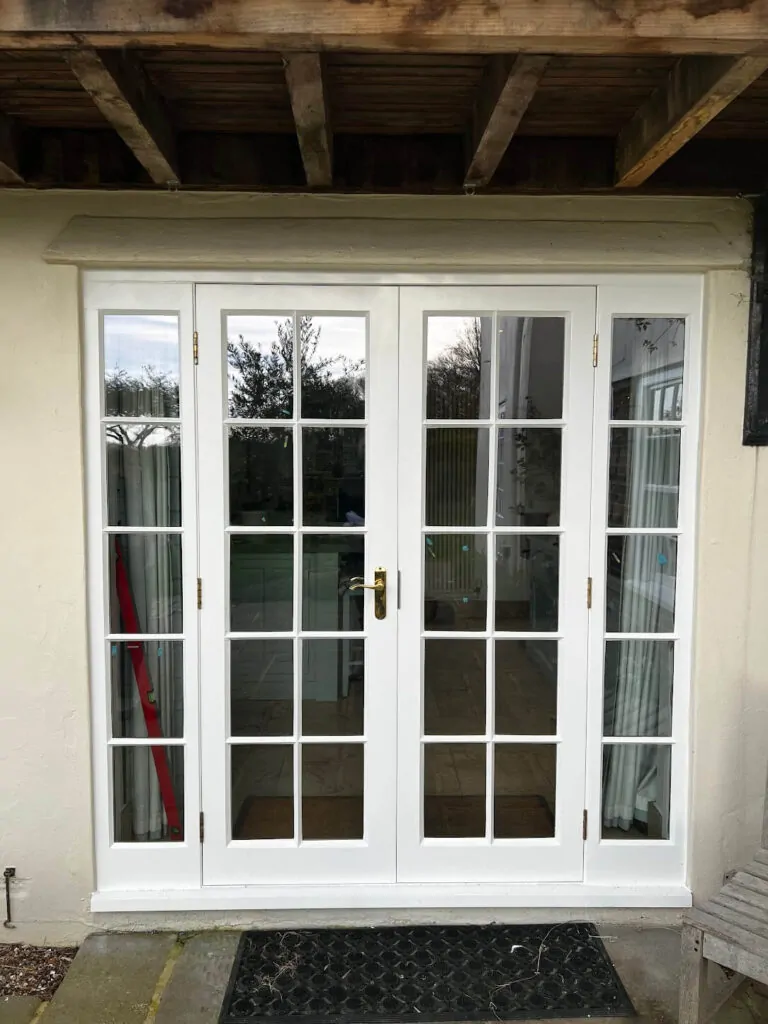
Label placement varies by manufacturer with most positioning labels on door frame header jambs or hinge-side jambs. Sliding glass doors often place labels on fixed panel corners or bottom rails. French doors display labels on active panel meeting stiles. The Window & Door Manufacturers Association recommends accessible locations allowing verification without door removal.
Missing or damaged labels create inspection failures and insurance complications. Contact manufacturers for replacement labels providing original purchase documentation and NOA numbers. Many manufacturers maintain databases linking installation addresses to product specifications supporting label replacement requests. Digital documentation including photos and NOA certificates supplement physical labels during verification processes.
Visual Construction Indicators
Laminated glass shows visible PVB interlayer between glass sheets when viewing edge profiles. The interlayer appears as thin plastic film measuring 0.060-0.090 inches distinguishing impact construction from standard tempered or annealed glass. Use flashlight illumination from side angles making interlayer more visible.
Frame wall thickness of 0.125-0.187 inches indicates proper reinforcement for impact applications. Measure frame members with calipers comparing specifications to manufacturer documentation. Thinner frames lack structural capacity for hurricane forces despite marketing claims suggesting adequate protection.
Multi-point locking mechanisms with 3-5 locking points indicate impact-rated construction. Examine locks identifying engagement points along frame perimeters. Single-point locks prove inadequate for hurricane applications despite lower costs. Count locking points by operating locks and observing bolt engagement at header, sill, and jamb locations.
Weight and Density Testing
Impact doors weigh 2-3 times more than standard doors due to laminated glass and reinforced construction. A 3x8 foot standard entry door weighs 75-100 pounds while equivalent impact door weighs 200-250 pounds. The substantial weight difference provides obvious identification when doors are accessible for handling.
Sliding glass door panels typically weigh 300-400 pounds for impact construction versus 150-200 pounds for standard doors. This dramatic weight increase requires heavy-duty roller systems and reinforced tracks. Attempt moving door panels slightly testing weight, though full movement requires proper hardware allowing smooth operation despite increased mass.
Tap glass gently with knuckles comparing sound between impact and standard doors. Laminated glass produces duller, less resonant sound compared to standard glass's sharper ring. The PVB interlayer dampens vibration changing acoustic properties. This simple test provides preliminary indication requiring confirmation through other verification methods.
Documentation and Certification Verification
Building permits for impact door installation remain permanently accessible through county building departments. Request permit copies from current or previous owners documenting installation compliance and product certifications. These records prove essential during property sales, insurance applications, and renovation planning.
Manufacturer warranties require installation by licensed contractors following approved methods. Warranty registration cards or online confirmation documents proper installation and activates coverage. Request warranty documentation from sellers verifying product authenticity and remaining coverage periods. Transferable warranties maintain value for subsequent homeowners.
Insurance inspection reports documenting wind mitigation features include door certification verification. Homeowners insurance carriers conduct inspections assessing hurricane protection calculating premium discounts. These reports confirm impact door installation and certification status. Request copies from insurance agents or previous owners providing third-party verification.
How Much Do Impact Sliding Doors Cost in Florida?
Impact sliding doors cost $4,000-7,000 installed for standard 6x8 foot two-panel systems, $5,000-9,000 for 8x8 foot configurations, $6,000-12,000 for three-panel systems spanning 9-12 feet, and $10,000-20,000 for premium lift-and-slide systems in South Florida. Material costs represent 50-60% of total pricing at $2,500-5,000 for quality Miami-Dade NOA certified products while professional installation, permits, disposal, and finish work account for remaining 40-50%. The Window & Door Manufacturers Association reports vinyl frames cost 15-20% less than aluminum frames with comparable performance while thermally broken aluminum provides superior durability in coastal environments justifying 20-30% premium pricing.
Standard Sliding Door Pricing
Six-foot by eight-foot two-panel impact sliders cost $4,000-6,000 installed representing most common residential size. Vinyl frames range $3,500-5,000 while aluminum frames cost $4,500-6,500 depending on finish options and glass packages. The entry-level pricing provides adequate hurricane protection for budget-conscious homeowners.
Eight-foot by eight-foot sliders cost $5,000-8,000 installed for standard configurations creating wider openings popular in Florida indoor-outdoor living designs. Material costs increase 25-35% compared to smaller sizes due to larger glass areas and reinforced frames supporting increased loads. Installation complexity adds labor premium for handling heavier panels.
Three-panel systems spanning 9-12 feet cost $6,000-10,000 installed providing expansive openings connecting interior living spaces with patios, pools, and outdoor entertainment areas. The additional panel requires enhanced track systems and structural support increasing material and labor costs. These configurations prove popular in luxury homes and waterfront properties.
Premium Sliding Door Options
Four-panel systems reaching 12-16 feet wide cost $8,000-15,000 installed creating dramatic openings suitable for entertaining and showcasing views. Commercial-grade hardware and reinforced frames support larger glass areas meeting Design Pressure requirements. The substantial investment creates architectural statements defining luxury properties.
Lift-and-slide premium systems cost $10,000-20,000 installed for 8-12 foot openings. German-engineered hardware provides effortless operation lifting panels off tracks eliminating friction during movement. Superior weathersealing and thermal performance justify premium pricing for high-end applications demanding best performance and aesthetics.
Custom configurations including curved tracks, corner installations, or pocket doors retracting into walls cost 30-50% more than standard installations due to specialized engineering and manufacturing. These architectural applications create unique designs impossible with standard products. Costs reach $15,000-30,000 for complex installations.
Additional Cost Factors
Permits cost $100-300 per door in Miami-Dade and Broward counties. Building inspections verify proper installation and product certification compliance. Some municipalities require engineering calculations for large openings adding $300-800 to project costs ensuring structural adequacy.
Structural modifications including header reinforcement or opening size changes add $500-2,000 per opening. Older homes may need framing upgrades supporting heavier impact door weights. Concrete cutting for floor tracks in slab foundations costs $200-500 depending on track length and concrete thickness.
Stucco repair, trim carpentry, and paint touch-up cost $200-500 per door completing professional installations. Rush installations during peak season command 20-30% premium pricing due to contractor demand. Disposal fees for old doors cost $75-200 per unit depending on size and materials.
Value Analysis and ROI
Impact sliding doors add $8,000-15,000 to property values through buyer demand for hurricane protection and indoor-outdoor living features. The National Association of Realtors reports South Florida buyers prioritize impact-protected homes with seamless indoor-outdoor transitions. Properties with quality sliding doors sell 10-15% faster than comparable homes requiring these upgrades.
Insurance discounts of 8-45% provide ongoing savings partially offsetting installation costs. A property with $3,500 annual premium saves $280-1,575 yearly through complete impact protection including doors. Ten-year cumulative savings reach $2,800-15,750 covering 40-75% of sliding door costs depending on discount percentages.
Energy efficiency improvements through Low-E coatings and improved sealing reduce cooling costs $200-400 annually for large glass door areas. The sealed construction eliminates air infiltration common in standard sliding doors. Combined insurance and energy savings create 8-15 year payback periods justifying premium pricing through long-term value.
What Door Materials Work Best for Florida Impact Doors?
Door materials working best for Florida impact doors include fiberglass providing superior durability in humid coastal environments with 25-30 year lifespans, steel offering excellent strength at moderate costs with 15-20 year lifespans when properly maintained, thermally broken aluminum achieving best structural performance and corrosion resistance for coastal properties, solid wood mahogany or similar hardwoods requiring regular maintenance but providing authentic luxury aesthetics, and reinforced vinyl combining good thermal performance with competitive pricing. The American Architectural Manufacturers Association reports material selection should consider climate exposure, maintenance willingness, budget constraints, and aesthetic preferences with coastal properties within 1 mile of saltwater requiring most durable materials justifying premium investments.
Fiberglass Door Advantages
High-density fiberglass construction provides superior impact resistance through solid cores without hollow sections weakening structures. The material resists warping, rotting, cracking, and deterioration in Florida's humid environment. Manufacturers including Therma-Tru and Plastpro provide comprehensive warranties covering materials and finishes demonstrating confidence in longevity.
Fiberglass accepts wood grain textures mimicking luxury wood appearance at 40-50% lower costs than mahogany. Advanced manufacturing techniques create realistic textures and staining options indistinguishable from wood at conversational distances. This combination of durability and aesthetics makes fiberglass most popular material for Florida impact doors.
Polyurethane foam cores add strength and insulation achieving U-Factor ratings of 0.35-0.45. The foam expands during manufacturing filling cavities and bonding to fiberglass skins creating monolithic assemblies. Sound dampening reduces exterior noise transmission 40-50% compared to hollow construction.
Fiberglass impact doors cost $2,500-4,500 installed for standard 3x8 foot sizes including frames and hardware. Premium wood grain finishes and upgraded hardware increase costs toward upper ranges. The investment provides 25-30 year service lives with minimal maintenance requirements justifying initial expense.
Steel Door Characteristics
Steel impact doors use 16-18 gauge steel skins over reinforced frames achieving required Design Pressure ratings. The material provides excellent strength-to-cost ratios making steel economical choice for budget-conscious projects. Powder coat finishes resist initial corrosion but prove less durable than fiberglass in coastal environments.
Interior foam cores provide insulation and structural support. However, steel's natural heat conductivity creates thermal bridging reducing energy efficiency compared to fiberglass or wood alternatives. Thermal break technology in premium steel doors addresses this limitation but increases costs approaching fiberglass pricing.
Steel doors show 15-20 year lifespans in coastal environments before rust and corrosion require replacement. Properties beyond 5 miles from ocean achieve better durability approaching 20-25 years. Regular maintenance including rust treatment and finish touch-up extends service lives but creates ongoing expenses offsetting initial cost savings.
Steel impact doors cost $2,000-3,500 installed representing lowest entry pricing for quality impact protection. However, shorter lifespans and higher maintenance requirements reduce long-term value advantages. Homeowners planning extended residence should consider fiberglass durability benefits justifying 20-30% premium costs.
Aluminum Frame Applications
Thermally broken aluminum frames provide superior strength and corrosion resistance in coastal environments. Marine-grade 6063-T5 alloy with factory-applied powder coating maintains appearance 15-20 years without fading or chalking. The material proves ideal for sliding glass doors and large openings requiring maximum structural capacity.
Thermal break technology inserts polyurethane barriers between interior and exterior aluminum sections preventing heat conduction. These breaks reduce frame U-Factors from 1.0-1.2 for standard aluminum to 0.35-0.45 for broken designs improving energy efficiency qualifying products for Energy Star certification.
Aluminum impact doors suit contemporary architectural styles accepting smooth finishes in various colors. The slim profile frames maximize glass area creating modern aesthetics popular in waterfront properties. However, the industrial appearance proves less suitable for traditional architectural styles preferring wood or fiberglass materials.
Aluminum impact doors cost 10-20% more than fiberglass for equivalent sizes but provide superior durability in harsh coastal environments. Properties experiencing salt air exposure, marine layer humidity, or direct water contact benefit from aluminum's corrosion resistance justifying premium investment.
Wood Door Considerations
Solid wood doors using mahogany, cherry, or similar hardwoods provide authentic luxury aesthetics unmatched by manufactured alternatives. The natural grain patterns, depth, and character create distinctive appearances justifying premium pricing for high-end properties. Custom carving and decorative elements enable unique designs.
Wood requires regular maintenance including refinishing every 3-5 years in South Florida climate. The humid conditions, intense UV exposure, and frequent rain accelerate finish deterioration. Annual inspection and touch-up prevent moisture intrusion causing rot, warping, or structural damage. Maintenance costs $200-400 annually plus refinishing costs of $400-800 every 3-5 years.
Wood impact doors cost $3,500-6,500 installed for standard sizes using quality hardwoods. Exotic woods, custom carving, or oversized doors reach $8,000-15,000. The aesthetic premium and ongoing maintenance requirements suit homeowners prioritizing appearance over convenience and long-term costs.
If you need expert guidance selecting the right impact doors for your Doral, Kendall, or Fort Lauderdale property, ASP Windows & Doors provides comprehensive consultation services analyzing wind zones, architectural requirements, material options, budget constraints, and long-term value considerations. Our experienced team helps homeowners navigate complex choices ensuring optimal protection, performance, and satisfaction. Call (888) 782-8342 to schedule your free consultation with product demonstrations, material comparisons, and detailed project estimates customized to your property and preferences. We serve residential and commercial properties throughout Miami-Dade, Broward, and Palm Beach counties with certified installations meeting all code requirements and manufacturer warranty specifications.
Now Accepting Appointments
Proudly serving homeowners and businesses across South Florida and Southwest Florida. Book your visit and let our experts help protect and upgrade your space.
.avif)
.avif)
.avif)
%201.avif)
Insights & Resources
Stay informed with expert tips on impact windows, hurricane protection, and South Florida building standards.


%201.webp)
%201%20(1).webp)

%201.svg)
%201%20(1)%20(1).webp)
.png%20(1).webp)
.png.webp)
.avif)
.avif)


.avif)


.png)
.png)