.avif)


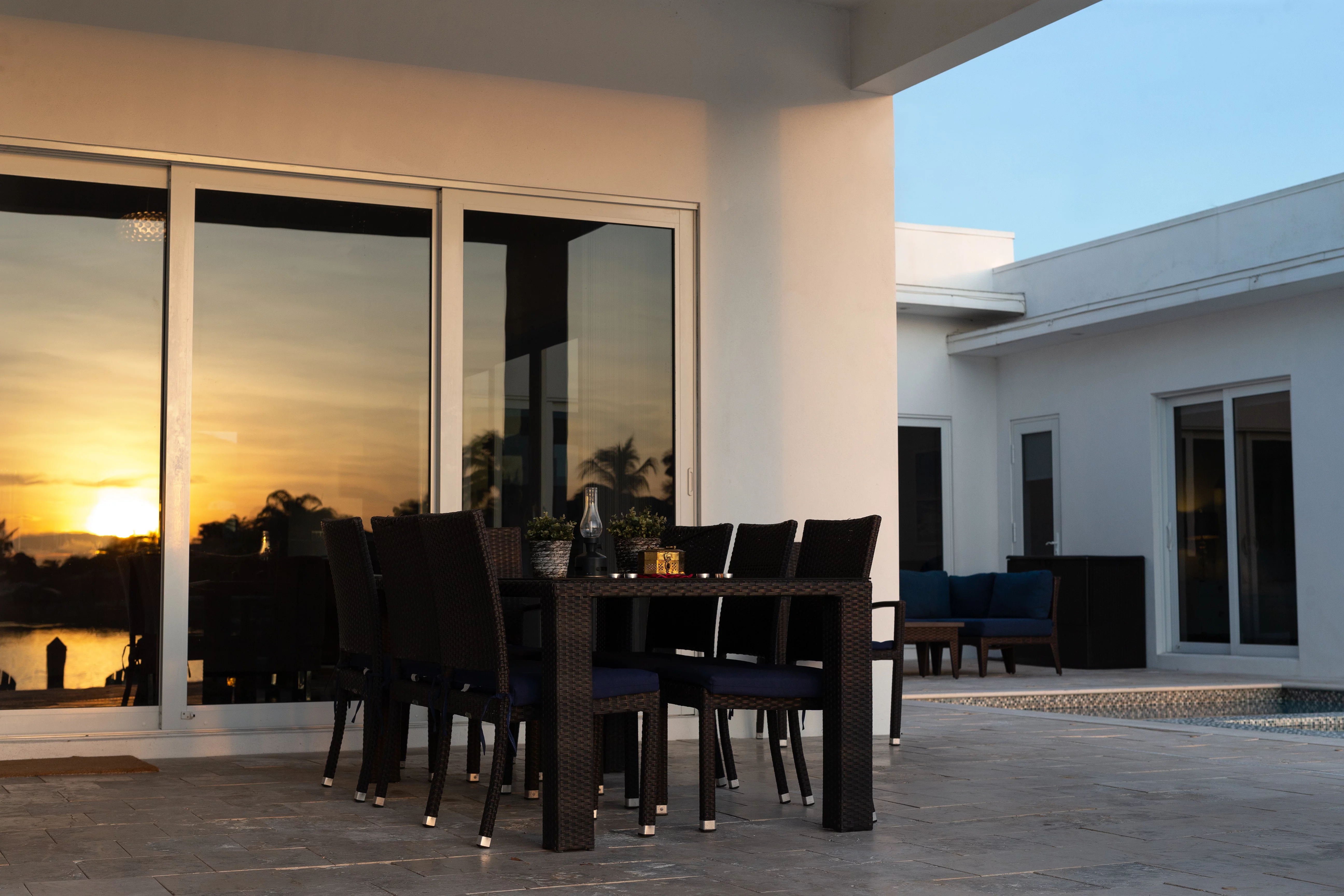

Impact sliding glass doors cost between $2,500 and $6,000 fully installed for a standard two-panel 6-to-8-foot unit in South Florida, according to 2026 market data from multiple licensed contractors. Three-panel systems (9-12 feet wide) run $5,000 to $9,000 installed, and four-panel or multi-panel configurations range from $7,000 to $15,000 or more. The final number depends on door size, frame material, glass configuration, design pressure (DP) rating, and how complex the installation is at your specific opening.
This guide breaks down what impact sliding glass doors cost by configuration, explains every factor that moves the price up or down, covers what is and is not included in a typical installed quote, and shows how insurance savings, state grants, and energy efficiency offset the investment over time. By the end, you will know what to budget, what to ask your contractor, and what to expect on installation day.
Key Takeaways
- A standard 8-foot two-panel impact sliding glass door costs $3,500 to $6,000 fully installed, according to Armor Pro Windows (2026 data).
- Three-panel systems (9-12 ft) cost $5,000 to $9,000 installed, and premium multi-panel pocketing systems can exceed $15,000 to $40,000.
- The six factors that drive price are door size, frame material, glass type, design pressure rating, installation complexity, and permit requirements.
- Florida homeowners save 10-45% on the windstorm portion of insurance premiums with full opening protection, according to the Florida Department of Financial Services.
- The My Safe Florida Home program offers matching grants up to $10,000 for impact window and door upgrades, funded at $280 million for 2025-2026.
- The insurance credit for opening protection is all-or-nothing: one unprotected sliding door can cost you the entire wind mitigation discount.
- A whole-home impact door package (entry + sliding + French doors) typically runs $8,000 to $20,000 or more installed.
How Much Do Impact Sliding Glass Doors Cost?
Impact sliding glass doors cost $2,500 to $15,000 or more fully installed, depending on the panel configuration, opening width, and product tier. The most common residential purchase, a two-panel 8-foot impact slider, falls in the $3,500 to $6,000 range installed, according to 2026 pricing data from Armor Pro Windows. That installed price covers the door unit, frame, tracks, hardware, installation labor, building permit, and disposal of the old door.
Impact sliding glass doors cost more than standard sliding glass doors because the glass, frame, and hardware are all engineered to a higher structural standard. Standard sliding glass doors use tempered glass that shatters into small pieces on impact. Impact sliding doors use laminated glass with a polyvinyl butyral (PVB) or SGP interlayer bonded between two glass panes. Laminated impact glass holds together when struck, preventing wind and debris from entering the home. The frame is reinforced to resist sustained wind loads that can exceed 150 mph in Florida's High-Velocity Hurricane Zone (HVHZ). The hardware includes heavy-duty tandem rollers, multi-point locking systems, and corrosion-resistant tracks built for decades of coastal use.
Impact sliding glass doors represent the single largest fenestration investment in most Florida homes. One impact sliding glass door can cost as much as three to five standard impact windows combined, according to Armor Pro Windows. The size of the glass panels, the weight of each panel (200 to 400+ pounds), and the mechanical complexity of the track system all contribute to the higher price point. Getting the right product for your opening, your wind zone, and your budget matters more with sliding glass doors than with any other opening in the home.
How Much Do 2-Panel vs. 3-Panel vs. 4-Panel Impact Sliding Doors Cost?
Two-panel impact sliding doors cost $2,500 to $6,000 installed, three-panel systems cost $5,000 to $9,000, and four-panel or wider configurations cost $7,000 to $18,000 or more. The panel count determines the opening width, and wider openings require more material, heavier structural headers, and more labor hours to install correctly.
ConfigurationTypical WidthInstalled Cost RangeBest For2-panel (standard)6-8 ft$2,500-$6,000Bedrooms, dens, standard patio access3-panel9-12 ft$5,000-$9,000Living rooms, family rooms, lanai access4-panel (2-track)12-16 ft$7,000-$12,000Large living areas, open-plan homes4-panel (3- or 4-track)16-20 ft$10,000-$18,000Premium open-plan configurationsMulti-panel pocketing16-40 ft$15,000-$40,000+Luxury waterfront, panels retract into walls
Panel notation in contractor quotes follows a standard system: X means a sliding panel, O means a fixed panel. An XO configuration means the left panel slides and the right is fixed. An OXO means a center slider with fixed panels on each side. Knowing this notation helps you compare quotes accurately because two contractors quoting the same opening may list different configurations at different prices.
The price gap between a two-panel and a three-panel system is not just about one additional panel. Three-panel impact doors require a wider structural header above the opening, more track material, additional rollers, and longer installation time. Four-panel systems on three or four tracks add even more frame depth, more potential water intrusion pathways, and more hardware that must be precisely aligned for smooth operation.
What Factors Affect the Cost of Impact Sliding Glass Doors?
The six factors that affect the cost of impact sliding glass doors are door size, frame material, glass configuration, design pressure rating, installation complexity, and permit requirements. Each factor can move the final installed price by hundreds to thousands of dollars in either direction.
- Door size: A standard 6-foot two-panel slider and a 12-foot multi-panel slider are both listed as "one door" on a quote sheet, but the price difference between them is $3,000 to $6,000 or more. Wider and taller openings require proportionally more glass, more frame material, and heavier structural support. Always ask for a per-opening breakdown, not just a project total.
- Frame material: Standard aluminum is the baseline frame material for impact sliding glass doors because aluminum provides the structural strength needed for large, heavy panels. Thermally broken aluminum adds 30-50% to the cost but significantly improves energy efficiency by reducing heat transfer through the frame. Vinyl impact sliding doors exist but are less common for large openings due to lower maximum design pressure ratings, according to Armor Pro Windows.
- Glass configuration: Standard laminated impact glass is the baseline. Insulated glass units (IGU) with argon gas fill and Low-E coatings add $200 to $500 per panel, according to Caner Impact Windows. Tinted glass, low-iron glass, and acoustic interlayers add further cost. Low-E glass reflects heat and blocks up to 99% of UV radiation, protecting interior furnishings from fading while reducing cooling costs.
- Design pressure (DP) rating: Design pressure measures a door's resistance to wind load in pounds per square foot (PSF). Higher DP ratings require sturdier frames, thicker glass, and heavier hardware. A DP-50 door and a DP-90 door for the same 8-foot opening are fundamentally different products at different price points. A standard 8-foot impact sliding door has approximately 40 square feet of surface area. At DP-50, that surface area must resist 2,000 pounds of total wind force. At DP-90, the same door must resist 3,600 pounds.
- Installation complexity: Difficult access, out-of-square openings, rotted framing that needs replacement, second-story installations, and high-rise condo projects all add labor time and cost. Stucco repair around the new frame, interior trim work, and sill pan installation are common additional costs that may or may not be included in the initial quote.
- Permits: All impact door installations in Florida require a building permit. Permit fees vary by city and county but typically add $150 to $500 per project, according to Caner Impact Windows. In the HVHZ (Miami-Dade and Broward Counties), the product must carry a Miami-Dade Notice of Acceptance (NOA), not just a standard Florida Product Approval.
What Is Included in the Installed Price of Impact Sliding Glass Doors?
The installed price of impact sliding glass doors typically includes the door unit, frame, tracks, hardware, weatherstripping, installation labor, building permit, and disposal of the old door. Knowing what is and is not included prevents surprises on installation day and helps you compare quotes accurately between contractors.
A complete installed quote should itemize the door product (manufacturer, model, configuration, glass type), the labor for removal of the existing door, installation of the new unit, and all necessary anchoring and flashing. The quote should also specify whether permit fees are included or billed separately. Reputable contractors include the permit in their quoted price because pulling the permit is a required step, not an optional add-on.
Items that are commonly NOT included in a standard installed quote, and that you should ask about specifically, are structural header modifications (if the existing header cannot support the new door's weight and wind loads), sill pan installation (a waterproof membrane beneath the door threshold), interior trim and paint, exterior stucco or finish repair around the new frame, and a post-installation wind mitigation inspection. Structural header modification can add $500 to $2,000 depending on the opening width and the load the header must carry. Stucco patching and painting around the new frame can add $300 to $800. A wind mitigation inspection, which documents the new door for your insurance company, costs $75 to $150 and is essential for claiming your insurance discount.
How Much Should I Expect to Pay to Have a Sliding Glass Door Installed?
You should expect to pay $600 to $2,000 or more for installation labor alone on an impact sliding glass door, depending on the project's complexity and the contractor's rate. Installation labor for impact sliding glass doors is higher than for standard glass glazing products because of the weight of the panels, the precision required in track alignment, and the anchoring standards mandated by Florida Building Code.
Installation labor for impact sliding glass doors involves removing the existing door and frame, preparing the rough opening (shimming, leveling, verifying square), setting the new frame with code-compliant anchoring, installing the track system, hanging and adjusting each panel on its rollers, sealing the perimeter with weatherstripping and caulk, and testing the lock and latch mechanisms. Roller adjustment after installation is critical because poorly adjusted rollers cause uneven weatherstripping compression, which increases water intrusion risk over time.
A single impact sliding glass door installation typically takes 4 to 8 hours for a standard replacement where the new door fits the existing opening, according to Caner Impact Windows. Installations that require structural modifications to the header, sill, or surrounding wall can take a full day or longer. Multi-panel systems and high-rise condo installations may require two or more days. Professional installers complete most residential sliding door replacements in a single day, which is one reason bundling multiple openings into one project saves money: the mobilization, setup, and permit costs are shared across the entire job.
What Is the Average Cost of Replacing a Sliding Patio Door?
The average cost of replacing a sliding patio door with an impact-rated unit in South Florida is $3,000 to $6,000 for a standard two-panel 8-foot opening, fully installed. Republic Windows reports that most South Florida homeowners pay $3,000 to $6,000 for a two-panel impact sliding glass door replacement. A whole-home door package covering a front entry, rear slider, and additional doors typically lands at $8,000 to $18,000 including product, labor, and county permits.
Replacement cost is higher than new-construction installation cost because replacement involves removing the existing door, disposing of the old unit, and addressing any damage or deterioration in the surrounding framing that was hidden behind the old door. Water damage, wood rot, and termite damage in the framing around the rough opening are common discoveries during replacement projects in South Florida. Addressing these issues before installing the new door is not optional; installing an impact-rated door into compromised framing defeats the purpose of the upgrade because the frame will fail before the door does in a hurricane.
Replacing impact windows and doors together in a single project almost always reduces the per-unit cost. Permitting, labor mobilization, setup, and cleanup are shared across the entire job. A typical 2,200-square-foot South Florida home with 15 to 20 windows and 2 to 3 doors costs $15,000 to $32,000 at mid-tier pricing for a full replacement, according to Safeguard Impact (2026 data).
Can You Replace Just the Sliding Door on a Patio Door?
Yes, you can replace just the sliding panel on an existing patio door without replacing the entire frame assembly, but only if the existing frame, track, and fixed panel are still in good structural condition. Panel-only replacement costs significantly less than a full door replacement because the frame, track, and hardware stay in place.
Panel-only replacement works best when a single panel has been damaged, such as from a stray baseball or a failed glass seal that causes fogging between the panes. Major manufacturers sell replacement panels through authorized dealers and parts stores. The replacement panel must match the existing frame's dimensions, track profile, and glass specification exactly. Ordering a mismatched panel results in air leaks, water intrusion, and operational problems that cost more to fix than the panel saved.
Panel-only replacement does NOT work when the frame itself is compromised, when the track is bent or corroded, when the rollers are worn beyond adjustment, or when the existing door does not meet current Florida Building Code requirements. In those situations, a full door replacement is the safer and more cost-effective long-term investment. A new impact-rated door installed into a sound rough opening will last 20 to 30 years with proper maintenance. A new panel installed into a failing frame may need to be replaced again within a few years.
Do Impact Sliding Glass Doors Save Money on Insurance?
Yes, impact sliding glass doors save money on insurance by qualifying your home for Florida's mandatory wind mitigation premium credits. Florida homeowners with full opening protection, meaning every window, door, and garage door is impact-rated or shutter-protected, save 10 to 45% on the windstorm portion of their insurance premiums, according to the Florida Department of Financial Services.
In dollar terms, that savings translates to roughly $1,000 to $3,500 per year for most South Florida homeowners, according to Armor Pro Windows (2026). Homeowners in Miami-Dade and Broward Counties see the largest raw-dollar savings because their base windstorm premiums are the highest in the state. The windstorm portion of a homeowner's policy typically represents 30 to 70% of the total premium in coastal Florida, according to Fuller Insurance. Wind mitigation credits applied to that portion move real money.
The critical rule homeowners must understand is that the opening-protection credit is all-or-nothing. Every glazed opening in the home, including impact sliding doors, windows, entry doors, and garage doors, must be protected with approved products for the full discount to apply. A single unprotected sliding glass door can cost the homeowner the entire wind mitigation credit. We see this constantly across our projects in South Florida, where completing the full envelope of protection unlocks the maximum insurance discount. A licensed wind mitigation inspector must document the protection using the Florida OIR-B1-1802 form and submit it to your insurer before any discount is applied.
Is There a Grant for Impact Sliding Glass Doors in Florida?
Yes, the My Safe Florida Home (MSFH) program offers matching grants of up to $10,000 for hurricane-hardening upgrades, including impact sliding glass doors, impact windows, hurricane shutters, and roof reinforcements. The Florida Legislature allocated $280 million to fund MSFH grants and inspections for the 2025-2026 cycle, and the application portal reopened on August 4, 2025.
The MSFH grant operates on a 2-to-1 matching basis: for every $1 the homeowner spends on qualifying improvements, the state contributes $2, up to the $10,000 cap. Homeowners who spend $15,000 or more on eligible upgrades can receive the full $10,000 reimbursement. Low-income homeowners at or below 80% of area median income may qualify for grants covering up to 100% of the project cost, also capped at $10,000. The program is administered by the Florida Department of Financial Services and funds are distributed on a first-come, first-served basis.
Eligibility requires a single-family, site-built primary residence in Florida with an insured value of $700,000 or less and active windstorm insurance coverage. The program begins with a free wind mitigation inspection that identifies your home's hurricane vulnerabilities and recommends specific upgrades. Only the improvements recommended in that inspection report are eligible for grant reimbursement. The most important rule: do not start any work before grant approval. Beginning installation before your grant is approved automatically disqualifies your application. Florida's 2026-2027 budget also includes a three-year sales tax exemption on impact windows and doors, providing additional savings even for homeowners who do not qualify for the grant.
Are Impact Sliding Glass Doors Worth the Investment?
Yes, impact sliding glass doors are worth the investment because they provide hurricane protection, reduce insurance premiums, increase home value, lower energy costs, reduce noise, and block UV damage, all from a single product that requires no deployment before storms.
The financial math works in favor of impact sliding glass doors when you stack all the savings together. Insurance premium reductions of $1,000 to $3,500 per year mean that a $5,000 impact sliding glass door pays for itself in insurance savings alone within 2 to 5 years. Energy savings from Low-E glass and tight weatherstripping add $150 to $400 per year in reduced cooling costs, according to Five Seasons Windows research. MSFH grants can offset up to $10,000 of the project cost. The sales tax exemption on impact products saves an additional 6-7% on the product cost.
Beyond the financial return, impact sliding glass doors provide protection that no amount of money can replace after a hurricane. Standard sliding glass doors are the most vulnerable opening in most Florida homes because of their size and exposure. FIU Wall of Wind research confirmed that sliding glass doors are the most vulnerable fenestration type for water intrusion during hurricanes, with significant leaking at just 26% of rated design pressure. Impact-rated sliding impact doors tested to Florida's TAS 201, TAS 202, and TAS 203 protocols have demonstrated the ability to withstand large missile impact (a 9-pound 2x4 at 50 feet per second) followed by 9,000 alternating pressure cycles that simulate sustained hurricane conditions.
What Is Better Than a Sliding Door?
French doors, bi-fold doors, and pivot doors are better than sliding doors in specific situations where a wider clear opening, a traditional aesthetic, or a dramatic entryway is the primary goal. Sliding doors remain the best choice for space efficiency, modern design, and the lowest cost per square foot of glass.
Impact-rated French doors cost $4,000 to $8,000 per pair installed, according to Armor Pro Windows (2026). French doors swing open on hinges and provide a full-width clear opening when both panels are open, while a sliding door only opens to half its total width because one panel stays fixed. Entry doors serve a different purpose entirely, focusing on security hardware, curb appeal, and primary access, with impact-rated single entry doors costing $2,000 to $6,000 installed.
The cost comparison between door types matters because the budget for one opening affects the budget for every other opening in the home. Many homeowners combine different door types across the house: a sliding glass door on the back patio for daily indoor-outdoor access, French doors off the dining room for a wider entertaining opening, and an impact entry door at the front for curb appeal and security. Each door type solves a specific problem, and our team helps homeowners match the right door to each opening based on function, aesthetics, and budget.
How to Prevent Common Problems With Impact Sliding Glass Doors
The most common problems with impact sliding glass doors are stiff or sticky operation, air drafts around the frame, condensation between glass panes, and worn rollers or tracks. Regular maintenance prevents all four problems and extends the door's usable life by years.
Track cleaning is the single most important maintenance task for impact sliding glass doors. Dirt, sand, pet hair, and debris accumulate in the bottom track and grind against the rollers every time the door opens and closes. Vacuuming the track and wiping it with a damp cloth every two to three months prevents buildup from accelerating roller wear. Applying a silicone-based dry lubricant to the track and rollers once or twice per year keeps the door gliding smoothly. Avoid petroleum-based lubricants because petroleum attracts dust and creates a sticky residue that makes operation worse over time.
Weatherstripping inspection should happen annually. Worn or compressed weatherstripping allows air leakage and water intrusion that degrade energy efficiency and comfort. Replacement weatherstripping kits are available from most manufacturers through authorized dealers. Condensation between glass panes indicates a failed seal in the insulated glass unit (IGU), which requires panel replacement, not just seal repair. Vinyl vs aluminum frame material also affects maintenance frequency; aluminum frames in coastal environments benefit from periodic washing to prevent salt buildup on hardware and finish surfaces. Roller replacement is the most common mechanical repair for sliding glass doors, and replacement rollers for major brands are available through authorized service channels.
Frequently Asked Questions
How Long Does It Take to Install Impact Sliding Glass Doors?
Impact sliding glass door installation takes 4 to 8 hours for a standard two-panel replacement where the new door fits the existing rough opening. Installations that require structural modifications to the header or surrounding framing can take a full day or longer. Multi-panel systems and high-rise installations may require two or more days. Most residential single-door replacements are completed within one working day. Permitting timelines vary by municipality and should be factored into the project schedule separately from the physical installation time.
What Kind of Door Can You Replace a Sliding Glass Door With?
You can replace a sliding glass door with another sliding glass door in a newer model, with French patio doors, with bi-fold glass panels, or with a center-hinged patio door. Replacing a slider with French doors typically requires minimal structural modification because both styles fit similar rough opening widths. Replacing a slider with bi-fold panels requires a wider header and additional framing work. The replacement type you choose affects both the upfront cost and the long-term operation and maintenance requirements.
What Looks Best on Sliding Glass Doors?
What looks best on sliding glass doors depends on the home's architectural style. Contemporary homes look best with thin-profile aluminum or thermally broken aluminum frames in black, bronze, or clear anodized finishes that maximize the visible glass area. Traditional homes look best with wider frame profiles in white, beige, or wood-tone finishes. Low-E glass with a neutral tint maintains color accuracy from the interior while reducing solar heat gain. Blinds-between-the-glass options provide built-in privacy without the maintenance of external window treatments.
Can You Finance Impact Sliding Glass Doors With $0 Down?
Yes, many licensed contractors offer $0-down financing options for impact sliding glass doors through third-party lenders. We offer both credit-based and PACE-secured financing programs with terms ranging from 5 to 30 years. PACE financing attaches to the property rather than the homeowner, requires no credit check, and can be transferred to the next owner if the home is sold. Fast approvals are typically completed in 30 minutes or less, and monthly payments are structured to align with the energy savings and insurance reductions the doors produce.
Do Impact Sliding Glass Doors Block Noise?
Yes, impact sliding glass doors reduce exterior noise by 25 to 50% compared to standard single-pane glass doors. The laminated glass construction that provides hurricane protection also functions as a sound barrier because the PVB interlayer dampens sound wave transmission. Homeowners near busy roads, airports, and commercial areas notice an immediate reduction in traffic noise, engine noise, and ambient sound after installation. Acoustic-grade interlayers are available as an upgrade for maximum noise reduction.
Do You Need a Permit to Install Impact Sliding Glass Doors in Florida?
Yes, all impact sliding glass door installations in Florida require a building permit. In the HVHZ (Miami-Dade and Broward Counties), the product must carry a Miami-Dade Notice of Acceptance (NOA), and the installation must pass inspection by the local building department. Even outside the HVHZ, a permit is required to document that the installation meets Florida Building Code wind-load and impact standards. Pulling a permit protects the homeowner by creating a verifiable record that the work was inspected and approved, which is necessary for insurance claims and resale documentation.
The Bottom Line
Impact sliding glass doors are the most significant single investment in most South Florida hurricane protection projects. A standard two-panel 8-foot unit costs $3,500 to $6,000 installed, and the price scales with configuration, frame material, glass type, and design pressure rating. The investment pays back through insurance savings of $1,000 to $3,500 per year, potential MSFH grants up to $10,000, energy efficiency improvements, noise reduction, UV protection, and increased property value. Every dollar spent on impact sliding glass doors does double duty: protecting your home during hurricane season and saving you money every month of the year.
At ASP Windows & Doors, we help South Florida homeowners find the right impact sliding glass door for every opening, every budget, and every wind zone. Give us a call at (888) 782-8342 to schedule a free estimate and see what your project will cost before you commit to a single dollar.
Now Accepting Appointments
Proudly serving homeowners and businesses across South Florida and Southwest Florida. Book your visit and let our experts help protect and upgrade your space.
.avif)
.avif)
.avif)
%201.avif)
Insights & Resources
Stay informed with expert tips on impact windows, hurricane protection, and South Florida building standards.


%201.webp)
%201%20(1).webp)
%201.svg)
%201%20(1)%20(1).webp)
.png%20(1).webp)
.png.webp)
.avif)
.avif)


.avif)


.png)
.png)