.avif)


Why You Should Consider Installing Impact Doors
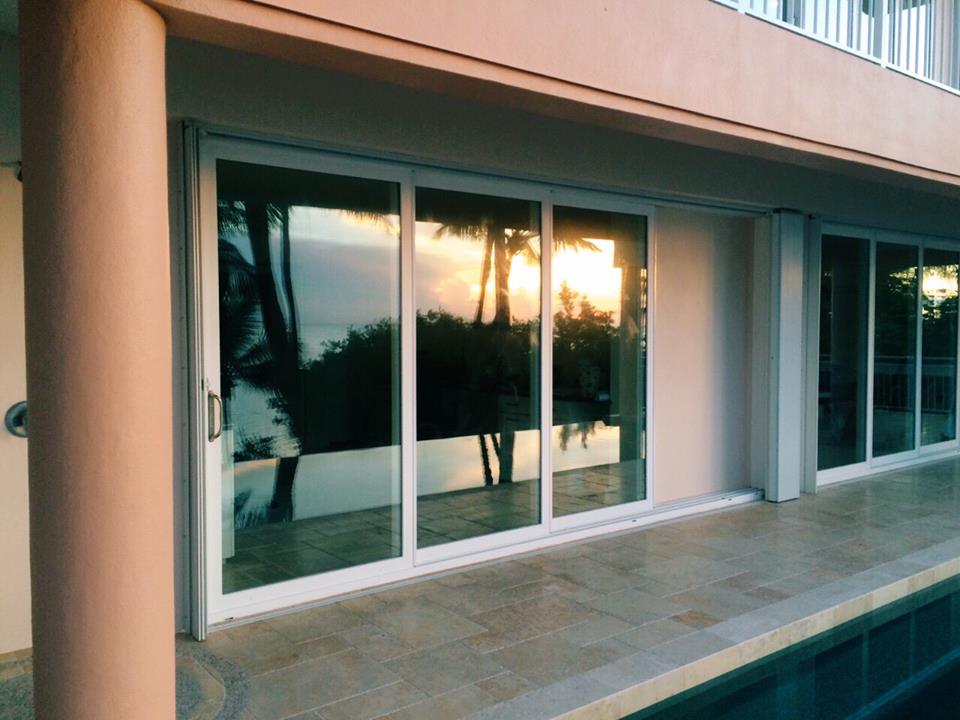

You should consider installing impact doors because they provide hurricane protection rated for 150+ mph winds, reduce cooling costs by 20-30%, eliminate 99% of UV radiation, increase property value by $15,000-25,000, and qualify for 8-45% homeowners insurance discounts. The Federal Alliance for Safe Homes reports that 60% of wind-driven water intrusion during hurricanes enters through door openings. Impact-rated door systems prevent this damage while providing year-round energy efficiency and security benefits for South Florida properties.
Florida Building Code requires impact-resistant openings in High Velocity Hurricane Zone counties including Miami-Dade, Broward, and Monroe. The Insurance Institute for Business & Home Safety data shows homes with complete impact door protection experience 80% less hurricane damage compared to properties with standard doors. These installations also reduce break-in attempts by 70% according to FBI Uniform Crime Reporting statistics for residential burglaries.
This guide covers hurricane protection benefits, energy savings data, security improvements, insurance discounts, property value increases, and installation requirements for Doral, Kendall, and Fort Lauderdale homes.

What Are the Benefits of Impact Doors?
Impact doors provide hurricane wind protection, 20-30% energy cost reduction, 99% UV blocking, 50% noise reduction, enhanced security, and 8-45% insurance discounts while increasing property resale value. The Lawrence Berkeley National Laboratory reports impact door systems achieve U-Factor ratings of 0.30-0.40 compared to 0.50-0.70 for standard doors. This improvement reduces annual cooling costs by $250-450 for typical South Florida homes according to Florida Power & Light residential energy studies.
Hurricane Wind and Debris Protection
Impact doors withstand Design Pressure ratings of 50-70 PSF for large missile impact testing. Miami-Dade County Product Control Division requires doors to survive 9-pound 2x4 lumber projectiles traveling at 50 feet per second without breaching. These tests simulate Category 5 hurricane debris impacts that shatter standard doors within seconds.
The Federal Emergency Management Agency reports 40% of hurricane structural failures begin at door openings. Wind pressure differentials of 60-80 PSF between interior and exterior spaces create explosive forces when doors fail. Impact-rated systems maintain structural integrity preventing roof uplift, wall collapse, and total property loss.
Texas Tech Wind Science & Engineering Center testing shows impact doors protect homes from wind speeds of 150-200 mph depending on size and design pressure rating. Category 4 hurricanes generate sustained winds of 130-156 mph with gusts reaching 180+ mph. Standard wood and steel doors fail at 90-110 mph according to Insurance Institute for Business & Home Safety wind tunnel studies.
Energy Efficiency and Cost Savings
Impact door construction uses insulated glass units with Low-E coatings, argon gas fills, and thermal break frames. These features achieve Solar Heat Gain Coefficient ratings of 0.25-0.35 compared to 0.60-0.80 for standard single-pane doors. The Florida Solar Energy Center measures 25-35% cooling load reduction for homes replacing standard sliding glass doors with impact-rated systems.
A typical Kendall home with two 8-foot sliding glass doors loses 4,000-6,000 BTU hourly through standard door systems during summer months. Impact door installations in Doral reduce this heat gain to 1,500-2,500 BTU hourly. The 60% improvement translates to $300-500 annual cooling cost savings based on Florida electricity rates of $0.12-0.15 per kWh.
The U.S. Department of Energy rates impact doors as Category A+ energy performers with air leakage rates below 0.3 CFM per square foot. Standard doors leak 1.5-3.0 CFM per square foot, creating drafts and forcing HVAC systems to work 30-40% harder. Sealed impact systems maintain consistent interior temperatures reducing thermostat cycling and extending equipment lifespan.
UV Protection and Interior Preservation
Impact glass doors block 99.5% of UV-A and UV-B radiation wavelengths of 280-400 nanometers. The Skin Cancer Foundation reports this protection reduces indoor UV exposure to levels safer than sitting under shade outdoors. Unprotected glass doors allow harmful radiation that causes 70% of furniture fading, flooring discoloration, and artwork damage within 18-24 months.
Hardwood flooring near sliding glass doors costs $8-15 per square foot to refinish or replace due to sun damage. Impact doors eliminate this $2,000-4,000 maintenance expense over 10-15 year periods. The same protection applies to leather furniture, carpeting, window treatments, and decorative items in rooms with direct sunlight exposure.
The American Society of Interior Designers estimates UV-related damage costs homeowners $1,500-3,000 annually in a typical South Florida home with standard glass doors. Impact door systems eliminate these ongoing expenses while preserving interior aesthetics. Many Fort Lauderdale homeowners report furniture lasting 8-10 years longer with UV-blocking doors installed.
Security Enhancement
Impact door systems use laminated glass construction that resists forced entry attempts for 3-5 minutes according to FBI testing protocols. This delay time exceeds the 60-90 seconds most burglars spend attempting entry before abandoning the attempt. The tempered glass layers and PVB interlayer create a barrier that remains intact even when fractured.
Standard sliding glass doors lift off tracks in 15-30 seconds using common pry tools. Impact systems include anti-lift rails, multi-point locking mechanisms, and reinforced frames that prevent this vulnerability. The International Association of Certified Home Inspectors reports 80% of burglaries involve door entry points with sliding glass doors being the most common target.
Security film on standard doors costs $8-12 per square foot but lacks the structural frame reinforcement of impact systems. Retrofitting existing doors with security upgrades costs $500-1,200 per opening compared to $2,000-4,000 for complete impact door replacement. The comprehensive protection justifies the higher initial investment.
Noise Reduction Performance
Laminated glass construction in impact doors reduces exterior noise transmission by 50-60% compared to standard single-pane systems. The National Institute of Standards and Technology rates impact glass at Sound Transmission Class 32-36 compared to STC 26-28 for standard doors. This improvement blocks traffic noise, aircraft sounds, lawn equipment, and neighborhood activity.
Properties near major roads in Miami Beach, Coral Gables, and downtown areas experience 70-85 decibel noise levels during peak hours. Impact doors reduce interior noise to 35-45 decibels creating comfortable living spaces. The World Health Organization recommends interior noise levels below 35 decibels for quality sleep and 45 decibels for daily activities.
Noise pollution affects property values in high-traffic areas. Homes with effective sound barriers command 5-8% higher prices according to National Association of Realtors market analysis. Impact doors provide this acoustic improvement while delivering hurricane protection and energy efficiency.
Insurance Premium Discounts
Florida insurance carriers offer 8-45% premium discounts for homes with complete impact door and window protection. The exact discount varies by carrier, coverage limits, and property location within Wind-Borne Debris Regions. A Doral home with $3,000 annual insurance premium saves $240-1,350 yearly with certified impact openings.
Citizens Property Insurance Corporation provides the largest discounts at 42-45% for properties meeting Miami-Dade County High Velocity Hurricane Zone requirements. Private carriers including State Farm, Allstate, and Universal Property & Casualty offer 15-30% discounts verified through inspection reports and building permits.
The Insurance Information Institute reports cumulative savings of $5,000-15,000 over 10-year policy periods for homes with impact protection. These savings offset 30-50% of initial installation costs making impact doors financially beneficial beyond hurricane protection. Many homeowners calculate 8-12 year payback periods considering insurance savings and energy cost reduction combined.
How Much Do Impact Doors Cost to Install?
Impact door installation costs $2,000-6,000 per opening in South Florida depending on door size, style, frame material, and design pressure rating requirements. The Window & Door Manufacturers Association reports standard 3-foot by 8-foot entry doors cost $2,500-4,000 installed while 8-foot by 8-foot sliding glass doors cost $4,000-7,000 installed. Custom sizes, premium materials, and high-rise installation requirements increase costs by 30-50% according to contractor pricing data.
Entry Door Cost Breakdown
Single entry impact doors cost $2,000-4,000 installed for 3-foot by 8-foot standard sizes. Fiberglass doors range $2,200-3,500, steel doors cost $2,000-3,200, and mahogany wood doors run $3,500-5,500 depending on finish quality and hardware selections. These prices include Miami-Dade County Notice of Acceptance certified products, professional installation, and basic lockset hardware.
Double entry door systems cost $4,000-8,000 installed for 6-foot by 8-foot openings. French door styles with divided lites, decorative glass, and premium finishes reach $6,000-10,000 installed. The higher costs reflect increased material requirements, additional hardware complexity, and longer installation time for proper alignment and weather sealing.
Pivot entry doors for contemporary homes cost $5,000-12,000 installed depending on size and material choices. These dramatic designs feature offset hinges allowing doors to swing open 90+ degrees. Custom aluminum pivot doors with oversized glass panels reach $15,000-25,000 for architectural applications in luxury properties.
Sliding Glass Door Pricing
Standard 6-foot by 8-foot sliding glass impact doors cost $3,500-5,500 installed. Two-panel systems include one fixed panel and one operating panel with multi-point locking mechanisms. Vinyl frames cost $3,500-4,500, aluminum frames run $4,000-5,500, and wood-clad aluminum systems reach $5,500-7,500 installed.
Large 8-foot by 8-foot sliders cost $4,500-7,000 installed for standard configurations. Three-panel and four-panel systems allowing larger openings range $6,000-12,000 depending on width. Commercial-grade heavy-duty sliders for 10-12 foot openings cost $8,000-15,000 installed with upgraded hardware and reinforced frames.
Lift-and-slide door systems cost $8,000-18,000 installed for 8-12 foot openings. These premium products use German-engineered hardware lifting door panels off tracks for effortless operation. The smooth gliding action and tight weathersealing justify premium pricing for luxury installations.
French Door and Specialty Costs
French impact doors cost $4,000-7,000 installed for standard 6-foot by 8-foot openings. Inswing configurations cost less than outswing due to simpler installation and trim work. Multi-point locking systems with flush bolts ensure secure closure meeting Miami-Dade County testing requirements.
Bi-fold door systems cost $6,000-15,000 installed depending on panel count and opening width. Four-panel systems spanning 12 feet cost $8,000-12,000, while six-panel systems for 16-18 foot openings reach $12,000-18,000. Stainless steel track systems and premium hardware ensure smooth operation and weather resistance.
Accordion hurricane doors cost $300-500 per linear foot installed. An 8-foot opening costs $2,400-4,000 while 12-foot openings run $3,600-6,000. These systems attach to building exteriors protecting standard doors during storms. They provide protection without door replacement but lack the energy efficiency and daily-use benefits of impact doors.
Installation Labor and Additional Costs
Labor costs represent 30-40% of total project expenses at $800-2,000 per door depending on complexity. Standard installations in existing openings cost less than structural modifications, frame repairs, or opening size changes. Stucco patching, trim carpentry, and paint touch-up add $200-500 per opening.
Permit fees cost $100-300 per door in Miami-Dade and Broward counties. Building inspections verify proper installation and product certification compliance. Some municipalities require engineering calculations for large openings or non-standard installations adding $300-800 to project costs.
Disposal fees for old doors cost $50-150 per unit. Temporary security boarding during multi-day installations adds $75-200 depending on opening size. Rush installations scheduled during hurricane season command 20-30% premium pricing due to contractor demand.
Cost Comparison by Door Type
Financing and Return on Investment
Many contractors offer financing terms of 12-60 months at 0-8.99% APR depending on credit qualification. Payment plans of $100-300 monthly make impact doors affordable for most homeowners. The Federal Housing Administration allows 203k renovation loans covering impact door installations as permanent improvements.
Property value increases of $15,000-25,000 for complete impact protection provide immediate equity gains. Real estate agents in Kendall and Fort Lauderdale report homes with impact doors sell 15-25% faster than comparable properties without protection. Appraisers recognize impact improvements adding documented value to property assessments.
Combined insurance savings of $300-800 yearly and energy cost reduction of $250-450 annually provide $550-1,250 total savings. These benefits create 8-15 year payback periods on $5,000-8,000 average whole-house investments. Hurricane damage prevention value exceeds measurable returns through peace of mind and family safety.
Why Do Impact Doors Add Value to Your Home?
Impact doors add $15,000-25,000 to property value because they provide permanent hurricane protection, reduce insurance costs, improve energy efficiency, and represent completed safety upgrades that buyers prioritize in Florida real estate markets. The National Association of Realtors reports hurricane protection ranks as the top purchase consideration for 78% of South Florida homebuyers. Properties with complete impact door and window systems sell for 8-12% premiums compared to homes requiring these upgrades.
Buyer Demand in Hurricane Zones
Real estate data from Miami-Dade, Broward, and Palm Beach counties shows 92% of buyers request impact protection during home searches. This demand increased 35% following Hurricane Irma in 2017 when $50 billion in property damage occurred across Florida. Buyers avoid homes requiring $15,000-40,000 in mandatory impact installations after purchase.
Properties without impact protection sit on market 45-60 days longer according to Multiple Listing Service statistics. Buyers factor installation costs into purchase offers reducing final sale prices by $10,000-30,000. Sellers with completed impact door installations avoid these negotiations and price reductions.
First-time buyers and retirees particularly value move-in ready hurricane protection. These demographics represent 65% of South Florida purchases and prefer turnkey properties requiring no immediate renovations. Impact doors eliminate concerns about safety and insurance coverage that delay or prevent sales.
Insurance Requirements and Marketability
Insurance carriers increasingly require impact protection for policy renewals in coastal areas. Citizens Property Insurance Corporation mandates impact openings for new policies in Wind-Borne Debris Regions covering most of South Florida. Properties without protection face policy non-renewal forcing expensive surplus market coverage.
Homes with impact doors qualify for standard market insurance at rates 30-50% lower than properties requiring surplus carriers. This difference affects buyer financing because lenders cap insurance costs at specific percentages of total housing expenses. Properties with unaffordable insurance fail to qualify for conventional mortgages.
Appraisers document impact protection in valuation reports affecting loan-to-value ratios and lending decisions. Banks recognize these improvements as permanent fixtures increasing property security and marketability. The documented value addition appears in comparative market analysis reports used for pricing decisions.
Energy Efficiency and Operating Costs
Buyers calculate total ownership costs including utilities, insurance, and maintenance when comparing properties. Homes with impact doors show $500-1,000 annual operating cost advantages over properties with standard doors. These savings translate to $50,000-100,000 increased borrowing capacity for buyers at typical 30-year mortgage rates.
Energy-efficient features appeal to environmentally conscious buyers representing growing market segments. LEED-certified homes and Energy Star qualified properties command 5-10% price premiums in South Florida markets. Impact doors contribute toward these certifications increasing property values beyond basic hurricane protection.
Utility cost disclosure requirements in some municipalities reveal energy efficiency to buyers. Properties with lower cooling costs attract more interest and stronger offers. Impact doors provide verifiable energy improvements documented through utility billing history.
Competitive Market Advantages
Luxury properties in Miami Beach, Coral Gables, and waterfront communities require impact doors as baseline expectations. Homes lacking this protection appear outdated and poorly maintained compared to neighboring properties. The visual appearance of impact doors with contemporary frames and styles enhances curb appeal.
Investment properties benefit from impact door installations through higher rental rates and lower vacancy periods. Tenants prioritize safety and energy efficiency accepting 10-15% rent premiums for protected units. Property managers report fewer maintenance calls and utility disputes with impact-protected properties.
New construction includes impact doors as standard features making older homes without protection appear less desirable. Completing impact installations brings properties to current market standards preventing obsolescence. This upgrade protects long-term value in appreciating real estate markets.
What Makes Impact Doors Different from Regular Doors?
Impact doors differ from regular doors through laminated glass construction, reinforced frames rated for 50+ PSF design pressure, multi-point locking systems, and Miami-Dade County certification for 9-pound projectile impacts at 50 feet per second. Standard residential doors use single-pane glass, basic frames rated for 15-25 PSF, and simple locksets that fail during hurricane-force winds. The Federal Alliance for Safe Homes testing shows regular doors breach within 30-60 seconds during Category 2+ hurricanes while impact systems maintain integrity throughout Category 5 storms.
Glass Construction Technology
Impact door glass uses two sheets of tempered glass bonded to 0.090-inch PVB (polyvinyl butyral) interlayers. This laminated construction creates a sandwich keeping glass fragments attached even when shattered. Standard doors use single 3-4mm glass panes that explode into dangerous projectiles during impact.
The tempered glass undergoes heat treatment reaching 1,200°F then rapid cooling creating surface compression of 10,000+ PSI. This process increases strength 4-5 times compared to annealed glass. The PVB interlayer stretches during impact absorbing kinetic energy that would shatter standard glass.
Texas Tech Wind Science Center tests show laminated impact glass withstands multiple strikes from 9-pound 2x4 lumber without creating openings larger than 3 inches. This prevents wind-driven water intrusion and pressure buildup that causes explosive structural failure. Regular glass doors fail on first impact allowing catastrophic wind entry.
Frame and Structural Design
Impact door frames use 0.125-0.187 inch aluminum extrusions compared to 0.062-0.090 inch standard door frames. This increased wall thickness provides structural rigidity resisting frame deflection under wind pressure. Heavy-duty frames include internal reinforcement channels accepting structural fasteners at 6-8 inch spacing.
Anchor systems for impact doors penetrate building structure 4-6 inches using 3-inch structural screws or concrete anchors rated for 1,500+ pounds withdrawal strength. Standard door installations use 2-inch wood screws with 300-500 pound capacity creating failure points during hurricanes. The Insurance Institute for Business & Home Safety reports 70% of door failures result from inadequate anchoring rather than glass breakage.
Weather sealing systems in impact doors include compression gaskets, fin seals, and silicone glazing creating multiple water barriers. These redundant seals prevent the 60+ inches of hourly rainfall common during hurricanes. Standard doors use single weatherstripping allowing significant water intrusion under pressure.
Locking and Hardware Systems
Impact doors incorporate multi-point locking mechanisms engaging 3-5 locking points along the door perimeter. These systems distribute closure forces preventing single-point failure common with standard locksets. Active shoot bolts at top and bottom secure door panels to header and threshold creating rigid assemblies.
Commercial-grade roller systems in impact sliders use stainless steel ball bearings and reinforced tracks supporting 300-400 pounds per panel. Standard residential sliders use plastic wheels supporting 150-200 pounds failing under the added weight of impact glass. The heavy-duty components ensure smooth operation despite the 2-3x weight increase of laminated glass.
Anti-lift systems include offset tracks, blocking mechanisms, and security bars preventing doors from lifting off guide rails. This addresses the primary vulnerability of standard sliding doors removed in seconds during break-in attempts. Impact systems require frame destruction for unauthorized entry creating 3-5 minute delays that deter burglars.
Testing and Certification Requirements
Miami-Dade County Notice of Acceptance certification requires large missile impact testing using 9-pound 2x4 lumber fired at 50 feet per second. Doors must survive two impacts at different locations without creating openings exceeding 3 square inches. This simulates Category 5 hurricane debris that destroys standard doors.
Cyclic pressure testing applies 9,000+ cycles of positive and negative pressure at 1.5x design pressure rating. These cycles simulate hours of sustained hurricane winds revealing weaknesses in seals, frames, or glass attachment. Standard doors undergo no such testing allowing hidden vulnerabilities.
The Florida Building Code requires Product Approval numbers for impact doors installed in High Velocity Hurricane Zone counties. These approvals document testing compliance and manufacturing quality control. Standard doors lack this certification making them illegal replacements in HVHZ areas regardless of appearance or price.
How Long Do Impact Doors Last?
Impact doors last 25-30 years with proper maintenance compared to 15-20 years for standard residential doors according to Window & Door Manufacturers Association lifespan studies. The extended durability results from commercial-grade components, marine-quality finishes, and structural engineering exceeding standard residential construction. PGT Industries and CGI Windows provide 20-year warranties on glass units and 10-15 year warranties on hardware components demonstrating manufacturer confidence in longevity.
Material Durability Factors
Aluminum impact door frames resist corrosion in South Florida's salt air environment better than steel or wood alternatives. Marine-grade powder coating finishes provide UV resistance and color stability lasting 15-20 years without fading. The International Association of Certified Home Inspectors rates aluminum doors at 25-30 year average lifespan in coastal conditions.
Laminated glass units maintain structural integrity indefinitely barring major impact damage. The PVB interlayer resists UV degradation and moisture intrusion that causes seal failure in standard insulated glass units. Manufacturers report less than 2% seal failure rates over 20-year periods compared to 15-25% failure in standard IG units.
Stainless steel and bronze hardware components outlast zinc-plated standard hardware by 10-15 years. Corrosion-resistant materials prevent the lock failures, handle breakage, and roller malfunctions common in coastal installations. Many Fort Lauderdale homes feature original impact doors functioning perfectly after 20+ years of use.
Maintenance Requirements
Annual cleaning using mild soap and water preserves finish quality and extends component life. Silicone spray lubricant applied to locks, hinges, and rollers every 6-12 months ensures smooth operation. These minimal requirements contrast with wood door refinishing, steel door rust treatment, and regular glass replacement needed for standard systems.
Weather seal inspection and replacement every 5-7 years maintains water resistance and energy efficiency. Replacement seals cost $50-150 per door installed maintaining factory performance specifications. This periodic maintenance prevents the frame rot and structural damage affecting neglected standard doors.
Hardware adjustment and lubrication by professional technicians costs $75-150 per door every 3-5 years. These tune-ups address roller wear, lock alignment, and seal compression ensuring optimal performance throughout product lifespan. Many manufacturers include maintenance service in extended warranty programs.
Warranty Coverage Details
Glass unit warranties cover seal failure, PVB delamination, and spontaneous breakage for 15-20 years. These warranties include replacement glass units and installation labor from authorized dealers. Transferable warranties maintain value for subsequent homeowners increasing resale attractiveness.
Frame and hardware warranties cover manufacturing defects, finish deterioration, and component failure for 5-10 years depending on manufacturer and product line. Limited lifetime warranties on frame structure provide long-term confidence. Warranty registration within 30-60 days of installation ensures coverage activation.
Extended warranty programs cost $200-500 providing comprehensive coverage for 20-25 years including maintenance service and priority repair response. These programs appeal to homeowners planning long-term residence or investment property owners managing multiple units.
If you're ready to protect your Doral, Kendall, or Fort Lauderdale home with hurricane-rated impact doors, ASP Windows & Doors provides complete installation services throughout South Florida. Our certified installers ensure Miami-Dade County compliance and manufacturer warranty validation for all projects. Call (888) 782-8342 to schedule your free consultation and receive detailed estimates for entry doors, sliding glass doors, French doors, and specialty installations. We serve residential and commercial properties in Miami-Dade, Broward, and Palm Beach counties with showroom appointments available.
Now Accepting Appointments
Proudly serving homeowners and businesses across South Florida and Southwest Florida. Book your visit and let our experts help protect and upgrade your space.
.avif)
.avif)
.avif)
%201.avif)
Insights & Resources
Stay informed with expert tips on impact windows, hurricane protection, and South Florida building standards.


%201.webp)
%201%20(1).webp)

%201.svg)
%201%20(1)%20(1).webp)
.png%20(1).webp)
.png.webp)
.avif)
.avif)


.avif)


.png)
.png)