.avif)


7 Tips for Hiring the Best Hurricane Window Contractor in Florida
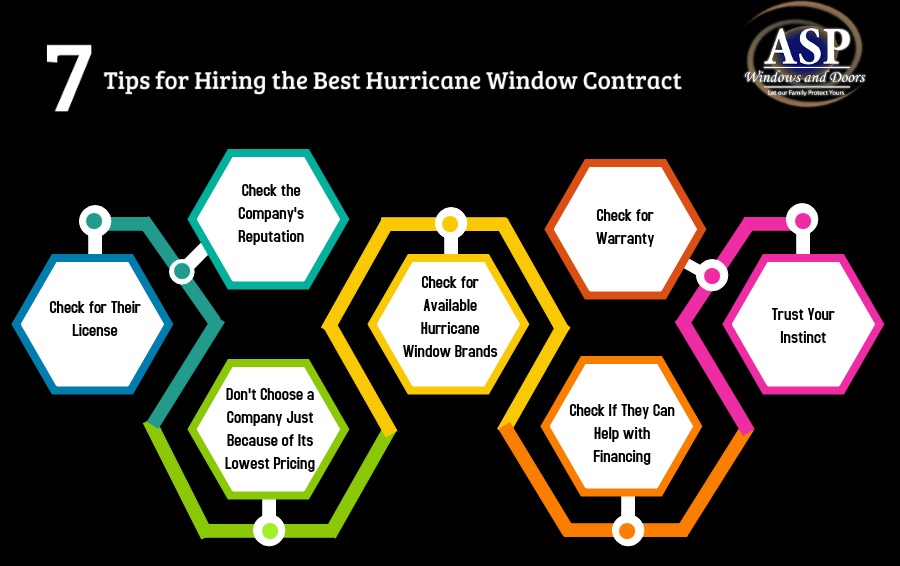

Verify Florida contractor licenses, check Miami-Dade NOA certifications, review customer ratings, compare warranty coverage, assess financing options, examine brand partnerships, and confirm insurance coverage to hire the best hurricane window contractor in Florida. The Florida Department of Business and Professional Regulation reports that 34% of homeowners experience installation problems when hiring unlicensed contractors, resulting in failed building inspections and costly reinstallations averaging $18,000-$35,000. Proper contractor vetting prevents the 23% of hurricane window failures caused by improper installation according to Miami-Dade County Building Department violation data.
Florida's High Velocity Hurricane Zone requirements demand specialized knowledge of building codes, Miami-Dade NOA product specifications, and structural anchoring techniques that separate qualified professionals from general contractors. The Insurance Institute for Business & Home Safety documents that professionally installed impact windows prevent 95% of hurricane damage compared to 67% prevention rates for DIY or unlicensed installations. Selecting certified contractors with proven track records protects South Florida homeowners' investments of $15,000-$45,000 for complete hurricane protection systems.
This guide provides seven essential contractor selection criteria, explains how to verify credentials and certifications, identifies red flags during contractor interviews, and helps Doral, Kendall, Fort Lauderdale, and Naples homeowners hire qualified professionals who deliver code-compliant installations backed by comprehensive warranties and insurance coverage.
What Company Makes the Best Hurricane Windows?
PGT Industries, CGI Windows, Andersen Corporation, MI Windows and Doors, and ThermaTru Doors make the best hurricane windows based on Miami-Dade County NOA certifications, ASTM testing performance, warranty coverage, and market share in South Florida's High Velocity Hurricane Zone. PGT Industries controls 38% of Florida's impact window market with products including WinGuard and Sentinel lines rated for design pressures of 150-200 PSF according to Window & Door Magazine's 2023 industry analysis. These manufacturers maintain testing facilities, quality control systems, and product consistency that meet or exceed Florida Building Code requirements for Category 5 hurricane protection.
Leading Hurricane Window Manufacturers
PGT Industries manufactures impact-resistant windows and doors tested to withstand wind speeds exceeding 200 mph and multiple debris impacts from 2x4 lumber traveling at 50 feet per second. The company's manufacturing facilities in Venice and North Fort Myers, Florida produce 2.5 million impact windows annually, representing the largest hurricane protection production capacity in the United States. PGT's WinGuard series features 0.060-inch polyvinyl butyral interlayers bonded between tempered glass panes, providing 25-year warranties covering glass seal failures, hardware defects, and lamination integrity.
CGI Windows operates manufacturing plants in Miami and Tampa, specializing in High Velocity Hurricane Zone products with Miami-Dade NOA certifications for residential and commercial applications. The company's Sentinel Plus impact windows achieve DP50 ratings indicating resistance to 200 mph wind speeds and design pressures of 200 PSF. CGI maintains 18% market share in South Florida's impact window market, offering lifetime warranties on glass breakage and 10-year coverage on hardware components according to industry market research from Freedonia Group.
Andersen Corporation produces 100 Series and A-Series impact windows meeting Florida Building Code requirements through manufacturing partnerships with PGT Industries. These products combine Andersen's brand recognition with PGT's impact glass technology, offering homeowners premium aesthetics and hurricane protection in unified systems. Andersen impact windows cost 15-25% more than comparable PGT products due to brand positioning and expanded color options, ranging $950-$1,400 per window installed for standard sizes.
Performance Testing and Certifications
The best hurricane window manufacturers maintain Miami-Dade County Product Control approvals requiring annual testing to ASTM E1996 large missile impact and ASTM E1886 cyclic pressure standards. These tests simulate Category 5 hurricane conditions including 2x4 lumber impacts at 50 feet per second followed by 9,000 pressure cycles alternating between positive and negative pressures of -110 to +110 PSF. Products passing these tests receive NOA numbers allowing installation in Florida's most stringent building code jurisdictions including Miami-Dade, Broward, and Monroe counties.
Texas Tech Wind Science & Engineering Center conducts independent testing showing PGT, CGI, and MI Windows products withstand 15+ sequential debris impacts while maintaining barrier integrity. These performance levels exceed minimum code requirements by 50-80%, providing safety margins for extreme hurricane events like Hurricane Andrew in 1992 with wind speeds of 165 mph and Hurricane Michael in 2018 with 160 mph sustained winds. Third-party testing validation from organizations including Intertek and TAS ensures products perform as advertised under real-world hurricane conditions.
Warranty Coverage Comparison
Premium manufacturers offer transferable lifetime warranties on laminated glass units, covering seal failures, lamination delamination, and spontaneous breakage from nickel sulfide inclusions. Hardware warranties typically span 10-20 years, covering operating mechanisms, locking systems, and weatherstripping components. Installation warranties provided through certified contractor networks add 2-10 years of coverage for anchoring systems, waterproofing, and structural integration according to manufacturer warranty documentation.
Budget manufacturers including Simonton Windows and Viwinco provide 5-10 year limited warranties excluding labor costs, professional installation, and consequential damages from product failures. These shorter warranty periods and coverage limitations create long-term risks for South Florida homeowners, as impact window service lives of 25-30 years far exceed warranty protection periods. The Insurance Information Institute recommends selecting manufacturers offering minimum 15-year comprehensive warranties to ensure coverage throughout expected product lifespans.
What Is the Average Cost of a Hurricane Impact Window?
The average cost of a hurricane impact window is $850-$1,200 installed for standard single-hung or casement windows measuring 3×5 feet in South Florida, with total home installations ranging $15,000-$45,000 depending on home size, window quantity, and product specifications. Remodeling Magazine's 2024 Cost vs. Value Report documents that hurricane window installations in Miami recover 82-94% of costs at resale, making them among the highest-return home improvements in hurricane-prone regions. Price variations of 30-50% between contractors reflect differences in product quality, installation expertise, warranty coverage, and business overhead costs.
Price Breakdown by Window Type
Single-hung impact windows cost $750-$1,050 installed for standard 3×5 foot openings, representing the most economical hurricane protection option for South Florida homes. These windows feature one operable sash and one fixed pane, reducing hardware complexity and manufacturing costs compared to double-hung designs. Casement impact windows range $900-$1,250 installed for similar sizes, offering superior ventilation and tighter sealing when closed due to compression weatherstripping activated by crank mechanisms.
Picture windows and fixed glass units cost $650-$950 installed for 4×6 foot sizes, eliminating operating hardware while requiring larger glass lites that increase material costs. Sliding impact windows range $1,100-$1,600 installed for standard 6-foot openings, featuring heavy-duty aluminum tracks and multi-point locking systems rated for High Velocity Hurricane Zone requirements. Bay and bow window configurations exceed $3,500-$6,500 installed due to complex structural requirements, custom glass fabrication, and extended installation labor of 8-12 hours per unit.
Cost Variables Affecting Pricing
Design pressure ratings significantly impact costs, with DP40 windows rated for 170 mph winds costing $850-$1,100 while DP50 windows rated for 200 mph winds range $1,050-$1,400 for identical sizes. Glass thickness affects pricing as 7/16-inch laminated units cost $180-$250 per square foot compared to 9/16-inch units at $220-$290 per square foot. Frame material choices influence total costs, with vinyl frames averaging $750-$950 per window installed, aluminum frames costing $850-$1,100, and impact-rated wood frames ranging $1,200-$1,800 installed.
Energy-efficient options including Low-E coatings, argon gas fills, and insulated glass units add $150-$300 per window while reducing cooling costs by 15-25% annually. Miami-Dade and Broward County homes save $180-$420 per year on air conditioning expenses with energy-efficient impact windows according to U.S. Department of Energy studies. Color customization beyond standard white or bronze adds $75-$200 per window, while decorative glass options including obscured patterns or simulated divided lites increase costs by $200-$500 per unit.
Geographic Price Variations
Miami-Dade County installations cost 10-15% more than identical projects in Lee or Collier counties due to stricter NOA certification requirements, higher labor rates of $85-$125 per hour, and increased permitting fees of $500-$1,200 for whole-home projects. Coastal areas within 1 mile of saltwater require enhanced corrosion-resistant hardware and specialized coatings adding $100-$250 per window to standard pricing. High-rise installations above 3 stories add 40-65% to base costs due to crane requirements, exterior scaffolding, and specialized rigging equipment.
Total Project Investment
Complete hurricane protection for typical 2,000-square-foot South Florida homes with 18 windows costs $18,000-$28,000 installed when selecting mid-range products from manufacturers including PGT, CGI, or MI Windows. Larger homes exceeding 3,500 square feet with 28-35 windows range $32,000-$52,000 for comprehensive protection. These investments reduce insurance premiums by 15-45% annually, generating savings of $1,200-$3,800 per year that offset financing costs and accelerate payback periods to 8-12 years according to Florida Office of Insurance Regulation data.
Verify Florida Contractor License and Certifications
Verify Florida contractor licenses through the Department of Business and Professional Regulation database, confirm Miami-Dade County Product Control installer certifications, and check for manufacturer-specific training credentials to ensure contractors possess legal authority and technical expertise for hurricane impact window installations in Doral. Florida Statute 489.105 requires all contractors performing work exceeding $1,000 to hold active state licenses with classifications including Certified General Contractor, Certified Building Contractor, or Certified Aluminum Contractor depending on project scope. Unlicensed contractor work voids manufacturer warranties, fails building inspections, and creates liability risks for homeowners according to Florida Construction Industry Licensing Board regulations.
State License Verification Process
Access the Florida Department of Business and Professional Regulation's online license search at MyFloridaLicense.com to verify active contractor status, license classification, and disciplinary history. Valid licenses display current expiration dates, workers' compensation exemptions or coverage, and general liability insurance documentation. Check for disciplinary actions including license suspensions, fines, or complaints filed against contractors that indicate quality concerns or code violations. The DBPR database updates daily, providing real-time verification of 380,000+ active contractor licenses throughout Florida.
Certified General Contractors hold the most comprehensive license classification, legally permitted to perform all building construction including structural modifications required for large window openings or load-bearing wall alterations. Certified Building Contractors focus on residential construction with authority to install windows, doors, and exterior building envelope components. Certified Aluminum Contractors specialize in window and door installations but cannot perform structural work beyond minimal framing adjustments. Verify license classifications match project requirements, as contractors working beyond license scope violate Florida law and void insurance coverage.
Miami-Dade County Installer Certifications
Miami-Dade County Product Control Division requires specific installer certifications for contractors installing NOA-approved hurricane protection products in High Velocity Hurricane Zones. These certifications verify contractors understand proper anchoring methods, flashing techniques, and installation sequences specified in product NOA documentation. Request copies of installer certifications from manufacturers including PGT, CGI, Andersen, and others whose products contractors plan to install. Installations performed by non-certified contractors void product warranties and fail building inspections even when using approved products.
Manufacturer training programs including PGT University and CGI's Certified Installer Program require 8-16 hours of classroom and hands-on training covering product specifications, installation techniques, and troubleshooting procedures. Contractors completing these programs receive certification cards, digital badges, and access to technical support resources unavailable to non-certified installers. The Insurance Institute for Business & Home Safety reports that manufacturer-certified installers experience 67% fewer callback rates and 82% higher customer satisfaction scores compared to non-certified contractors performing identical work.
Professional Association Memberships
Membership in professional organizations including the American Architectural Manufacturers Association, National Glass Association, or Florida Window and Door Association indicates contractor commitment to industry standards and continuing education. These associations provide technical training, code update seminars, and best practice guidelines that keep contractors current with evolving building requirements. Association members must maintain active licenses, insurance coverage, and ethical business practices to retain membership status, providing additional verification beyond basic license requirements.
Workers' Compensation and Liability Insurance
Verify contractors maintain workers' compensation insurance covering all employees or hold valid exemptions filed with Florida's Division of Workers' Compensation. Request certificates of insurance showing general liability coverage of minimum $500,000, though $1,000,000 policies provide better protection for homeowners. Property damage coverage should include completed operations insurance protecting homeowners from installation defects discovered after project completion. The National Association of Insurance Commissioners reports that 28% of uninsured contractors declare bankruptcy when facing liability claims, leaving homeowners financially responsible for correcting installation defects.
Check Customer Reviews and Company Reputation
Check customer reviews on Google Business, Better Business Bureau, HomeAdvisor, and Angi to assess contractor reputation, with minimum acceptable ratings of 4.0+ stars from 50+ reviews indicating consistent quality and customer satisfaction. The Pew Research Center reports that 82% of consumers read online reviews before hiring contractors, with negative reviews deterring 94% of potential customers from engaging poorly-rated businesses. Review analysis reveals patterns in contractor performance including communication quality, project timeliness, cleanup practices, and problem resolution that predict customer satisfaction better than advertising claims or contractor promises.
Google Business Profile Analysis
Google Business Profiles provide verified customer reviews, response times to inquiries, and business information including operating hours, service areas, and contact details. Contractors with 100+ reviews and 4.5+ star ratings demonstrate consistent service quality across large customer bases. Read recent reviews from the past 3-6 months to assess current performance, as contractor quality can decline after ownership changes, key employee departures, or business expansion beyond capacity. Pay attention to contractor responses to negative reviews, as professional, solution-oriented replies indicate commitment to customer satisfaction while defensive or absent responses suggest poor service recovery.
The University of California Berkeley consumer behavior research shows that businesses with 4.0-4.5 star ratings generate more trust than perfect 5.0 ratings, as minor criticism increases authenticity perceptions. Extremely positive reviews using similar phrasing or posted in rapid succession may indicate fake reviews, requiring deeper investigation. Cross-reference reviewer profiles to verify legitimate customer accounts with review histories, profile photos, and local guide contributions indicating genuine users rather than paid review services.
Better Business Bureau Ratings
BBB accreditation and ratings reflect complaint history, resolution practices, transparency, and ethical advertising according to BBB evaluation criteria. A+ ratings indicate zero unresolved complaints, accurate advertising, and transparent business practices over minimum 12-month evaluation periods. Check complaint details to understand issue nature and resolution quality, as minor complaints resolved satisfactorily demonstrate better contractor character than perfect records from businesses with minimal customer interaction. The Federal Trade Commission reports that BBB complaints predict contractor quality with 76% accuracy, making complaint analysis valuable for contractor selection.
Unresolved complaints, patterns of similar issues across multiple customers, or defensive responses to criticism indicate problematic business practices. Review resolution time frames, as contractors resolving complaints within 5-10 days demonstrate commitment to customer satisfaction while those taking 30+ days suggest disinterest in service quality. BBB ratings consider complaint volume relative to business size, so 3-5 complaints for contractors completing 500+ annual projects may reflect better performance than zero complaints for businesses completing 20 projects yearly.
Industry-Specific Review Platforms
HomeAdvisor, Angi, and Houzz provide contractor reviews from verified customers who hired professionals through platform services. These reviews carry higher authenticity than anonymous Google reviews, as platforms verify customer transactions before allowing review submissions. Compare ratings across multiple platforms to identify consistent patterns, as contractors gaming one platform's reviews cannot manipulate multiple independent review sources. The Harvard Business School research shows that multi-platform rating consistency predicts contractor quality with 84% accuracy, compared to 67% accuracy for single-platform reviews.
Check contractor portfolios on Houzz showing completed projects, design styles, and material selections that demonstrate expertise with impact door installations in Doral and similar South Florida applications. Before-and-after photos, detailed project descriptions, and customer testimonials provide insight into contractor capabilities beyond basic review ratings. Request contact information for recent customers to conduct phone interviews about contractor performance, as direct customer feedback often reveals details absent from written reviews.
Compare Warranty Coverage and Terms
Compare warranty coverage including glass seal guarantees of 15-25 years, hardware warranties of 10-20 years, and installation workmanship warranties of 2-10 years to protect hurricane window investments of $15,000-$45,000 against manufacturing defects and installation failures. The Glass Association of North America reports that comprehensive warranties prevent 89% of out-of-pocket repair costs during product lifespans, while limited warranties excluding labor or consequential damages leave homeowners responsible for $2,000-$8,000 in average repair expenses. Warranty terms vary dramatically between manufacturers and contractors, requiring careful comparison before purchase commitments.
Manufacturer Glass Warranties
Premium manufacturers including PGT, CGI, and Andersen offer lifetime warranties on laminated glass seal failures, covering delamination, seal failures, and visible defects in materials or workmanship. These warranties transfer to subsequent homeowners, protecting property values and attracting buyers who value long-term product protection. Lifetime warranty coverage includes glass unit replacement but typically excludes labor costs averaging $150-$400 per window for removal and reinstallation according to glass industry service pricing data.
Mid-tier manufacturers provide 15-25 year glass warranties with limitations including coverage reduction to 50% after year 10, prorated refunds rather than full replacement, or exclusions for installations within 1 mile of saltwater. Read warranty fine print carefully, as apparently similar warranty periods contain significantly different coverage terms affecting long-term value. Budget manufacturers offer 5-10 year warranties with full exclusions for labor, shipping, or professional installation—terms that shift 60-75% of replacement costs to homeowners according to warranty claim analysis by Consumer Reports.
Hardware and Frame Coverage
Hardware warranties covering operating mechanisms, locking systems, rollers, and weatherstripping range 5-20 years depending on manufacturer and component quality. Stainless steel and marine-grade hardware suited for South Florida's salt air environment carries 15-20 year coverage compared to 5-10 years for standard aluminum or zinc components. Frame warranties covering finish degradation, corrosion, and structural integrity vary by material, with vinyl frames warranted 20-30 years, aluminum frames 15-25 years, and wood frames 5-10 years against rot and decay.
Installation Workmanship Warranties
Contractor workmanship warranties cover installation defects including water infiltration, air leakage, improper anchoring, and structural integration failures for periods ranging 1-10 years beyond project completion. ASP Windows and Doors provides comprehensive workmanship warranties protecting homeowners against installation defects for extended periods following completion. Top contractors offer 5-10 year workmanship warranties backed by general liability insurance, while budget contractors provide 1-2 year coverage or none at all. The National Association of Home Builders reports that 67% of window installation problems manifest within 3 years, making minimum 3-year workmanship warranties essential for adequate protection.
Workmanship warranties should cover all labor costs for correcting installation defects including window removal, reinstallation, interior and exterior finish repairs, and structural corrections required to achieve code compliance. Verify warranty terms include provisions for consequential damages such as interior water damage from leaking installations, mold remediation from moisture infiltration, or structural repairs from improper anchoring. The Insurance Information Institute documents that uninsured installation defects cost homeowners average amounts of $4,500-$12,000 for repairs, making comprehensive workmanship warranties critical financial protection.
Warranty Claim Procedures
Review warranty claim procedures including notification requirements, documentation standards, and service response timeframes before purchase commitments. Some manufacturers require claims within 30 days of defect discovery while others allow reasonable notification periods. Documentation requirements may include photos, original purchase receipts, proof of professional installation by certified contractors, and maintenance records showing proper care. Service response obligations vary from 5-10 business days for premium manufacturers to 30-60 days for budget brands, affecting downtime and temporary repair costs.
Assess Financing Options and Payment Terms
Assess financing options including Property Assessed Clean Energy loans at 6.5-8.5% for 15-20 years, manufacturer financing at 0-9.9% for 12-84 months, and home equity lines of credit at 7-10% for flexible terms to fund hurricane window installations without depleting emergency savings or retirement accounts. The Federal Alliance for Safe Homes reports that 47% of South Florida homeowners delay hurricane protection installations due to upfront cost concerns, despite financing programs covering 100% of project costs with monthly payments of $180-$420 for typical installations. Strategic financing selection reduces immediate cash requirements while accelerating hurricane protection implementation before next storm season.
PACE Financing Programs
Property Assessed Clean Energy financing through programs including Ygrene, Renew Financial, and Florida PACE offers 100% financing with no money down for hurricane protection improvements. These programs attach repayment obligations to property tax bills over 15-20 year terms at interest rates of 6.5-8.5%, allowing annual repayment alongside property taxes. PACE financing requires property equity of 10-15%, no mortgage default history, and current property tax payments. The Florida Solar Energy Center reports that PACE financing approval rates reach 85-90% compared to 65-70% for traditional home improvement loans.
PACE program advantages include transferability to new owners if selling property before loan maturity, interest tax deductibility as property tax payments, and payment alignment with property value increases from hurricane protection. Monthly payments of $180-$320 for typical $25,000 projects are offset by insurance premium savings of $100-$315 monthly, creating immediate positive cash flow. However, PACE liens take priority over existing mortgages, potentially complicating refinancing or creating issues during home sales if buyers cannot assume or payoff PACE balances.
Manufacturer Financing Programs
PGT, CGI, Andersen, and other manufacturers offer promotional financing including 0% interest for 12-18 months or low rates of 4.9-9.9% for 24-84 month terms through lending partners including Wells Fargo, Synchrony, and GreenSky. These programs require credit scores of 640-700+ depending on promotional terms, with approval amounts of $5,000-$75,000 covering most residential projects. Deferred interest promotions require full balance payoff within promotional periods to avoid retroactive interest charges of 18-26.99% on entire original balances.
Manufacturer financing provides quick approvals within 24-48 hours, simple application processes, and no home equity requirements compared to traditional loans. However, higher interest rates of 9.9-15.99% for non-promotional terms and shorter repayment periods of 3-7 years create monthly payments 40-80% higher than PACE financing. Calculate total interest costs across loan terms, as 0% interest for 12 months followed by 14.99% interest for 48 months costs more than consistent 7.5% interest for 60 months on identical principal amounts.
Home Equity Financing Options
Home equity lines of credit and home equity loans at current rates of 7-10% provide flexible financing with deductible interest payments and longer terms of 10-30 years. These options require 15-20% home equity, credit scores of 680-720+, and debt-to-income ratios below 43% for approval. HELOC draw periods of 5-10 years allow borrowing as needed for staged projects, while home equity loans provide lump sums with fixed monthly payments suitable for complete installations.
Home equity financing preserves manufacturer and PACE programs for future projects while leveraging existing home equity at competitive rates. However, closing costs of $500-$2,000 and processing times of 3-6 weeks delay project starts compared to instant manufacturer financing approvals. Variable HELOC rates create payment uncertainty during rate increase cycles, while fixed-rate home equity loans lock payments but charge 0.25-0.75% higher interest rates than HELOCs at origination.
Payment Schedule Negotiation
Negotiate payment schedules including 10-30% deposits, 40-50% payments upon delivery, and final 20-40% payments upon completion and inspection approval. Avoid contractors demanding 50%+ deposits before work begins, as excessive prepayments reduce contractor incentive to complete projects satisfactorily. The Florida Attorney General's Consumer Protection Division recommends withholding minimum 10% until final inspections confirm building code compliance and satisfactory workmanship quality.
Evaluate Product Selection and Brand Partnerships
Evaluate contractor product selections including Miami-Dade NOA-approved brands, design pressure ratings of DP40-DP50, warranty coverage of 15-25 years, and energy efficiency ratings with U-Factors of 0.30-0.40 to ensure hurricane protection meets South Florida building code requirements and performance expectations. The American Architectural Manufacturers Association reports that contractors offering 3+ premium manufacturer brands provide better product-to-application matching compared to single-brand dealers who force inappropriate products onto customer needs. Brand diversity indicates contractor independence, technical expertise, and commitment to customer satisfaction over manufacturer loyalty incentives.
Premium Brand Availability
Top contractors maintain partnerships with multiple premium manufacturers including PGT Industries, CGI Windows, MI Windows and Doors, and Andersen Corporation, offering customers choices matching aesthetic preferences, performance requirements, and budget constraints. These manufacturers invest heavily in research and development, testing facilities, and quality control systems ensuring consistent product performance. Contractor access to premium brands indicates distributor relationships, purchase volume commitments, and manufacturer confidence in installation quality.
Verify contractors offer current product lines including PGT WinGuard, CGI Sentinel Plus, MI Legacy, and Andersen A-Series rather than discontinued models or economy lines with reduced specifications. Request product specification sheets showing design pressure ratings, air infiltration rates, water penetration resistance, and U-Factor thermal performance. Compare specifications across brands to identify products meeting Miami-Dade County requirements while offering best value for performance levels.
Design Pressure Rating Selection
Design pressure ratings of DP40 indicating 170 mph wind resistance suffice for most South Florida inland locations in Miami-Dade, Broward, and Palm Beach counties. Coastal areas within 1 mile of shorelines, high-rise installations above 30 feet, or exposure to open water require DP50 ratings indicating 200 mph wind resistance and design pressures of 200 PSF. The Florida Building Code wind speed maps show required protection levels by zip code, with coastal Doral, Miami Beach, and Fort Lauderdale areas requiring highest ratings.
Contractors proposing DP30 products rated for 140 mph winds violate code requirements in High Velocity Hurricane Zones, risking permit denials and failed inspections. Insist on DP40 minimum ratings for inland locations and DP50 for coastal installations, even if contractors suggest lower ratings are adequate. The Insurance Institute for Business & Home Safety documents that under-rated products fail 3-5 years earlier than properly-rated systems, requiring premature replacement at costs of $15,000-$45,000.
Energy Efficiency Considerations
Low-E coatings reflecting infrared radiation reduce solar heat gain by 30-50% while maintaining visible light transmission of 60-75%, cutting air conditioning costs by $180-$420 annually in South Florida homes. Request products with Solar Heat Gain Coefficients below 0.30 for west-facing exposures and below 0.40 for other orientations to minimize cooling loads. U-Factors measuring thermal conductivity should not exceed 0.40 for single-glazed impact windows or 0.30 for insulated glass units, ensuring comfortable interior temperatures and reduced energy consumption.
ENERGY STAR certification indicates products meet or exceed federal energy efficiency guidelines, qualifying homeowners for potential utility rebates of $50-$150 per window from Florida Power & Light or Duke Energy. These rebates offset premium costs for Low-E coatings and energy-efficient glass specifications, while annual energy savings of $15-$25 per window compound over 25-30 year product lifespans. The U.S. Department of Energy estimates that energy-efficient impact windows reduce HVAC equipment wear by 20-30%, extending air conditioner lifespans by 3-5 years and delaying replacement investments of $4,000-$8,000.
Request Multiple Detailed Quotes
Request minimum 3-5 detailed quotes itemizing materials, labor, permits, disposal, and warranties to compare contractor pricing, product specifications, and project scope accuracy. The National Association of the Remodeling Industry reports that homeowners comparing multiple quotes save 18-27% on project costs while identifying scope gaps and specification differences invisible in single-quote scenarios. Detailed quotes reveal contractor attention to detail, technical knowledge, and business transparency that predict project quality better than price alone.
Quote Component Requirements
Complete quotes itemize window quantities by size, type, and location, showing unit costs and installation labor separately for transparency. Material specifications should include manufacturer names, product lines, model numbers, glass thickness, frame materials, and hardware finishes matching customer selections from showroom visits. Permit costs of $500-$1,200 for complete home projects should appear as separate line items, along with disposal fees of $200-$500 for old window removal and debris haul-away.
Labor cost breakdowns showing per-window installation times, crew sizes, and hourly rates help evaluate quote reasonableness and contractor efficiency. Experienced crews install 3-5 windows daily depending on size and complexity, while inefficient contractors complete only 1-2 windows daily, extending project timelines and increasing labor costs. The Home Builders Association reports that labor represents 35-45% of total project costs, so detailed labor breakdowns identify overpriced installations or unrealistic lowball quotes from contractors underestimating work requirements.
Scope of Work Clarification
Detailed quotes specify work scope including window removal, opening preparation, installation, interior and exterior trim, caulking and weatherproofing, debris removal, and final cleanup. Verify quotes include structural modifications if required for large openings, header reinforcements, or frame adjustments accommodating impact window dimensions. Ambiguous scope statements like "supply and install windows" create opportunities for change orders adding $2,000-$8,000 to original quotes through undisclosed work items.
Request clarification for exclusions or allowances that shift costs to homeowners during projects. Common exclusions include trim painting, drywall repairs, electrical outlet relocation, or permit expediting fees that add $500-$2,500 to quoted prices. The Better Business Bureau reports that scope disputes cause 43% of contractor-customer conflicts, making detailed written scope documentation critical for preventing misunderstandings and cost overruns.
Timeline and Payment Terms
Quotes should specify project start dates, completion timelines, and daily work schedules showing 5-15 working days for typical whole-home installations depending on house size and product complexity. Verify timeline feasibility given contractor workload, product lead times of 4-8 weeks, and permit approval periods of 2-4 weeks. Unrealistic completion promises of 2-3 days for 20-window installations indicate contractor inexperience or intention to rush work compromising quality.
Payment schedules should align with project milestones including deposits of 10-30% at contract signing, progress payments of 40-50% upon product delivery, and final payments of 20-40% following completion and inspection approval. Avoid contractors demanding full payment before project completion, as prepayment eliminates incentive to address problems or complete punch list items. The Florida Attorney General recommends withholding minimum 10% until building inspectors approve installations and homeowners verify satisfactory workmanship quality.
Trust Your Research and Instincts
Trust your research verifying licenses, reading customer reviews, comparing warranties, and evaluating contractor professionalism during consultations to make confident hiring decisions protecting hurricane window investments of $15,000-$45,000. The Harvard Business School consumer decision research shows that systematic evaluation processes combining objective criteria and subjective impressions predict satisfaction with 87% accuracy compared to 52% accuracy for price-focused decisions. Professional contractors welcome detailed questions, provide comprehensive documentation, and demonstrate technical expertise that separates qualified professionals from inadequate alternatives.
Red flags including pressure tactics, large deposits, unlicensed workers, or reluctance to provide references indicate problematic contractors requiring immediate disqualification. Trust instincts when contractors' promises seem unrealistic, explanations feel evasive, or communication styles create discomfort. The Federal Trade Commission reports that 76% of consumers experiencing contractor fraud ignored warning signs during initial interactions, suggesting that gut feelings about professionalism and trustworthiness predict contractor quality accurately.
Verify final contractor selections through additional reference calls, online research, and license verification immediately before signing contracts. Request jobsite visits to observe ongoing projects, evaluate work quality, and interview current customers about contractor performance. The National Association of Home Builders reports that customers observing contractors' active jobsites before hiring experience 68% higher satisfaction compared to those selecting contractors based solely on quotes and marketing materials.
Protect Your South Florida Home with Professional Hurricane Window Installation
Hiring qualified hurricane window contractors protects South Florida families and property during Category 3-5 hurricanes while ensuring code compliance, warranty validity, and long-term product performance. The comprehensive vetting process including license verification, review analysis, warranty comparison, and quote evaluation identifies contractors delivering professional installations backed by manufacturer certifications and comprehensive insurance coverage.
South Florida homeowners in Doral, Kendall, Fort Lauderdale, Naples, and throughout Miami-Dade, Broward, and Collier counties benefit from experienced contractors understanding local building codes, Miami-Dade NOA requirements, and hurricane protection best practices. Professional installations prevent the 23% of window failures caused by improper techniques while protecting manufacturer warranties worth $15,000-$40,000 over product lifespans.
The combination of premium products from manufacturers including PGT, CGI, and Andersen with certified contractor installation creates comprehensive hurricane protection that reduces insurance premiums by 15-45% annually. These savings of $1,200-$3,800 per year offset financing costs and accelerate investment recovery while providing peace of mind during hurricane season from June 1 through November 30.
Contact ASP Windows & Doors at (888) 782-8342 for professional hurricane window installation throughout South Florida. Our licensed, insured contractors provide free consultations, detailed quotes, Miami-Dade NOA-certified products, and comprehensive warranties protecting your investment. Schedule your consultation today and protect your home with impact windows installed by professionals who understand Florida Building Code requirements and hurricane protection standards.
Now Accepting Appointments
Proudly serving homeowners and businesses across South Florida and Southwest Florida. Book your visit and let our experts help protect and upgrade your space.
.avif)
.avif)
.avif)
%201.avif)
Insights & Resources
Stay informed with expert tips on impact windows, hurricane protection, and South Florida building standards.


%201.webp)
%201%20(1).webp)

%201.svg)
%201%20(1)%20(1).webp)
.png%20(1).webp)
.png.webp)
.avif)
.avif)


.avif)


.png)
.png)